Vietnam's Independence Palace marks 60 years with rare exhibits revealing its four-year construction
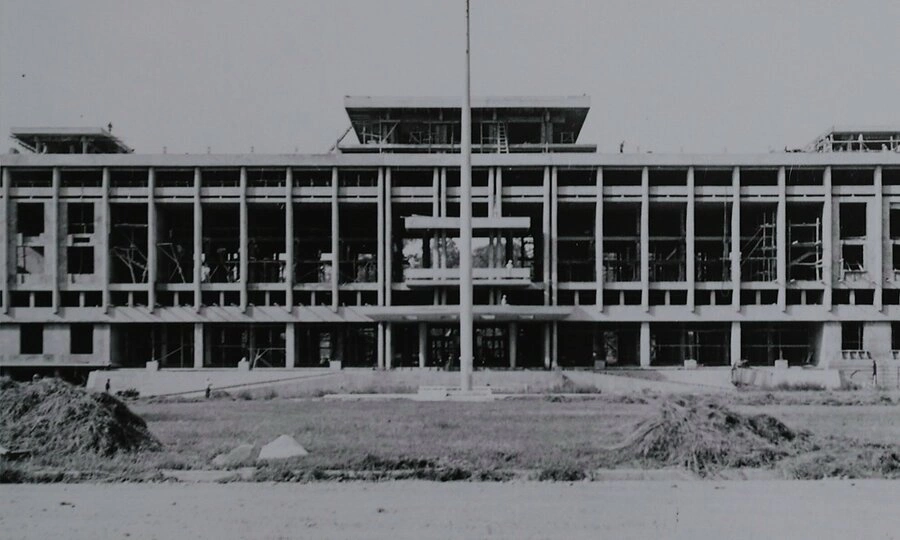
Around 100 architectural drawings and photographs documenting more than four years of design and construction of the Independence Palace in Ho Chi Minh City are on display to mark the 60th anniversary of its inauguration on Oct. 31, 1966.

Norodom Palace, the predecessor to today's Independence Palace, is pictured in 1873.
Completed by the French colonial administration in 1871, the Saigon landmark initially served as the home and headquarters for the Governor of Cochinchina before becoming the seat of the Governor-General of French Indochina.
In 1954, Ngo Dinh Diem, then the Prime Minister of the State of Vietnam, formally received the building from the French and renamed it Independence Palace.
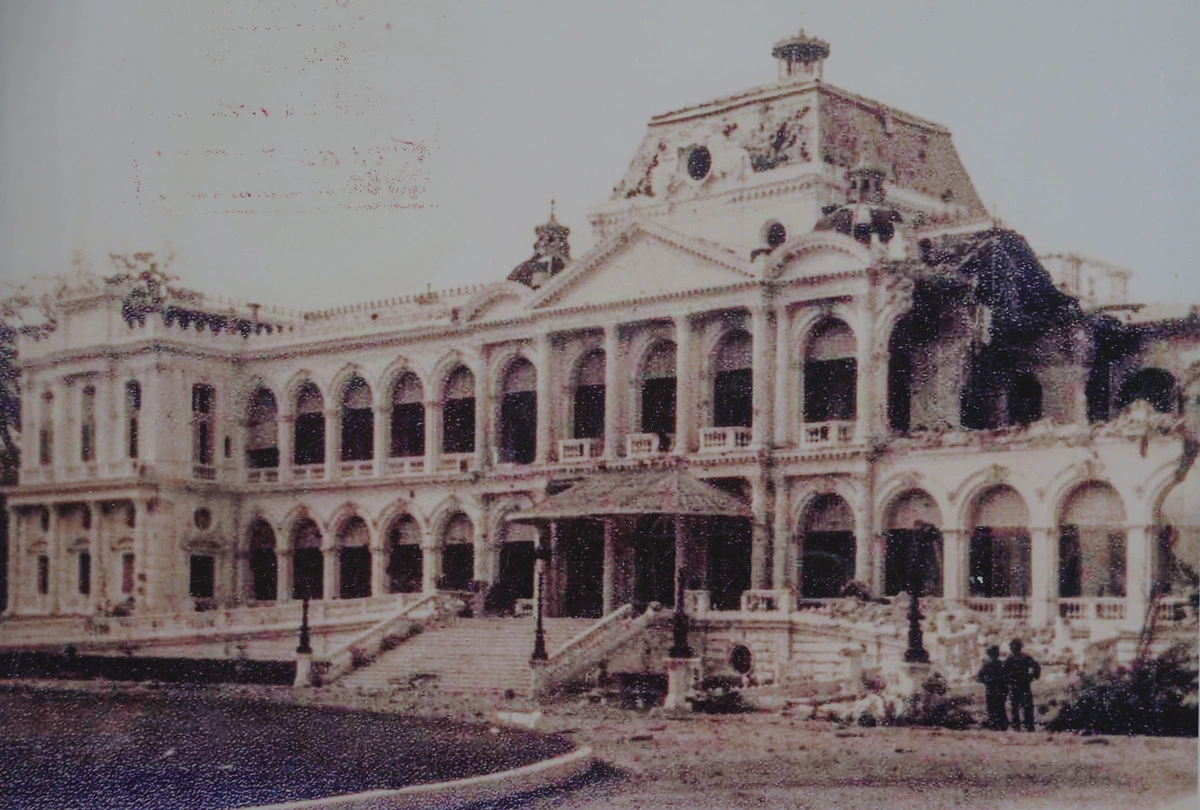
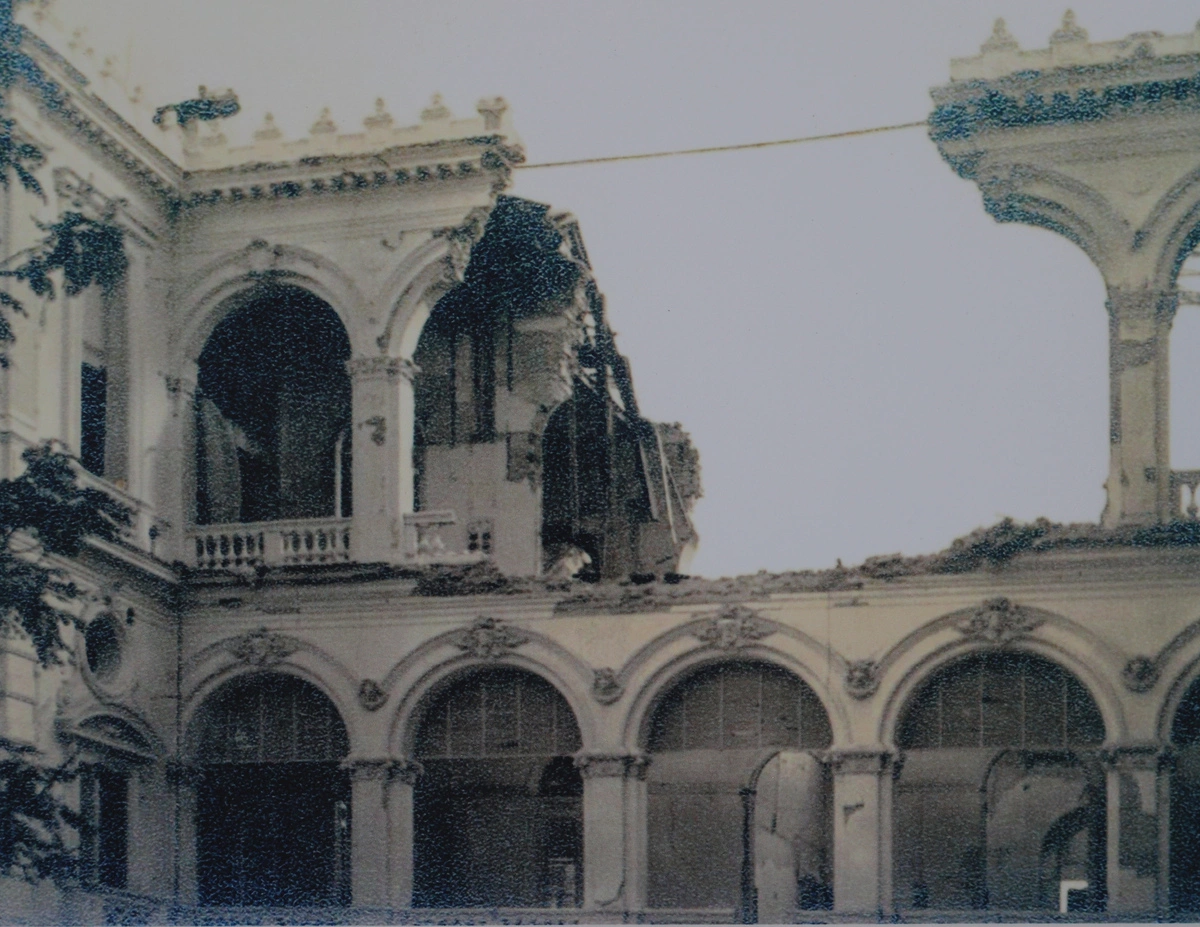
On Feb. 27, 1962, the palace became the target of an attack when two pilots from the Republic of Vietnam Air Force, Pham Phu Quoc and Nguyen Van Cu, bombed the compound. The aerial strike caused extensive structural destruction, leaving the building's left wing severely ruined and beyond the point of viable restoration.
Faced with a structure that could no longer be salvaged, Ngo Dinh Diem, then President of the Republic of Vietnam, ordered the historic building demolished and commissioned acclaimed Vietnamese architect Ngo Viet Thu to design a modernized presidential residence on the exact same site.

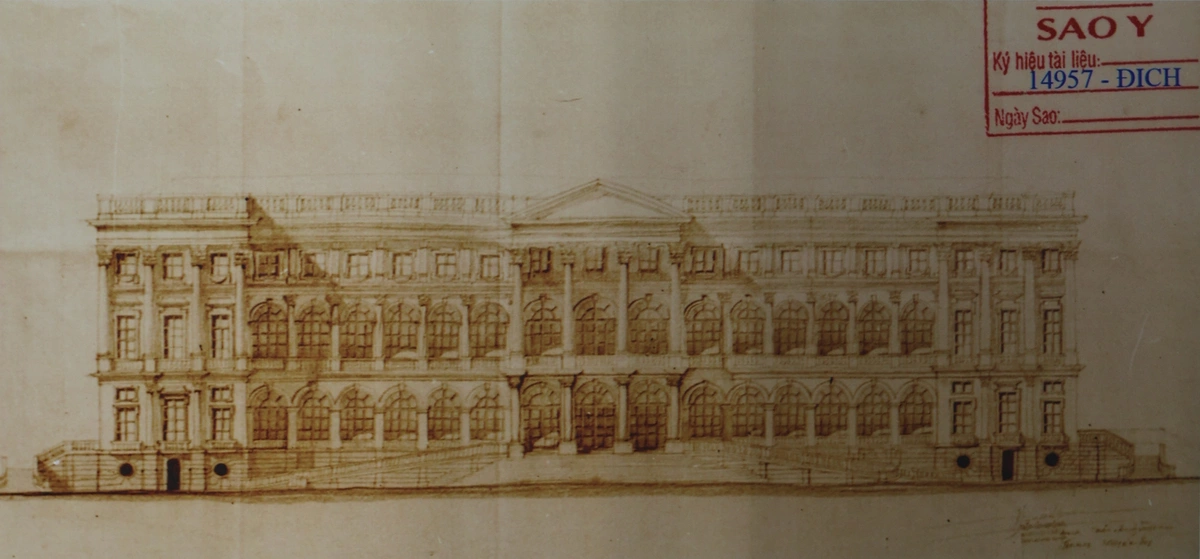
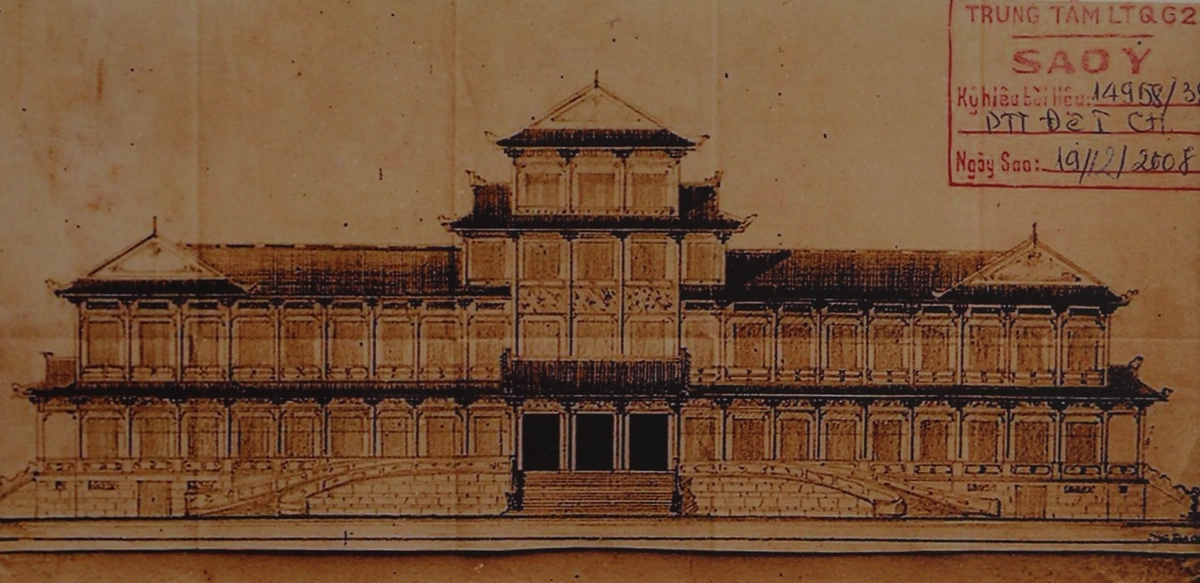
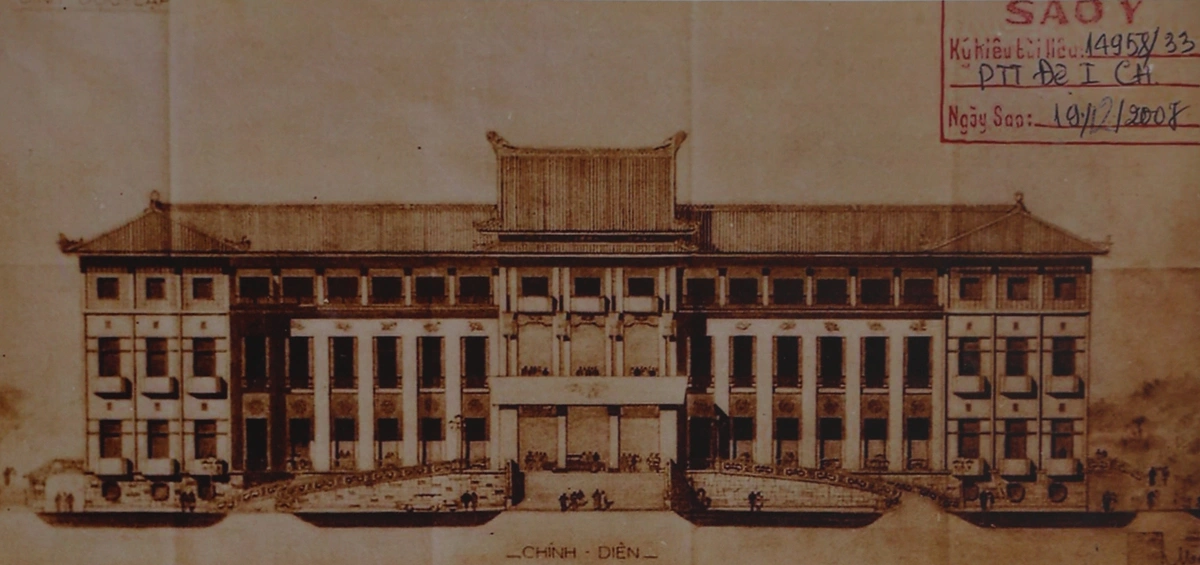
Before architect Ngo Viet Thu and his team's winning design was chosen, several alternative proposals were considered. The current exhibition highlights these early concepts, which primarily fell into two categories: neoclassical and East-West fusion.
To reduce reconstruction costs, the neoclassical proposals incorporated remnants of the original Norodom Palace while maintaining the balance, grandeur, and symmetry of classical design. Notable submissions in this style came from the architectural teams of Hoa-Thang-Nhac, Bui Quang Hanh-Le Van Lam, and Tran Van Duong.
Conversely, the East-West fusion approach championed an Indochinese aesthetic heavily influenced by traditional Vietnamese architecture. Prominent designs in this category were submitted by architects Hoang Hung, Nguyen Ba Chi, and Nguyen Manh Bao.

A modernist design drawing by Thu on display at the exhibition.
The master plan for Independence Palace, developed by a design team comprising Thu, sculptor Nguyen Van The and their collaborators, was completed in Da Lat in December 1962. Construction had begun earlier, on July 1, 1962.
Influenced by the modernist architectural movement, the team combined reinforced concrete structures with restrained design elements while incorporating Eastern philosophy, Vietnamese decorative arts and architectural solutions suited to the tropical climate of southern Vietnam.
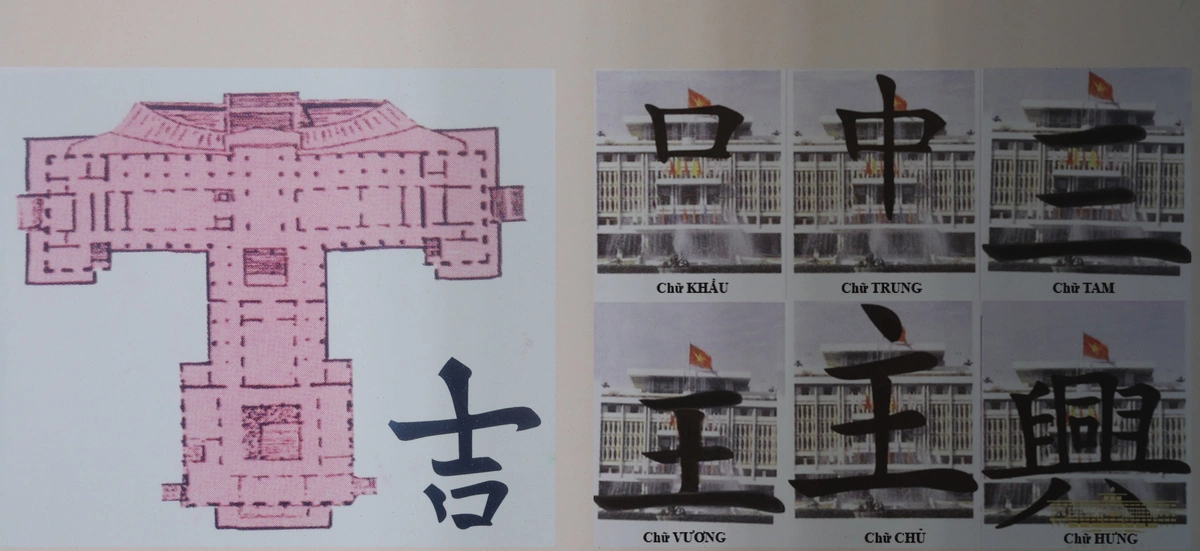

Deeply rooted in Eastern philosophy, the palace’s design is heavily influenced by the visual strokes of traditional Chinese characters. The overall layout forms the character Cat, symbolizing good fortune and prosperity. Throughout the structure, architectural lines subtly evoke the characters Khau, Tam, Vuong, Chu, and Hung, collectively representing ideals of free speech, national sovereignty, independence, and aspirations for a thriving nation.
A drawing on display highlights the palace's main building, which sits at the center of the complex. Featuring a T-shaped floor plan, the structure covers 4,500 sq.m and reaches a height of 26 m.
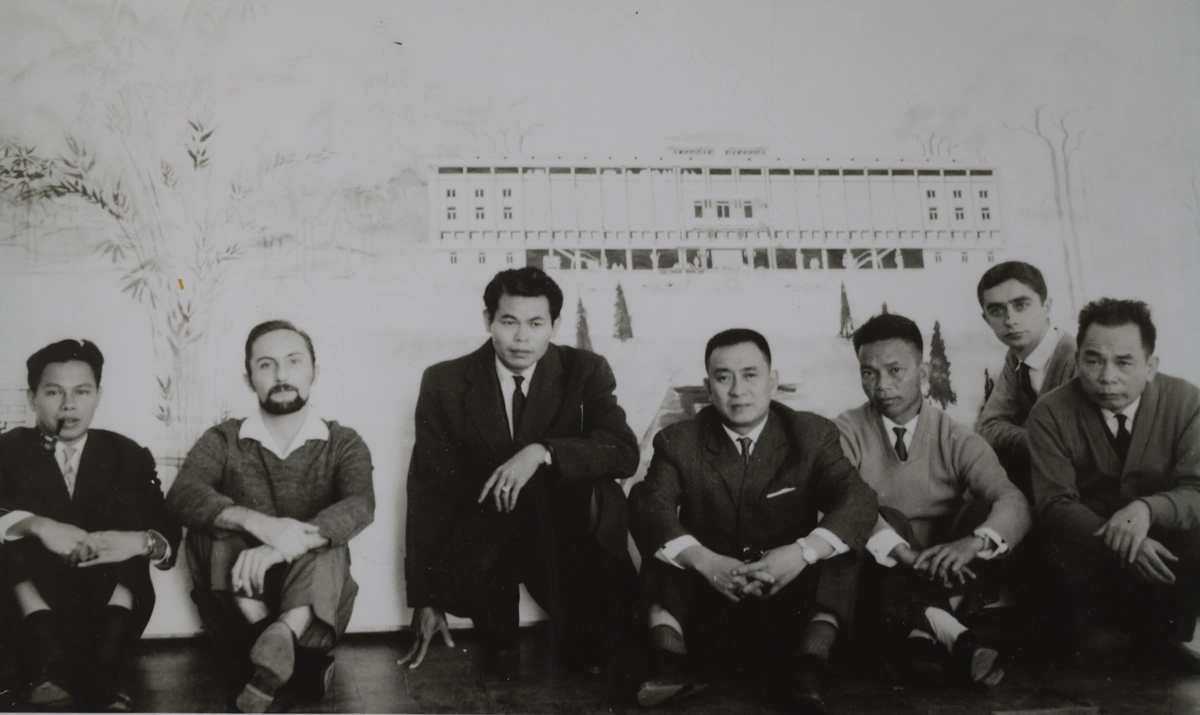
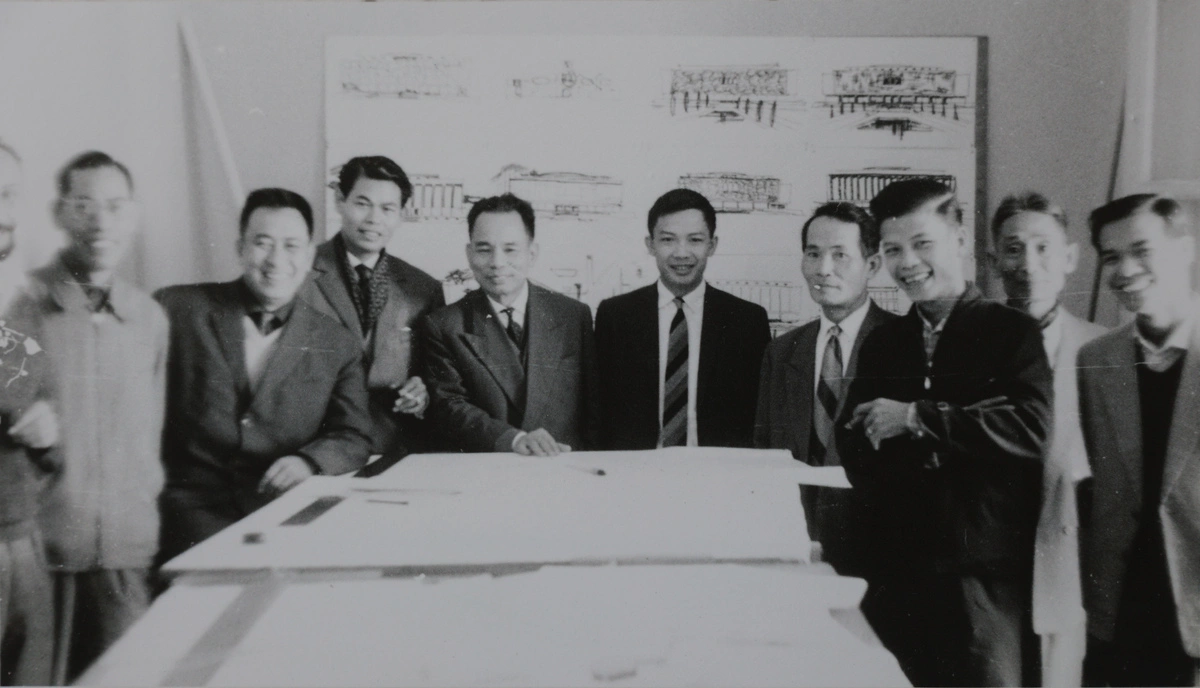
Architect Thu's design team (third from left in the first photograph) poses in front of the architectural plans.
Thu graduated in architecture from the École des Beaux-Arts in Paris and won the Premier Grand Prix de Rome in 1955. In 1962, he was named an Honorary Fellow of the American Institute of Architects (Hon. FAIA).
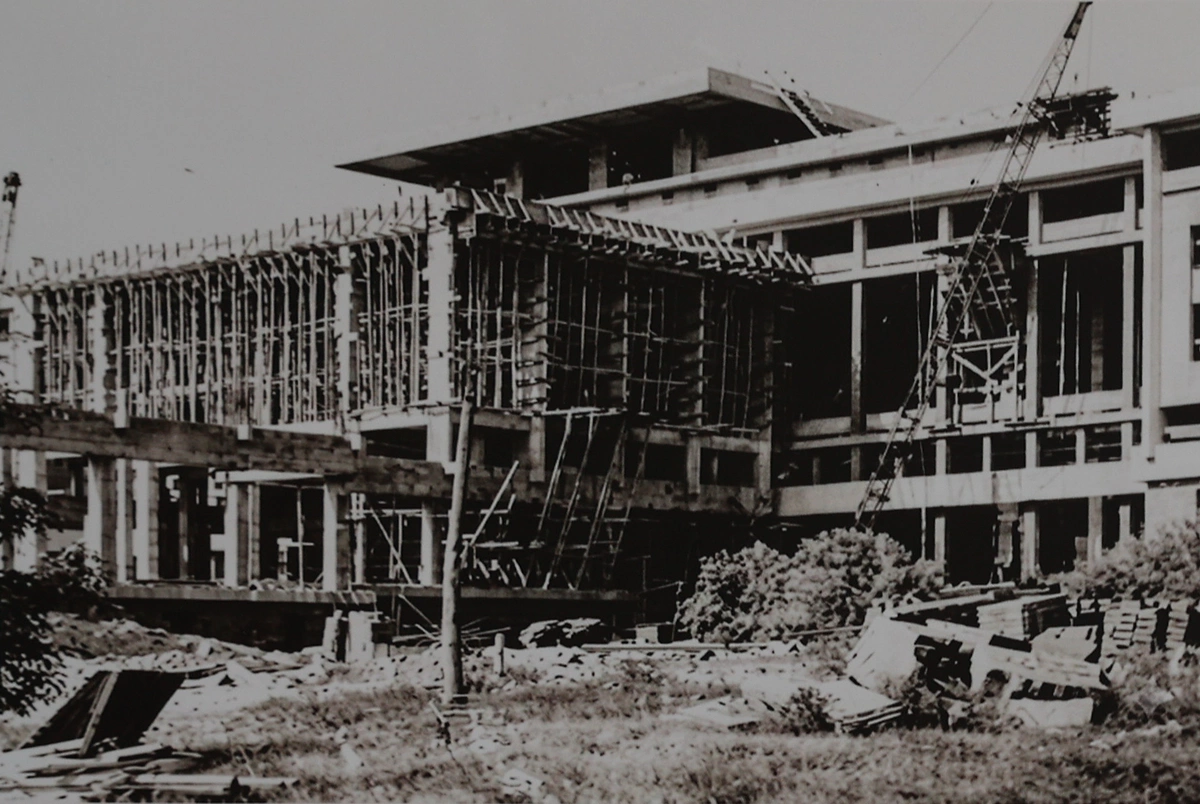
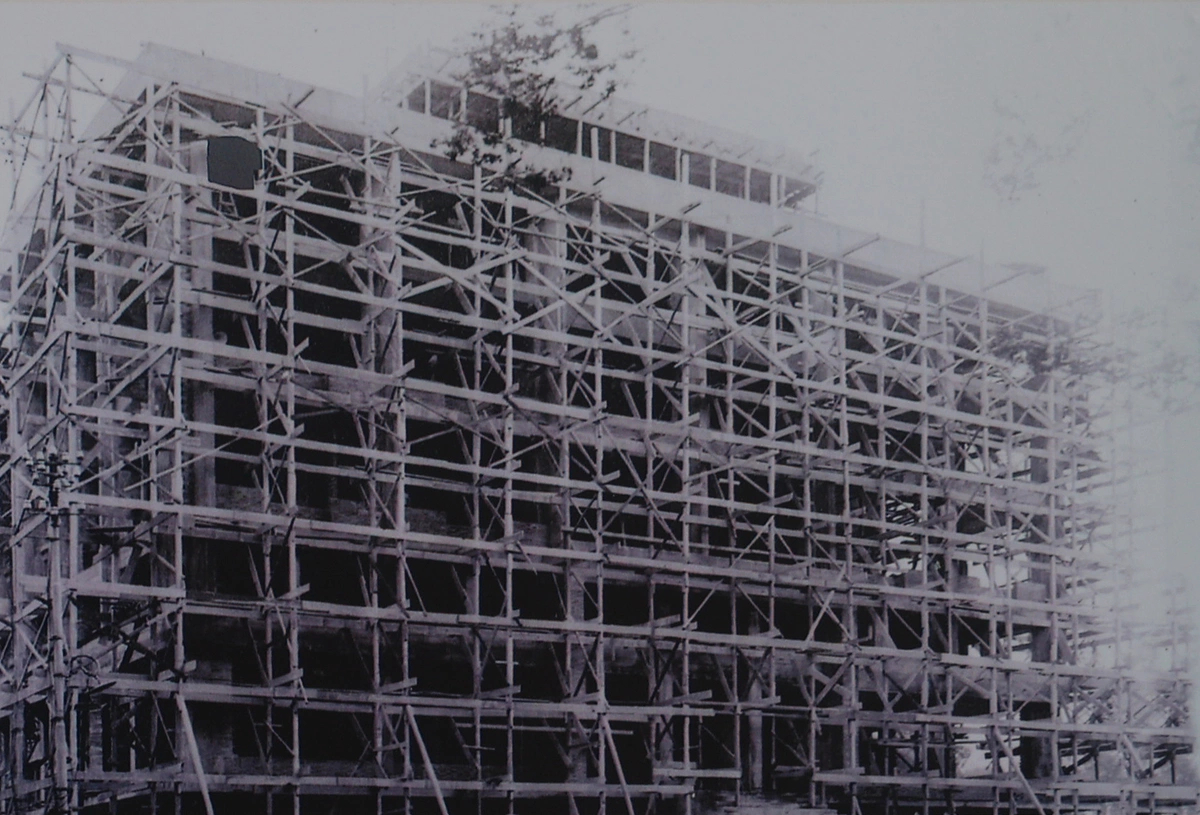

The Independence Palace is pictured under construction between 1963 and 1964. The project was still underway when President Ngo Dinh Diem was assassinated by coup forces on Nov. 2, 1963.
Upon the building's completion, Nguyen Van Thieu, president of the Second Republic of Vietnam, presided over its inauguration on Oct. 31, 1966, and resided there from October 1967 until April 1975.
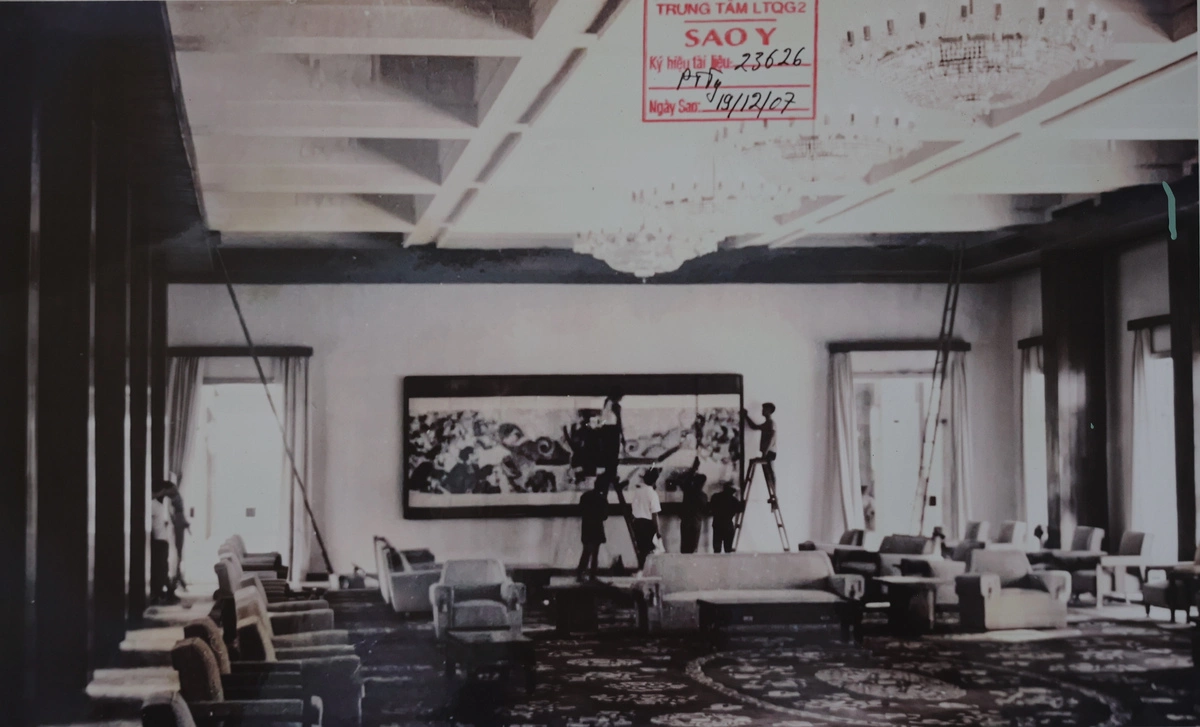

The Independence Palace is pictured in 1955 alongside a view of how the landmark looks today.
On April 30, 1975, tanks of the liberation forces breached the palace gates. The raising of the National Liberation Front of South Vietnam flag over the building marked the reunification of the country.
In 1976, the palace was designated as a special national historical and cultural relic. Now managed by the Reunification Hall under the Government Office, the landmark remains a prominent historical site that continues to attract large numbers of visitors.

To mark the 60th anniversary of the building's inauguration, an exhibition titled "From Blueprint to Icon" opened on Oct. 28.
The showcase is divided into four thematic sections: "Architectural Foundations," which explores Norodom Palace as its predecessor; the building's historical development; its unique architectural language; and its interior spaces and heritage symbolism.
The exhibition will run until Jan. 28, 2027. It is open daily from 7 a.m. to 6 p.m., with admission priced at VND40,000 (US$1.60) per person.
KioskNews shows a cleaned-up reading view extracted from the publisher’s page — the original always lives on their site, not ours.