SPEAK UP: ‘Optogenetics’ wins Nobel for illuminating eyes for the blind (1/2) 諾貝爾生醫獎「光遺傳」 點亮盲人希望(上)
A: The 2026 Nobel Prize in Medicine was awarded to US doctor Karl Deisseroth, German scientists Peter Hegemann and Georg Nagel for their breakthrough in the field of “optogenetics.”
B: Wow, what kind of research is so impressive?
A: They discovered a protein “channelrhodopsin” in a green alga, and introduced the protein gene into nerve cells, where the light switched on and off a nerve signal.
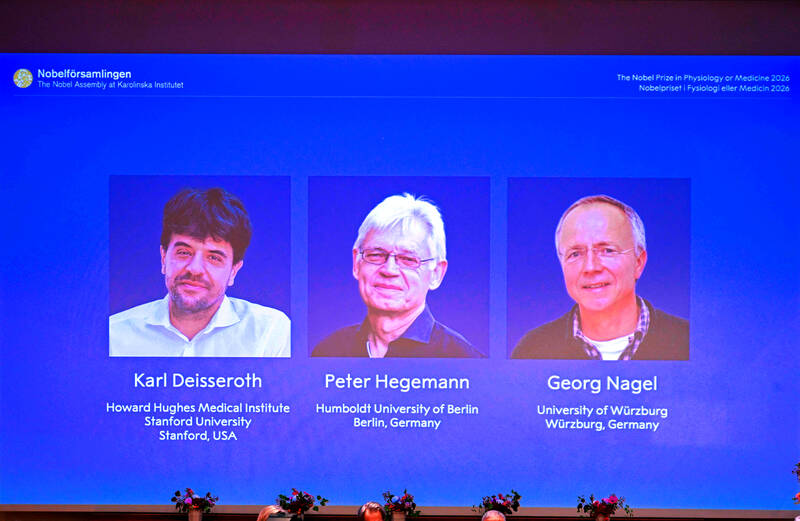
2026 Nobel Prize laureates Karl Deisseroth, from left, Peter Hegemann and Georg Nagel. 2026 諾貝爾獎得主戴瑟羅斯(左起)、赫吉曼、內格爾。
Photo: AFP 照片:法新社
B: Can vision-impaired individuals regain sight through “optogenetics?”
A: Well, some researchers have injected similar light-responsive protein into patients’ eyes, trying to enable cells to react to light. This offers hope to those suffering eye diseases like “retinitis pigmentosa” (RP).
A: 2026年諾貝爾生醫獎頒給美國醫生戴瑟羅斯、德國科學家赫吉曼和內格爾,以表彰他們在「光遺傳學」領域的突破。
B: 是什麼研究這麼厲害?
A: 他們在某一種綠藻中,發現「光敏感通道蛋白」(通道視紫紅質),將其轉化為能以光線控制神經細胞的開關。
B: 透過「光遺傳學」,視力受損者也能恢復視力嗎?
A: 有研究將類似感光蛋白注射進病患眼中,讓原本不感光的細胞可以感光,為「色素性視網膜炎」(RP)等患者帶來希望!
(By Eddy Chang, Taipei Times/台北時報張迪)
For your information
Language Tip 語文小提示
retinitis pigmentosa (RP) 色素性視網膜炎(視網膜色素病變) retinitis 視網膜炎(retina 視網膜) pigmentosa 色素的(pigment 色素、顏料)
KioskNews shows a cleaned-up reading view extracted from the publisher’s page — the original always lives on their site, not ours.