The bright sparks whose jobs are safe from artificial intelligence
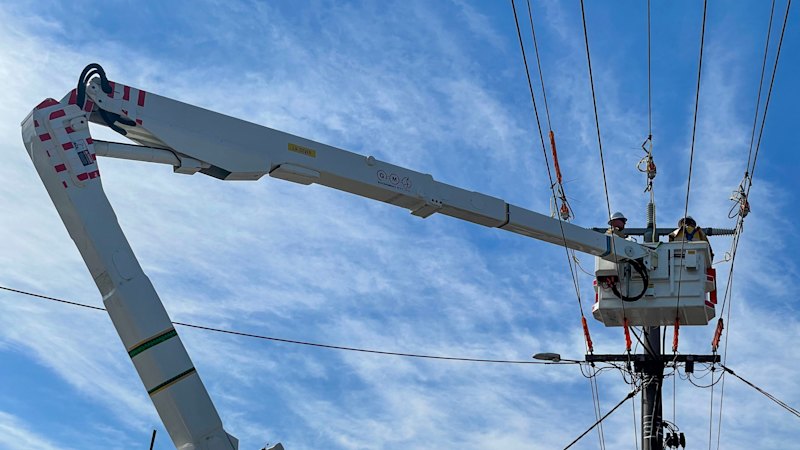
The bright sparks who become electricians battle angry dogs, bitter weather and itty-bitty crawling spaces – and that’s before you get to the constant need to guard against electrocution. But there is one threat tradies’ jobs are fairly safe from: artificial intelligence.
As KPMG economist Terry Rawnsley put it: “It’s at far less risk of being disrupted than your traditional white-collar job. The robots can’t get in there and rewire a house just yet.”
As the Herald’s higher education reporter Sally Rawsthorne reports on Sunday, the number of electricians jumped significantly to 184,000 in 2025. It’s a trend that’s been matched in NSW.
Rawnsley is right: the rapidly changing technology may be able to give anyone a how-to guide to handiwork, but for the moment actual human beings need to do the work, and tradespeople such as Kaitlyn McMahon are valuable.
For university graduates, on the other hand, AI is a double-edged sword. Dario Amodei, the chief executive of the AI behemoth Anthropic behind Claude, warned that 39 per cent of jobs will “fundamentally change” by 2030. Amodei said the technology is so capable it could wipe out half of all white-collar entry-level jobs.
Law firms and accounting giants are adjusting, as are students. Universities are being urged to move away from policing AI and towards teaching AI skills for the workplace.
“AI literacy is rapidly becoming a core workforce capability. This means teaching students how to critically evaluate outputs and apply them strategically and ethically,” RMIT Online director of customer success Anshu Arora said.
While AI might be able to harness all of human intelligence, it also has the capacity to harvest its worst.
As education reporter Emily Kowal revealed on Sunday, for the price of a takeaway lunch ($20) Ben Fitzpatrick used an AI tool to find the Facebook pages of 1780 NSW public schools.
Fitzpatrick is a digital marketing specialist, but he is also a Central Coast parent. He stopped short of downloading photos, but his experiment proved anyone can mass harvest images of schoolchildren, and raised alarm among parents.
The NSW government is alive to the challenges. Education Minister Prue Car has intervened in the HSC, asking the NSW Education Standards Authority to suspend take-home assessments that count towards a student’s marks from next year. The move was partly about addressing the risk of cheating, but also about thinking: there is a risk an over-reliance on AI will short-circuit students’ learning.
Meanwhile, the last NSW budget included $3.46 billion for skills, training and TAFE NSW. As trade jobs become increasingly attractive, given their strength against the AI threat, it’s vital that governments ensure sufficient funding and support for this sector.
It is encouraging to see humans put their hands up to be the next generation of electricians and tradespeople. It serves as a reminder that sometimes there’s no substitute for a human.
Get a weekly wrap of views that will challenge, champion and inform your own. Sign up for our Opinion newsletter.

KioskNews shows a cleaned-up reading view extracted from the publisher’s page — the original always lives on their site, not ours.