Shopping, Lottery, Job Scams: Survey Finds How Indians Fall For Digital Fraud
India's digital economy has changed the way people communicate, shop, bank, work, and access everyday services. But as more of these activities move online, consumers are also encountering different forms of scams.
A new report by the GSM Association (GSMA), a global organisation representing mobile operators and companies across the mobile ecosystem, looks at the types of scams Indian consumers face, how they reach victims, and what happens after they are reported.
The report, "India Consumer Scam Report 2026: Permission Granted, Cases Still Open", is based on a consumer survey conducted by Milieu Insight between July 29 and August 3, 2026.
What scams are Indians facing?
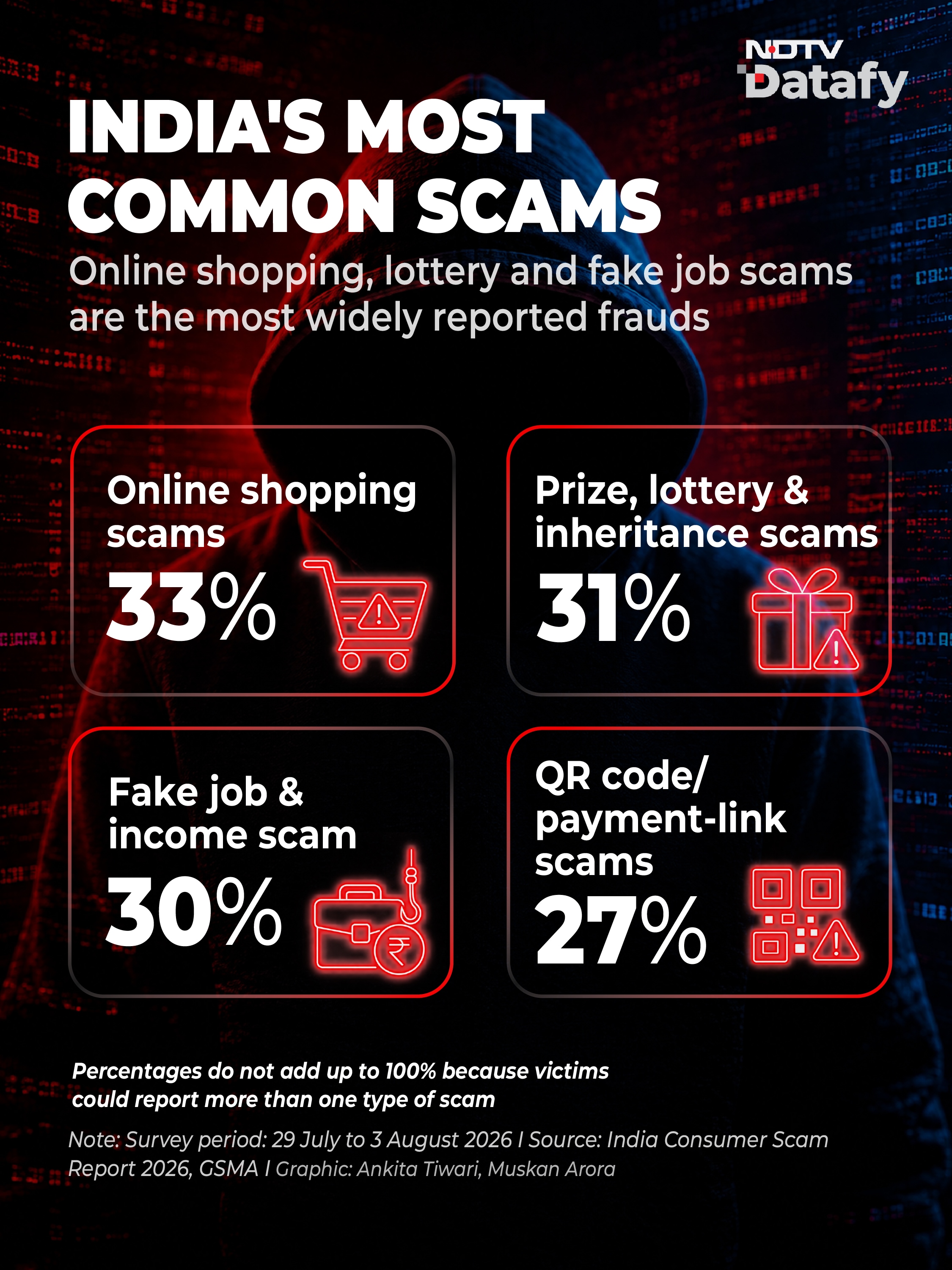
Among the people surveyed who had experienced scams, online shopping was the most commonly reported category, at 33 per cent. Shopping is followed by prize, lottery, and inheritance scams at 31 per cent, job or income scams at 30 per cent, and QR-code or payment-link scams at 27 per cent.
The numbers also show that scams are not tied to a single digital platform. Messaging apps were involved in 42 per cent of scams, followed by social media at 37 per cent and email at 33 per cent. Offline QR codes and payment links were involved in another 21 per cent of cases.
In other words, the same digital ecosystem that makes transactions and communication easier also gives scammers several ways to approach potential victims.
Artificial intelligence is adding another layer to this problem. 89 per cent of Indian consumers surveyed said they had seen AI being used in scams. AI-written messages and fake AI images were each identified by 48 per cent, while 47 per cent had seen fake AI profiles or advertisements and 42 per cent had seen deepfake videos of real people.
READ | Rs 2-Crore Home, Gold Lost: A Cyber Scam In Delhi That Wasn't Just Digital
The survey covered approximately 3,500 adults, including around 500 in India and 3,000 across six ASEAN countries in the region. The findings therefore provide a snapshot of the experiences and perceptions of the people surveyed, rather than a count of scam victims or cases across the country. Percentages do not add up to 100 per cent where respondents could report multiple scam types, use multiple reporting channels, or where different questions have different respondent bases.
Who is being affected?
The survey found that 12 per cent of the surveyors had been scammed in the previous 12 months. Another 39 per cent said they had not been scammed themselves but had seen someone close to them fall victim.
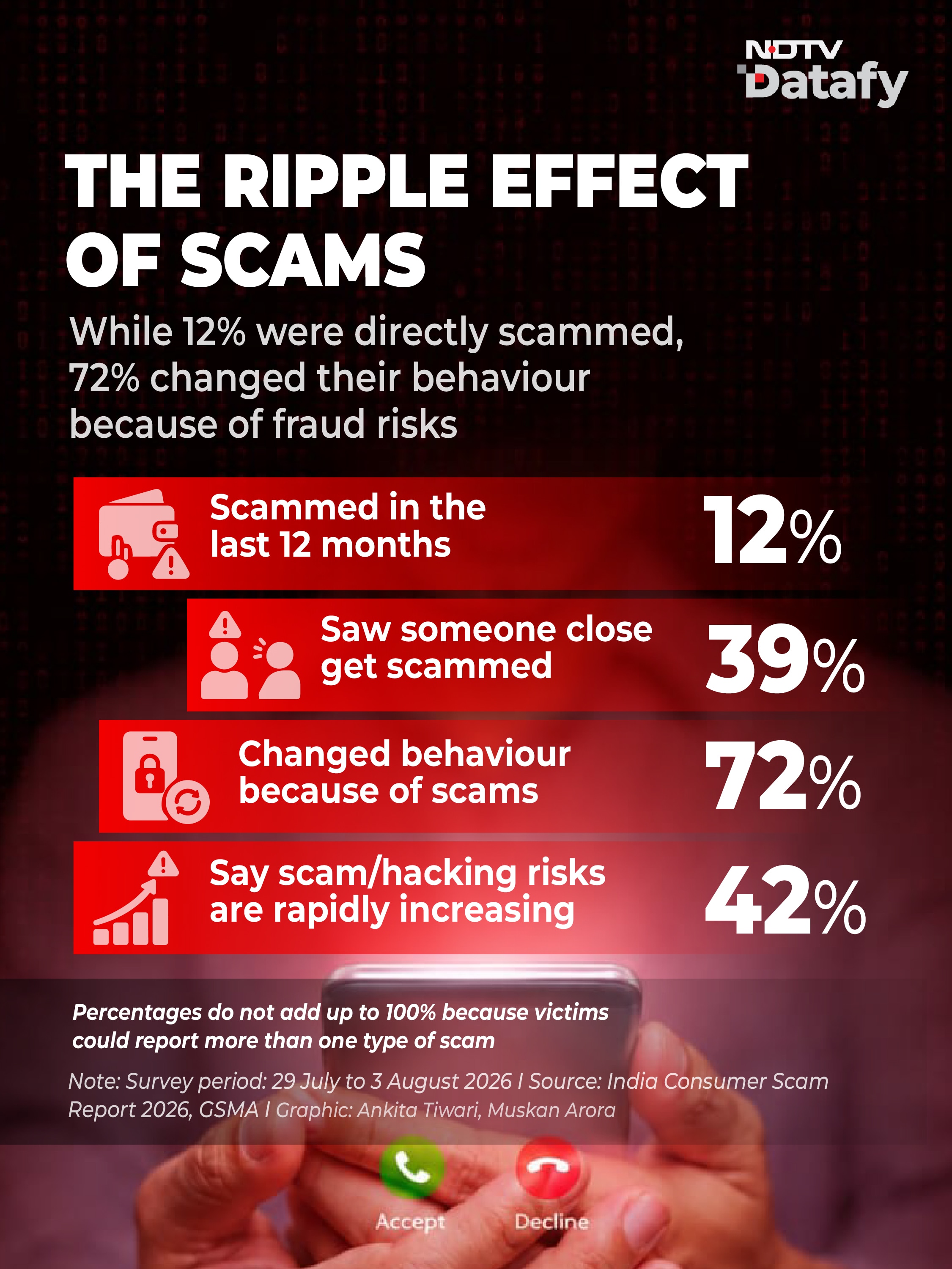
The impact goes beyond direct victims. 72 per cent of consumers said scams had changed their behaviour, either because of their own experience or because someone close to them had been scammed.
Another 42 per cent said the risks from scams and hacking were increasing rapidly.
Consumers are also changing how they protect themselves. Only 5 per cent said they had taken no protective step. Around 37 per cent had installed or upgraded security tools, while 27 per cent said they now call companies back on an official number rather than trust an incoming call or message.
READ | Frozen-Screen UPI Scam: How A Technical 'Glitch' Can Drain Your Bank Account
But being aware of scams is one thing. What happens when someone actually becomes a victim? Do they report it, and who do they turn to?
Do victims report scams?
Most Indian victims do seek help.
86 per cent took their case to at least one organisation, and 65 per cent of organisations were voted as taking responsibility to check the scam.
The police were the most common point of contact, with 49 per cent of victims approaching them.
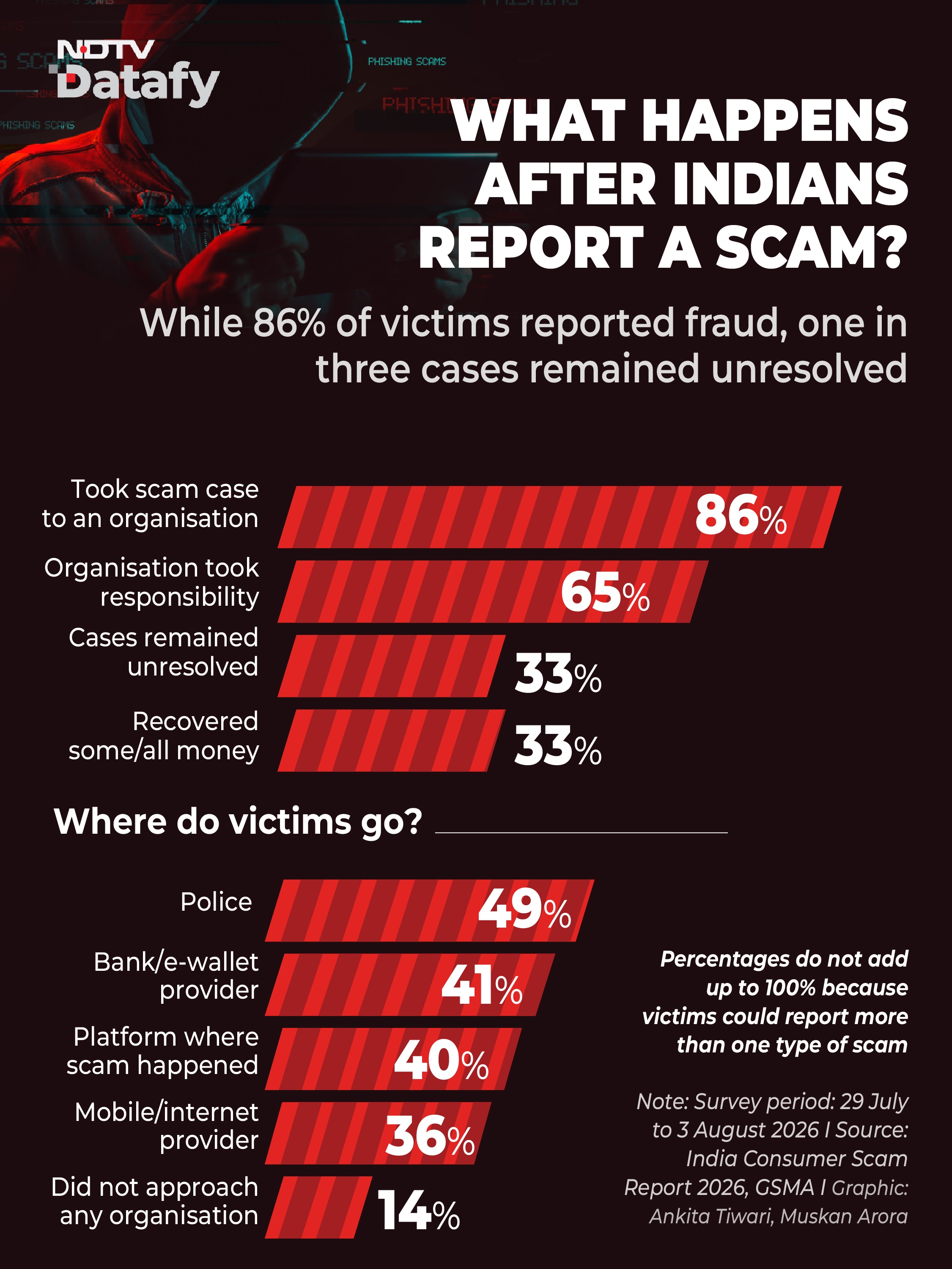
Banks or e-wallet providers followed at 41 per cent, while 40 per cent approached the platform where the scam happened. Another 36 per cent went to their mobile or internet provider.
However, 14 per cent of victims did not approach any organisation, while 7 per cent said they told no one at all.
KioskNews shows a cleaned-up reading view extracted from the publisher’s page — the original always lives on their site, not ours.