Xi’s bay-area vision offers scope for cooperation despite US, Tokyo hurdles: analysts
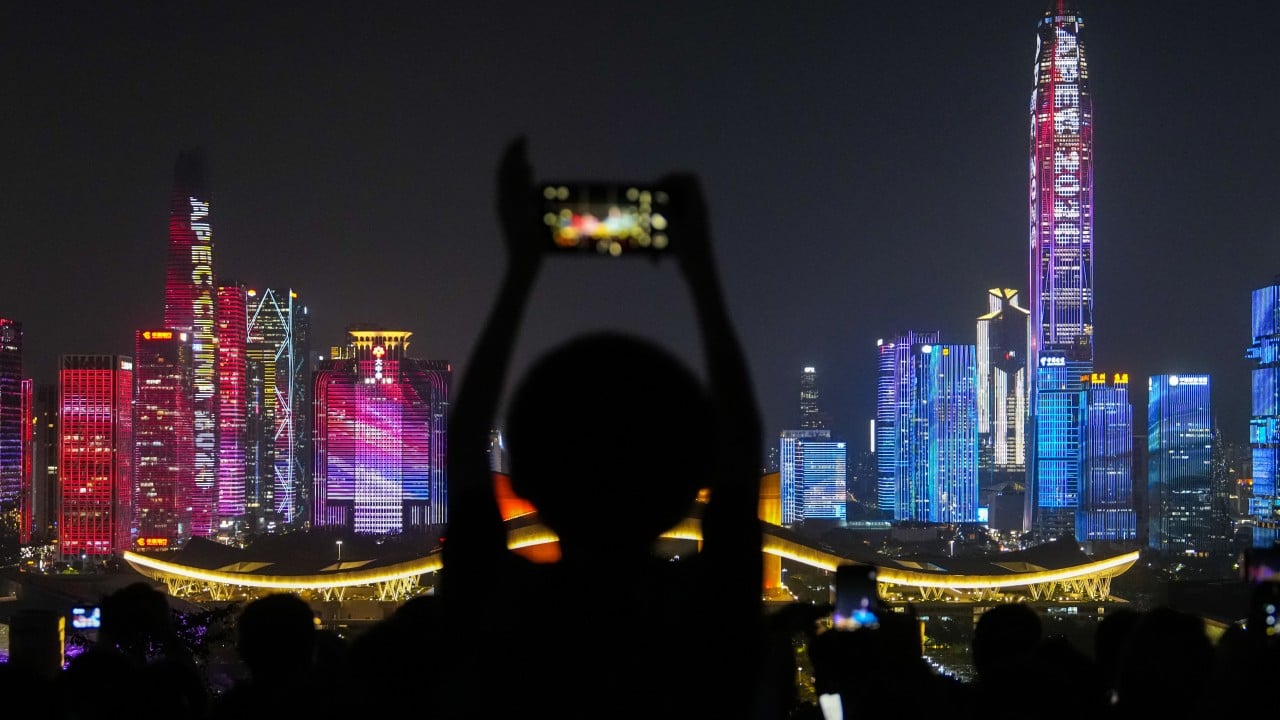
Chinese President Xi Jinping’s call for a global association of bay areas signals a long-term economic vision to the United States and Japan, although geopolitical tensions and difficulty finding common ground pose significant obstacles, observers have said.
Xi proposed closer economic links between major coastal innovation centres across the globe at the Apec CEO Summit in Shenzhen on Wednesday. He said closer cooperation between major metropolitan bay areas could deepen economic ties and help drive regional growth.
The president, who revealed his ambition during his keynote speech at the opening of the CEO Summit, described the Asia-Pacific region as home to the world’s most important bay areas, which were notable for their “open and interconnected economies”. He highlighted that Shenzhen was part of the Guangdong-Hong Kong-Macau Greater Bay Area.
In addition to the Greater Bay Area, which comprises Hong Kong, Macau and nine cities in Guangdong, three other prominent bay areas include San Francisco, New York and Tokyo.
Xi’s comments were delivered against a high-stakes diplomatic backdrop. On the sidelines of the Apec Economic Leaders’ Meeting, Xi, US President Donald Trump and Russian leader Vladimir Putin held their first trilateral meeting and issued a declaration reaffirming that “a nuclear war cannot be won and must never be fought”.
Japanese Prime Minister Sanae Takaichi attended the leaders’ meeting of the 21-member Asia-Pacific Economic Cooperation (Apec) forum. Her visit marked the first trip to China by a Japanese prime minister in seven years.
Michael Walsh, managing director and company secretary of the Pacific Basin Economic Council, a regional NGO, said Xi’s proposal was both a diplomatic gesture and a potentially achievable economic initiative.
“US-China and China-Japan tensions create real obstacles, particularly in sensitive technologies. But they need not prevent cooperation where interests align,” he said.
“Success will depend on trust, genuine international participation and tangible benefits – not another talking shop.”
International relations expert Wilson Chan Wai-shun of the Chinese University of Hong Kong said Xi might have wanted people to focus more on regional cooperation.
“He also seized this opportunity to promote the international status of the Greater Bay Area and let more people know about it,” Chan said.
“The formation of a global association of bay areas can bypass national taboos and sensitive and political issues between nations.”
Walsh also said he believed Xi’s call represented an opportunity for Hong Kong to strengthen its role as an international connector.
“Our financial, legal and professional services, together with the Greater Bay Area’s innovation and manufacturing strengths, could help businesses build partnerships with other major economic hubs,” he said.
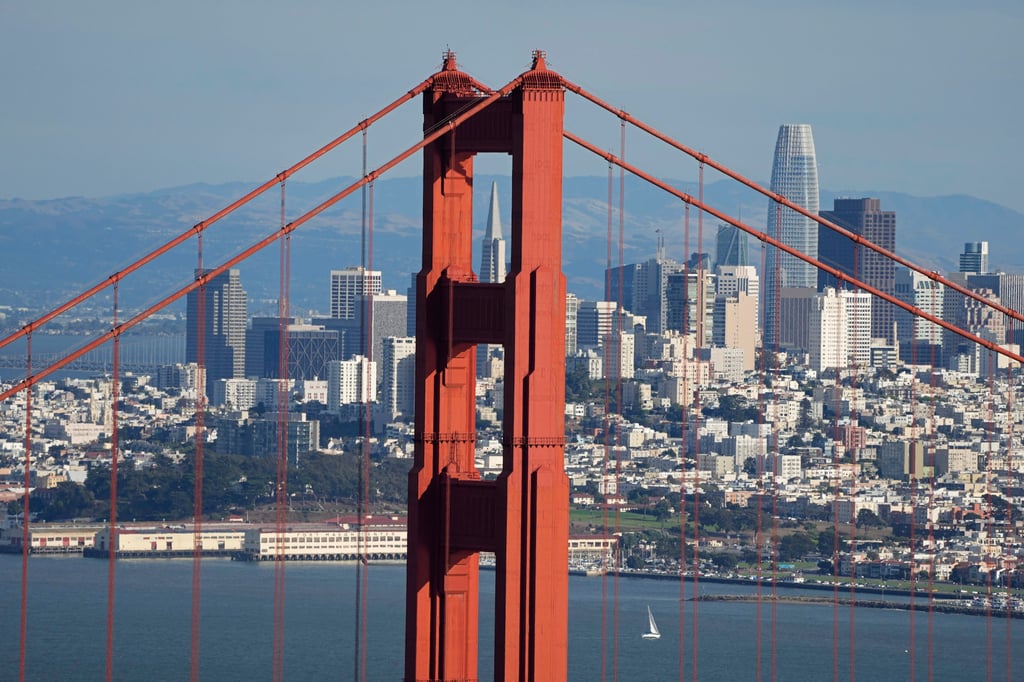
He said Hong Kong should work with its Greater Bay Area counterparts to convene interested businesses, universities and city representatives from places such as Tokyo Bay and the San Francisco Bay Area.
“The priority should be practical pilot projects – in areas such as green finance, sustainable ports and SME market access – with clear timelines and measurable outcomes,” he said.
“Transparent governance and respect for intellectual property, data rules and export controls will be essential.”
Secretary for Commerce and Economic Development Algernon Yau Ying-wah, who also travelled to the Apec events, said on Saturday that working with other bay areas would create opportunities for Hong Kong in trade and talent exchanges.
Yau said the 11 cities in the Greater Bay Area had their own strengths and characteristics, with Hong Kong helping mainland enterprises go global and Macau providing a gateway for Portuguese-speaking countries.
“If all four bay areas could work together, we could facilitate global economic development,” he said. “As a ‘superconnector’ and ‘super value-adder’, how Hong Kong can connect the bay area economy both internally and externally is very important.”
He added that he had visited the San Francisco Bay Area two years ago with Guangdong authorities to explore potential collaboration.
Chan, of Chinese University, said that Hong Kong, as an international financial centre and a separate customs zone in the Greater Bay Area, could fully utilise its role to enhance its export and import activities with different bay areas, thus promoting economic cooperation between them.
But he argued it was very difficult and complex to carry out the plan.
“The biggest question is to establish an institutional framework that can link different bay areas to build up consensus or agreements mutually beneficial to each other,” he said.
“It’s difficult to integrate different bay areas as an economic entity.”
Lau Siu-kai, a consultant for the semi-official Chinese Association of Hong Kong and Macau Studies think tank, said the US was the biggest hurdle to an association of bay areas amid intense competition between nations, especially in the area of technology.
“This is a long-term vision of Xi. Different bay areas can enhance their cooperation. But for forming a global association, I really cannot see any linkages between them, as a bay area only benefits the neighbourhood activities of its own nation,” he said.
“So far they do not have economic cooperation. Rather, I only see competition between them, especially on innovative technology. I cannot see that there are any areas of cooperation beneficial to any of them.
“The biggest obstacle is the US, which tries to suppress China, especially in the development of innovation such as chips. Hong Kong alone cannot do much to help.”
02:48
Xi, Trump and Putin meet for historic trilateral summit at Shenzhen Apec meeting
James Chau, president of Hong Kong-based NGO the China-United States Exchange Foundation, said the city could test US interest in Beijing’s proposed global bay-area network by bringing American and Chinese institutions together on specific projects before asking them to join a formal association.
“Political differences and legal restrictions are real. A credible initiative must respect those boundaries, not look for ways around them,” Chau said.
He viewed the proposal as an attempt by Beijing to turn renewed engagement with Washington into practical cooperation.
Whether US universities, businesses and local institutions would take part would depend on their having a say in choosing projects and seeing benefits for their communities, he added.
“Interest in a particular project is also different from a decision to join an association,” he said.
Chau suggested Hong Kong invite willing institutions from the Greater Bay Area and the San Francisco Bay Area to select two projects and aim to deliver results within a year.
Healthy ageing and coastal resilience were possible areas of cooperation, he said, with Hong Kong helping the partners work out how to fund and run the projects.
KioskNews shows a cleaned-up reading view extracted from the publisher’s page — the original always lives on their site, not ours.