‘Not particularly prudent’: Trump’s Israel aid cutoff draws criticism from Republicans

US President Donald Trump announced on Election Day, November 3, that the United States would stop providing nearly $4 billion in annual military assistance to Israel by the end of 2026, citing Israel’s economic strength and the political criticism Republicans face over American support for the Jewish state.
For more stories from The Media Line go to themedialine.org
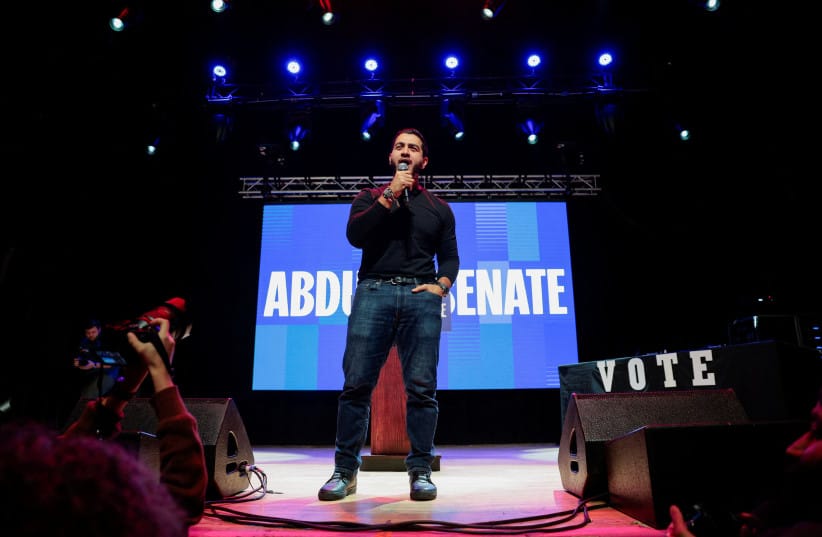
Speaking by telephone on “Fox & Friends,” Trump singled out Michigan Democratic Senate candidate Abdul El-Sayed, a prominent critic of unconditional military assistance to Israel, as he explained why the funding should end.
By early Wednesday, El-Sayed had defeated Republican Mike Rogers to become the first Muslim elected to the US Senate, and Democrats had won control of both chambers of Congress.
For Israel, the announcement raised questions about how its government would replace financing already built into defense planning, whether the transition could be accomplished without cuts to civilian services, and whether Trump could implement the decision on the timetable he described.
The existing US-Israel memorandum of understanding provides $3.8 billion annually through fiscal 2028, including $3.3 billion in Foreign Military Financing and $500 million for joint missile-defense programs. Trump rounded that amount to $4 billion and said he and Prime Minister Benjamin Netanyahu had agreed months earlier to end the assistance.
“We were giving them $4 billion, we are, but it gets cut off at the end of the year,” the president said. He did not explain how the cutoff would operate under existing funding arrangements.
“Why should we suffer the slings from lunatics like an El-Sayed when they don’t need it?” Trump asked, arguing that Israel could afford to buy its own weapons.
El-Sayed, a former Michigan public health official, has opposed unconditional military assistance to Israel and argued that American tax revenue should instead support domestic priorities.
In his victory speech in Detroit, he returned to that position.
“We want our taxes spent here, for schools here, and healthcare here, and infrastructure here,” he said. “We don’t want our money sent to do apartheid, or genocide, or war.”
Although Trump and El-Sayed offered different reasons for ending assistance, their positions converged on whether American taxpayers should continue financing Israel’s military purchases.
Israeli experts question Trump’s timing
Ofir Dayan, a researcher at the Institute for National Security Studies (INSS) specializing in antisemitism and delegitimization, said the timing suggested Trump believed the assistance was hurting Republican candidates.
“The military aid is very problematic in terms of public opinion,” she told The Media Line.
Dayan argued that American assistance exposes Israel to criticism from voters opposed to foreign entanglements and from Democrats who believe US financing should give Washington greater influence over Israeli military conduct. She interpreted the announcement as an attempt to improve Republicans’ electoral position rather than a coincidence of scheduling.
Marc Zell, chairman of Republicans Overseas Israel, also questioned the timing.
“I think it was not particularly prudent for him to do so,” he told The Media Line, suggesting that the president may have sought to weaken El-Sayed’s support before voting ended.
Zell stressed that Netanyahu had proposed a 10-year transition away from American financial assistance, not an immediate cutoff. He said it remained unclear whether Trump intended, or could unilaterally implement, the accelerated timetable he announced.
Despite the Democratic takeover of Congress, Zell rejected the assumption that the election results would automatically mean a severe setback for Israel.
He pointed to the president’s substantial foreign-policy authority while acknowledging that congressional control over spending could become a constraint, particularly on funding for military operations against Iran.
What the US-Israel aid agreement covers
The current $38 billion memorandum, signed in 2016 under former president Barack Obama, covers fiscal years 2019 through 2028 and expires on September 30, 2028. Although it establishes a political commitment between the two governments, it is not a legally binding treaty.
According to the Congressional Research Service, Congress retains authority over appropriations, and the memorandum’s funding commitments are subject to congressional approval. Ending the arrangement early would raise questions about appropriated funds, outstanding commitments and the future structure of bilateral defense cooperation.
The memorandum’s two main funding components serve different purposes. Foreign Military Financing helps Israel buy American defense equipment and services, while the missile-defense allocation supports cooperative programs. Ending direct financing would not necessarily require ending joint missile-defense development and production.
American military assistance to Israel predates the current agreement by decades. The Obama administration’s $38 billion package succeeded a $30 billion arrangement negotiated under former president George W. Bush. Under former president Bill Clinton, an earlier agreement began phasing out economic assistance while increasing military support.
Netanyahu had already advocated reducing Israel’s dependence on American grants. In January, he said he wanted to phase out US military aid over the following decade.
On May 6, Israel’s Defense Ministry announced formal negotiations with Washington on a successor framework emphasizing joint research, development, investment and weapons production. The ministry described the proposed arrangement as a gradual transition toward a reciprocal partnership.
Dayan warned that an abrupt halt would carry consequences beyond Israel’s defense budget.
The annual assistance package, she said, is a visible demonstration of American commitment to Israel’s security. Other governments watch that relationship closely, and a perceived weakening of Washington’s commitment could encourage countries already considering restrictions on Israel to go further.
She did not describe the announcement as a sanction, saying she believed Trump understood himself to be accepting Netanyahu’s request.
Dayan also argued that Israel needed to address the deterioration of its standing among Americans rather than relying solely on traditional arguments for military assistance.
“It’s not preserving Israel’s standing with the American public. It’s rebuilding it,” she said.
Dayan, who grew up in a West Bank settlement and remains supportive of settlements, also called for action against settler violence. She argued that arresting those responsible for what she described as Jewish terrorism would serve Israel’s own values while helping repair its reputation among Americans.
How US aid to Israel supports American industry
US Ambassador to Israel Mike Huckabee has defended American assistance by pointing to the businesses and security interests it supports.
In a June statement, he wrote: “Israel receives $3.8 billion but spends far more than that buying US military goods.”
Huckabee also cited intelligence and technological benefits, while describing a future memorandum that would replace traditional assistance with a trade-based relationship.
Much of Israel’s Foreign Military Financing is spent on American equipment and services, supporting US defense manufacturers and their suppliers. Those domestic economic benefits do not eliminate the cost to the federal budget, but ending grants would not necessarily mean an equivalent drop in orders from American manufacturers. That would depend partly on Israel’s ability to keep buying equipment with its own funds.
The industrial relationship is illustrated by a defense manufacturing facility in East Camden, Arkansas.
In November 2025, RTX announced a $1.25 billion contract for its Raytheon-Rafael joint venture to supply Israel with Tamir interceptors used by the Iron Dome missile-defense system.
A newly opened factory in East Camden was established to manufacture those missiles and the SkyHunter variant for the US Marine Corps’ Medium-Range Intercept Capability program.
The arrangement supports an American military requirement as well as Israeli procurement. Trump’s announcement does not establish that either production line would stop, but it illustrates the interconnected defense industries that any new funding arrangement would need to accommodate.

Can Israel replace US military aid?
For Israel, taking on the financial burden of military purchases would not end its dependence on Washington.
The Congressional Research Service notes that Israel’s fighter jet fleet is almost entirely American-made and that its missile-defense capabilities depend significantly on US cooperation.
Dayan said American diplomatic backing, weapons cooperation and the US commitment to preserving Israel’s qualitative military edge could not simply be replaced by another major power. She favored expanding joint defense projects rather than abruptly dismantling the existing financial arrangement.
The prospect of reduced assistance also tests Netanyahu’s ambition to expand Israel’s domestic weapons production.
At a Finance Ministry conference in Jerusalem on September 15, 2025, the prime minister warned that restrictions on foreign weapons supplies could force Israel to develop greater industrial independence.
He said the country might need to become “Athens and super-Sparta,” combining technological and economic capabilities with greater military self-sufficiency.
The following day, he clarified that his remarks concerned defense independence rather than closing the broader Israeli economy to international trade.
Professor Elise Brezis, an economist at Bar-Ilan University, said Israel could develop additional domestic defense production, potentially generating products for export and reducing its reliance on foreign suppliers. But cutting external financial support before sufficient replacement capacity was available would create unnecessary economic strain, she warned.
Brezis favored a timetable that would allow Israel to address its security requirements, expand production and adjust its finances before losing American funding.
She also cautioned against treating Trump’s announcement as a done deal.
“I don’t believe that this will happen,” she told The Media Line, expressing hope that negotiations would preserve support or establish a slower reduction.
If an abrupt cutoff did take effect, Brezis expected Israel to face difficult budget choices, potentially including military and civilian spending cuts, higher taxes and additional borrowing.
Dayan likewise said replacing American assistance would be possible but difficult, potentially requiring Israelis to accept a lower standard of living.
Brezis identified roads, expanded rail services and education among the areas that could lose funding as military spending competed with civilian priorities for Israeli tax revenue.
Developing new weapons industries could eventually reduce dependence on foreign suppliers and create additional economic opportunities, she said. But building factories, expanding production capacity and developing the necessary technology would take time.
KioskNews shows a cleaned-up reading view extracted from the publisher’s page — the original always lives on their site, not ours.