Genocide ruling leaves Suu Kyi and Myanmar’s NUG with a tougher pitch abroad

Aung San Suu Kyi defended Myanmar’s army at the UN’s top court in 2019. Seven years later, that same court has now ruled that the army committed genocide against the Rohingya.
Analysts say the ruling will change little inside the Southeast Asian nation, where roughly 90 per cent of the population is Buddhist and hostility towards the mostly Muslim ethnic minority group is deep rooted. Yet it may spell the end of any political comeback hopes for Suu Kyi.
The International Court of Justice, the UN body that settles disputes between states, ruled on November 19 that Myanmar had committed genocide with its military crackdown on the Rohingya in 2017.
Nine judges backed the ruling with six opposed, the court’s president Yuji Iwasawa said.
Ronan Lee, a researcher specialising in Myanmar, the Rohingya and Southeast Asian politics at Loughborough University London, called the genocide ruling a “serious setback” for Suu Kyi and for the National Unity Government (NUG) that was formed by her pro-democracy allies shortly after the 2021 coup that ousted her from office.
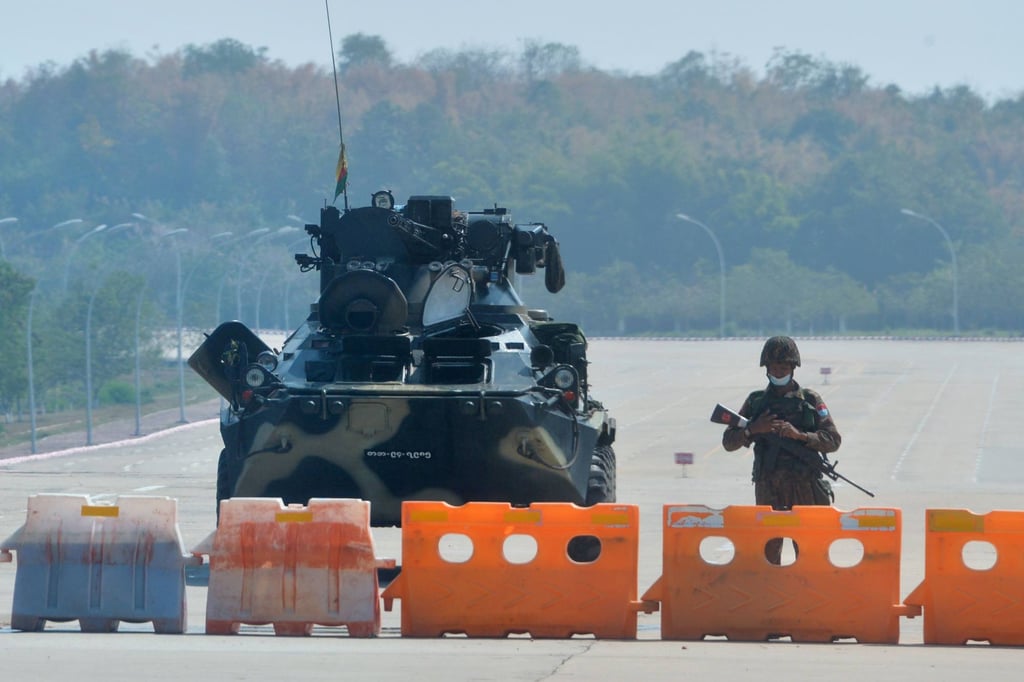
The NUG is a shadow administration, or government-in-exile, created by elected lawmakers, ethnic minority leaders and anti-coup groups that claims legitimacy from the 2020 general election, which the military overturned when it seized power.
Suu Kyi, 81, is currently under house arrest. She once held the title of state counsellor, effectively the civilian head of government, and personally defended Myanmar before the ICJ in December 2019, arguing that the army was fighting an insurgency and had no genocidal intent.
The court this month rejected that argument, saying in its ruling that the only reasonable inference was that the army had the “intention to destroy” a substantial part of the Rohingya population in the north of Rakhine state, with its actions going far beyond targeting militants and making no distinction between fighters and civilians.
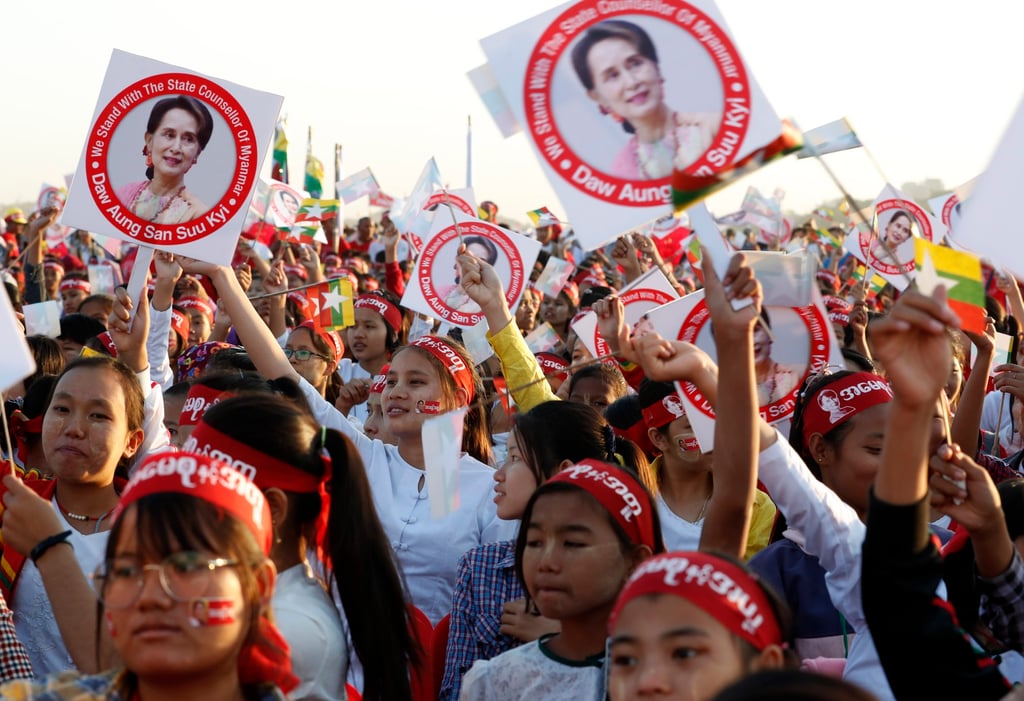
A tarnished legacy
By appearing at the ICJ, Suu Kyi had “tied her political future to the outcome of the case”, said Lee, who wrote the 2021 book Myanmar’s Rohingya Genocide.
“Now that a finding of genocide has been made, she will rightly be regarded as complicit with the crimes she defended,” he said, adding that her “political legacy will now always be tarnished by her defence of a genocide against the Rohingya” and by the images of her appearing at the ICJ to speak for the military.
International support had long been one of Suu Kyi’s biggest political assets, but “that will now almost certainly evaporate”, Lee said, as few governments would want to be seen supporting someone who so strongly defended conduct the court called genocidal.
He further predicted that the NUG’s international standing would be “dramatically weakened”, noting that foreign support was crucial to its hopes of one day replacing Myanmar’s current military-backed administration.
She will rightly be regarded as complicit with the crimes she defended
“Damage to Suu Kyi’s reputation will be sorely felt by the NUG,” Lee said, adding: “Myanmar’s military will be delighted they can share the international blame for the genocide with Suu Kyi.”
The NUG has for years been competing for international recognition with the government of coup leader turned president, Min Aung Hlaing, who took office in April following a heavily restricted and widely criticised election that took place amid an ongoing civil war in the country.
In the years since the coup, the NUG has formalised alliances with several ethnic armed groups, expanded local governance provision in the territories where it maintains a presence and lobbied other Southeast Asian nations not to recognise the military-backed administration.
Welcoming this month’s ruling, the NUG said it respected the court’s authority and called the decision “an important moment for the Rohingya people and the pursuit of justice in Myanmar”.
It said in a statement that justice for the Rohingya must go hand in hand with ending the current government’s “continuing violence against civilians throughout Myanmar”, citing in particular its “air strikes, killings, arbitrary detention, torture and forced displacement”.
Nay San Lwin, co-chair of the Arakan Rohingya National Council, which represents Rohingya communities worldwide, called the NUG’s statement a “positive shift” but said action needed to follow.
“Its international legitimacy will depend on it,” he said, referring to the NUG.
Deep-rooted hostility
Within Myanmar, “anti-Rohingya sentiment is widespread”, Nay San Lwin said – pointing to extensive support for the military when Suu Kyi appeared before the ICJ in 2019 and the fact that only a handful of civil society groups in the country came out in support of this month’s genocide ruling.
Suu Kyi’s domestic standing was therefore unlikely to suffer, he said, while also predicting that her reputation would be much more “difficult to repair” among those abroad who had seen her as something of a human rights icon.
Hostility towards the Rohingya stems partly from Myanmar’s colonial history, amid a pervasive narrative that they are recent arrivals rather than an indigenous group. Historians and analysts have disputed the claim that Rohingya are solely descendants of colonial-era immigrants.
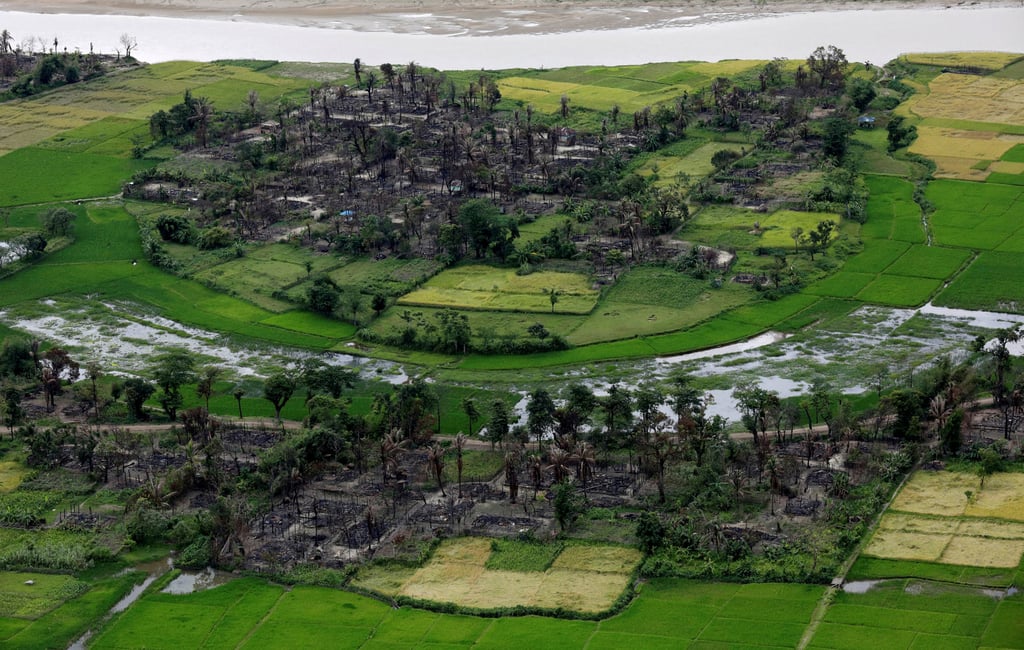
The military’s 2017 campaign against the Rohingya, which began the year before and which it later characterised as “clearance operations”, drove more than 700,000 members of the ethnic minority group from Rakhine state into Bangladesh. They arrived with reports of mass killings of adults and children, gang rapes and burnt-down villages.
Suu Kyi also served as foreign minister at that time, in a power-sharing agreement with the military. Her civilian government did not command the crackdown, but she and her administration did support the military’s framing of it and limited access to outside investigators, routinely rejecting international criticism and calling the matter an internal affair.
02:25
UN top court rules Myanmar committed genocide against Rohingya
According to the United Nations and human rights groups, her government in 2017 denied access to members of a fact-finding mission organised by the UN Human Rights Council, forcing it to conduct its investigation from outside the country.
Nay San Lwin said true justice for the Rohingya would require more than a declaration of genocide.
It would also have to entail restored citizenship, recognition of ethnic identity and guaranteed fundamental rights, as well as “the opportunity to return to our homeland safely, voluntarily and with dignity, where we can live in peace and equality”, he said.
The Rohingya activist further urged the international community to support the UN cohurt’s ruling, saying it now “enables every country to act”.
The UN and human rights groups have likewise called for the restoration of the Rohinyga’s citizenship and legal rights in Myanmar, safe and voluntary repatriation with international guarantees, legal accountability and reparations.
KioskNews shows a cleaned-up reading view extracted from the publisher’s page — the original always lives on their site, not ours.