A pivotal election for Hong Kong’s future

On November 22, Hong Kong’s Election Committee subsector elections were held for the second time since the electoral reforms of 2021. The voting produced a committee that will play a pivotal role in shaping the city’s political and economic future.
Coming after the launch of Hong Kong’s first five-year plan and ahead of the 30th anniversary of its reunification with China, the elections offered a glimpse into the priorities, aspirations and political dynamics that will shape Hong Kong in the years ahead.
Candidates in 31 contested subsectors engaged in spirited debates over how to make Hong Kong more successful in the next phase of national and regional development. The discussions reflected a growing recognition that the city faces significant challenges and unprecedented opportunities as it repositions itself within the country’s development strategy.
The Election Committee carries considerable responsibilities. It will choose Hong Kong’s leader in the seventh chief executive election in March, select Hong Kong’s deputies to the National People’s Congress in 2028 and return 40 members to the Legislative Council through the Election Committee constituency. Therefore, its composition will have implications well beyond next year.
This is particularly important as Hong Kong stands on the threshold of a major economic transformation. The development of the Northern Metropolis, a new growth belt intended to expand the city’s technology and higher education sectors, will require vision, expertise and a close understanding of developments across the border. The committee needs members who understand emerging technologies, can advise on integration with the mainland’s technology hubs and can help mainland enterprises expand their international reach. Representatives elected from the industry, technology, education and national organisations subsectors are well placed to help reach these objectives.
The Election Committee’s structure, which comprises 40 subsectors across five categories, is intended to promote diversity, balance and inclusiveness. Judging by the voting results, the committee has broadly succeeded in bringing together representatives from a wide cross-section of society.
The significance of such diversity should not be underestimated. The Election Committee provides a platform through which different sectors of society can contribute their perspectives in the selection of Hong Kong’s leaders.
In the business subsectors, several political veterans, including those who retired from the Legislative Council last year, secured re-election with strong support. Their success suggests that experience, industry connections and a record of representing business interests continue to carry considerable weight with voters.
A similar logic applies to the professional subsectors, although the calculations can be more delicate. Voters generally favour candidates who can advance the standing and prospects of their professions.
The grass roots and district committee subsectors, meanwhile, operate according to rather different dynamics. Candidates contesting grass-roots association seats might initially find it difficult to identify and reach all eligible voters. In such circumstances, a sustained record of community service and established relationships within grass-roots organisations can make a decisive difference.
The district committee subsectors provide another illustration of how local networks shape electoral outcomes. Their electorate comprises members of the District Fight Crime, District Fire Safety and Area Committees across the New Territories, Kowloon and Hong Kong Island. As several hundred members are spread out across the city, candidates are often competing against others whose performance and commitment are familiar to voters.
Hard work, good relationships and an effective campaign all matter. The results broadly reflected these informal but important criteria. Several older members who were less active or failed to campaign effectively lost their seats, while younger candidates who campaigned energetically managed to break through. This points to a degree of generational renewal within the district-based political network.
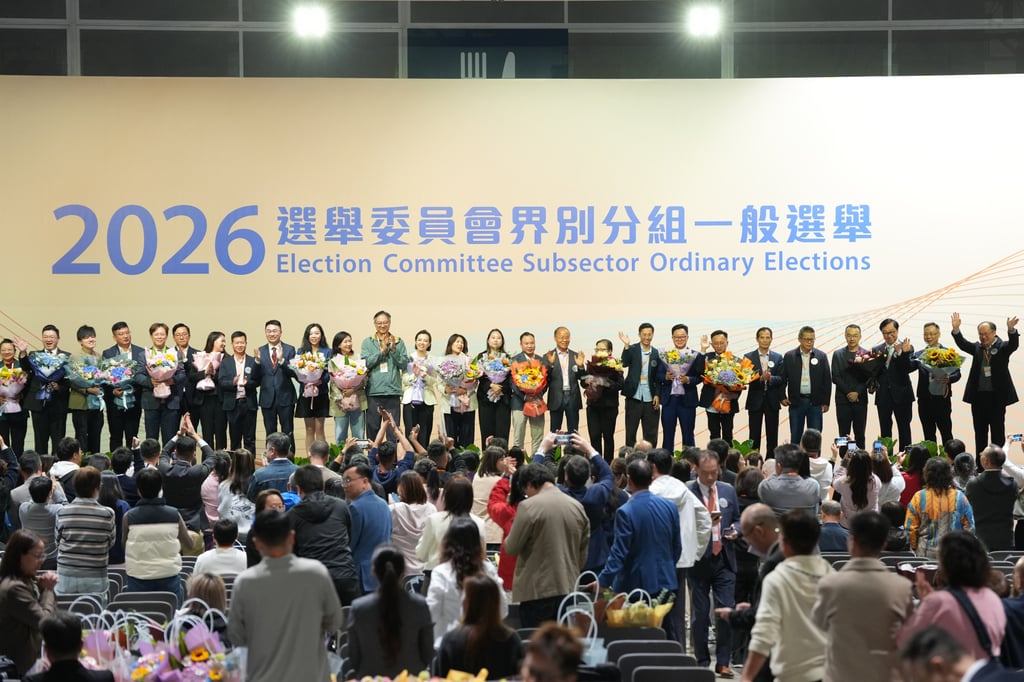
The election also indicated the relative strength of Hong Kong’s political parties and their organisational networks. The Democratic Alliance for the Betterment and Progress of Hong Kong (DAB) emerged as the biggest winner, with an estimated total of more than 100 seats. Its strong presence in grass-roots organisations and district committees clearly worked to its advantage. The Federation of Trade Unions (FTU) secured an estimated 79 seats.
These figures suggest the DAB and FTU will remain the two most influential political forces within the Election Committee. Their extensive grass-roots networks and organisational reach provide them with advantages that smaller parties could find difficult to replicate in the short term.
That said, smaller parties should not be discouraged. Political influence is not determined by numbers alone; nor is the balance of power immutable. Building a stronger political presence takes time, particularly through cultivating new talent and developing a sustainable base of support across District Councils, the Legislative Council, the Chinese People’s Political Consultative Conference and the NPC.
Ultimately, the ability to contribute constructive ideas, identify emerging issues and deliver results can matter as much as the number of seats a party commands. A smaller party with capable people and a clear sense of purpose can still punch above its weight.
The refreshed Election Committee will help steer Hong Kong through an important transition. Its members must look beyond the immediate interests of their respective sectors and consider the wider challenges and opportunities facing the city. As Hong Kong seeks to strengthen its position as an international financial and business centre while developing new engines of growth in technology, innovation and higher education, the quality of leadership and the ability to work across sectors will be crucial.
The election has provided a broad-based committee with a substantial reservoir of experience, expertise and community connections. The test now is whether its members can translate these strengths into a shared vision for Hong Kong’s future. At this pivotal moment, that is precisely what the city needs.
KioskNews shows a cleaned-up reading view extracted from the publisher’s page — the original always lives on their site, not ours.