Economy set to worsen, with higher unemployment and weaker growth on the way, Jim Chalmers reveals
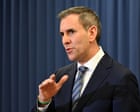
Jim Chalmers has revealed December’s mid-year budget update will project weaker growth and higher unemployment, as economists warn of a difficult six months ahead for the Australian economy.
Two days after a senior Reserve Bank official foreshadowed the potential for another interest rate hike in under two weeks’ time, the treasurer in a speech on Friday morning will say “higher inflation is putting people under pressure, tighter monetary policy is weighing on domestic activity, and we can see that in the softening of the labour market”.
“Treasury is in the process of revising all the numbers for the mid-year update,” Chalmers will say, according to speech extracts seen by Guardian Australia.
“Higher interest rates and higher inflation are likely to mean softer growth and slightly higher unemployment.”
With the Albanese government already suffering the fallout from its ambitious tax reforms, the deteriorating economic situation will be a further blow to Labor and Chalmers’ popularity into the new year.
Australian households are deeply pessimistic about the outlook, and Jonathan Kearns, the chief economist at Challenger, said “things have to get worse before they get better”.
Sign up for Guardian Australia’s Politics, really newsletter here
Jobs data last week showed unemployment reached 4.7% in September, the highest in nearly five years. Despite this, financial markets on Thursday lifted the probability of a Melbourne Cup day rate hike to nearly 60%, according to ANZ.
Kearns said the full impact of this year’s four interest rate hikes were yet to fully flow through to the economy – and that was before the prospect of a fifth.
“The unemployment rate will increase further from here, and we are yet to see the full decline in housing prices, so they are two pretty high-profile things that will impact how people feel about the economy,” he said.
“We could be seeing unemployment at 5%, and that will be a difficult threshold for the government.”
ANZ economists on Thursday said they now expected capital city home prices to eventually fall by 13.5% – a record peak-to-trough fall – before regaining some ground in 2028.
With little end in sight for the Middle East conflict, high fuel costs could also be a pain for motorists through the festive season and summer holidays.
Sally Auld, NAB’s chief economist, agreed that “the next six to nine months will be pretty challenging”.
after newsletter promotion
“Growth needs to slow. The RBA is facing an inflation challenge that’s worse than they thought it would be as recently as August,” Auld said.
By this time next year, however, the economy should be sailing in smoother waters.
“Hopefully by that point we should have lower inflation than we have today,” Auld said. “That would be a step in the right direction.”
The government will hope for an economic tailwind ahead of the next federal election in 2028.
But Kearns said Chalmers’ policy options were limited for now, as any additional cost-of-living relief threatened to exacerbate the inflation challenge.
“The challenge is that the government has been criticised, and probably fairly, for contributing to inflation through high government spending.
“But if they pull back on government spending to reduce inflation, they will be gonged for contributing to the rise in unemployment.”
KioskNews shows a cleaned-up reading view extracted from the publisher’s page — the original always lives on their site, not ours.