Canada’s population no longer declining after StatCan raises its count for every province
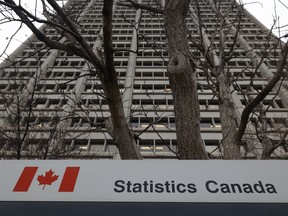
New counting methods introduced by Statistics Canada have added 17,000 more people to New Brunswick’s population, according to numbers released by the bureau this month.
Sign In or Create an Account
The people weren’t hiding. It’s just that the national agency is rolling out a new method of counting non-permanent residents, effective this month for its latest release of data, which covers the period to July 1. But data for the province has been rewritten all the way back to 2021. And the new numbers change what was thought to be a population decline into an increase.
According to StatsCan, using the new method, the number of New Brunswickers reached 883,522 people on July 1. That’s up from just 866,497 in April under the previous method, making the increase 17,025 over that period.

Get a dash of perspective along with the trending news of the day in a very readable format.
By signing up you consent to receive the above newsletter from Postmedia Network Inc.
A welcome email is on its way. If you don't see it, please check your junk folder.
The next issue of NP Posted will soon be in your inbox.
We encountered an issue signing you up. Please try again
The new method has also been applied to the province’s population data dating back to July 1, 2021. As a result, three straight quarters of population decline in the province (something that hadn’t happened in 20 years) turned into two quarters of modest growth, and just one of slight decline.
When the April 1 data was changed to reflect the new method, it showed a population of 878,549, meaning the July numbers represented an increase of 4,973 people.
In a release, Statistics Canada referred to the change as two adjustments “to more accurately measure the presence of permit holders in Canada.”
The first adjustment now draws information from Canada Border Services Agency to count non-permanent residents whose permits have expired but, due to wait times, remain in the country while their extension application is being processed.
The second anticipates permit extensions that are not yet reflected in data from Immigration, Refugees and Citizenship Canada that is available when its population estimates are produced.
“It’s good news if you’re New Brunswick,” economist Richard Saillant said in an interview last week. “It’s a big revision in the sense that there’s more people and population growth than we thought.”
However, he added: “I wouldn’t expect it to continue given Ottawa’s plans … the broader trend is still one toward a dramatic slowdown in population numbers.”
That’s because Canada has moved to reduce the number of immigrants it allows into the country. Permanent resident admissions have been capped at 380,000 for the next three years, after rising from 272,000 to 484,000 in the period from 2015 to 2024.
The country’s population was estimated at 41,798,407 on July 1 of this year, up just 189,425 people from a year earlier. That’s the lowest annual growth in since the Second World War, the agency said.
As a percentage, the annual growth was just 0.5 per cent, making that the lowest figure since the 0.3 per cent increase from 1915 to 1916.
But even that was higher than the numbers delivered under the previous method of counting. Those suggested that Canada had actually lost 236,000 people between last July and April 2026.
New Brunswick’s population grew by 8,811 people or one per cent over the year, twice the average for Canada as a whole, and tied for second place among provinces with Saskatchewan. Only Alberta had higher numbers, with a growth of 1.5 per cent.
Our website is the place for the latest breaking news, exclusive scoops, longreads and provocative commentary. Please bookmark nationalpost.com and sign up for our newsletters here.
Join the Conversation
This website uses cookies to personalize your content (including ads), and allows us to analyze our traffic. Read more about cookies here. By continuing to use our site, you agree to our Terms of Use and Privacy Policy.
KioskNews shows a cleaned-up reading view extracted from the publisher’s page — the original always lives on their site, not ours.