6 Near-Perfect Netflix Series Nobody Remembers

Sign in to your Collider account
Netflix has one of the most impressive streaming libraries. The platform is basically known for turning a new series into the biggest thing on television practically overnight. The only problem is that a lot of other promising titles get buried under all that noise. It would make sense if these forgotten shows were nothing special, but plenty of shows on the streamer deserved more recognition than they got.
In hindsight, the strangest thing about revisiting them is realizing how little their quality had to do with how long they stayed relevant. These six Netflix shows may no longer dominate the conversation, but they are just too good to be forgotten.
1 ‘Santa Clarita Diet’ (2017–2019)

Santa Clarita Diet is downright ridiculous, but it works. The Netflix comedy follows suburban real-estate agents Sheila (Drew Barrymore) and Joel Hammond (Timothy Olyphant), whose painfully ordinary life in Santa Clarita turns upside down when Sheila suddenly dies, comes back to life, and develops an appetite for human flesh. Instead of immediately turning the story into a traditional zombie comedy, the series explores how Joel tries to help his wife navigate her new condition without completely destroying their family in the process. Their dynamic is arguably the most important part of the show.
Sheila’s transformation gives her a new sense of confidence and freedom, but Joel becomes increasingly stressed trying to keep up with the bodies, lies, and absurd problems piling up around them. Despite that, the show grounds itself in the fact that these two truly love each other and are willing to go to borderline insane lengths to make their relationship work. Santa Clarita Diet is over-the-top, but the violence and chaos never take away from the central family dynamic at the core of the story. The series deserved far more than three seasons, and its cancellation still feels like a knife in the back.
2 ‘Alias Grace’ (2017)

It’s impossible to believe that a show like Alias Grace just faded away despite its gripping premise. The miniseries, based on Margaret Atwood’s novel and inspired by a real 19th-century murder case, follows Irish immigrant and domestic servant Grace Marks (Sarah Gadon), who has spent years in prison after being convicted of murdering her employer Thomas Kinnear (Paul Gross) and his housekeeper Nancy Montgomery (Anna Paquin). Now, Grace claims to have no memory of these murders, so psychiatrist Dr. Simon Jordan (Edward Holcroft) begins interviewing her in hopes of determining what actually happened. This means that everything the audience knows essentially comes through Grace herself.
She tells Jordan about immigrating to Canada, working as a servant, her friendship with Mary Whitney (Rebecca Liddiard), and her eventual arrival at Kinnear’s household. What’s interesting is how the series keeps recreating these memories for the audience without ever guaranteeing that Grace is telling the whole truth. She can appear vulnerable yet calculating in the same breath, which prevents the viewers from ever fully trusting her. This looming uncertainty is far more interesting than a simple whodunit. Eventually, Jordan and the audience realize that everyone around Grace has created their own version of her, but the truth is that she can never be reduced to just one of them. Six episodes later, the case definitely feels clearer, but Grace remains just as difficult to pin down, which is the brilliance of the show.
Collider Exclusive · Sci-Fi Survival Quiz Which Sci-Fi World Would You Survive? The Matrix · Mad Max · Blade Runner · Dune · Star Wars
Five universes. Five completely different ways the future went wrong — or sideways, or up in flames. Only one of them is the world your instincts were built for. Eight questions will figure out which dystopia, galaxy, or desert wasteland you'd actually make it out of alive.
💊The Matrix
🔥Mad Max
🌧️Blade Runner
🏜️Dune
🚀Star Wars
01
You sense something is deeply wrong with the world around you. What do you do? The first instinct is often the truest one.
02
In a world of scarcity, what resource do you guard most fiercely? What we protect reveals what we believe survival actually requires.
03
What kind of threat keeps you up at night? Fear is useful data — if you're honest about what you're actually afraid of.
04
How do you deal with authority you don't trust? Every dystopia has a power structure. Your approach to it determines everything.
05
Which environment could you actually endure long-term? Survival isn't just tactical — it's physical, psychological, and very much about where you are.
06
Who do you want in your corner when things fall apart? The company you keep is the clearest signal of who you actually are.
07
Where do you draw the line — if you draw one at all? Every survivor eventually faces a moment that tests what they're actually made of.
08
What would actually make survival worth it? Staying alive is one thing. Having a reason to is another.
Your Fate Has Been Calculated You'd Survive In…
Your answers point to the world your instincts were built for. This is the universe your temperament, your survival instincts, and your particular brand of stubbornness were made for.
The Matrix
You took the red pill a long time ago — probably before anyone offered it to you. You're a systems thinker who can't help but notice the seams in things.
- You're drawn to understanding how the system works before figuring out how to break it.
- You'd find the Resistance, or it would find you — your instinct for spotting constructed realities is the machines' worst nightmare.
- You function best when you have access to information and the freedom to act on it.
- The Matrix built an airtight prison. You'd be the one probing the walls for the door.
Mad Max
The wasteland doesn't reward the clever or the well-connected — it rewards those who are hard to kill and harder to break. That's you.
- You don't need comfort, community, or a cause larger than the next horizon.
- You need a vehicle, a clear threat, and enough fuel to outrun it — and you're good at all three.
- You are unsentimental enough to survive that world, and decent enough — just barely — to be something more than another raider.
- In the wasteland, that distinction is everything.
Blade Runner
You'd survive here because you know how to exist in moral grey areas without losing yourself completely.
- You read people accurately, keep your circle small, and ask the questions others prefer not to answer.
- In a city where humanity is a legal designation rather than a feeling, you hold onto something that keeps you functional.
- You're not a hero. But you're not lost, either.
- In Blade Runner's world, that distinction is everything.
Dune
Arrakis is the most hostile environment in the known universe — and you are precisely the kind of person it rewards.
- Patience, discipline, and political awareness are your core strengths — and on Arrakis, they're survival tools.
- You understand that the long game matters more than any single victory.
- Others come to Dune and are consumed by it. You'd learn its logic and earn its respect.
- In time, you wouldn't just survive Arrakis — you'd begin to reshape it.
Star Wars
The galaxy far, far away is vast, loud, and in a constant state of violent political upheaval — and you wouldn't have it any other way.
- You find meaning in being part of something larger than yourself — a cause, a crew, a rebellion.
- You'd gravitate toward the Rebellion, or the fringes, or whatever pocket of the galaxy still believes the Empire's grip can be broken.
- You fight — not because you have to, but because standing aside isn't something you're capable of.
- In Star Wars, that willingness is what makes all the difference.
3 ‘Lady Dynamite’ (2016–2017)

Lady Dynamite is definitely one of the strangest sitcoms Netflix has ever made, but it stands out because of how unique it is. The series stars comedian Maria Bamford as a fictionalized version of herself returning to Los Angeles after spending months away recovering from a mental breakdown. Maria wants to restart her comedy career, date again, and build a new life, but the show doesn’t tell that story conventionally. Lady Dynamite jumps between different versions of Maria’s life. This includes the overly ambitious Maria before her breakdown and the present-day Maria trying to figure out what her boundaries are.
These periods even look and behave differently because her changing state of mind is part of the show’s structure. Episodes feature fourth-wall breaks, fake sitcoms, celebrity cameos, and bizarre fantasies. However, all these seemingly bizarre things make it easier for the audience to understand Maria. Despite all its quirks, Lady Dynamite has a clear character arc as Maria spends two seasons learning and embracing who she really is. To this day, no other Netflix comedy has felt this authentic to its protagonist’s way of seeing the world.
4 ‘Sense8’ (2015–2018)

Sense8 came way before Netflix developed a reputation for its ambitious productions. The show, created by Lana and Lilly Wachowski with J. Michael Straczynski, was far ahead of its time and told a story that feels unique even today. Sense8 follows eight strangers living across the world who suddenly become mentally and emotionally connected. At first, they don’t understand why they can suddenly see, feel, and even physically experience what the others are going through. This confusion lays the foundation of the show, as it keeps finding clever ways for all of these characters to collide. Eventually, it stops telling eight parallel storylines because the group begins living one enormous shared life and stepping into one another’s situations whenever someone needs help.
The larger conspiracy involving the Biological Preservation Organization gives Sense8 its thriller plot, but the reason the series is still remembered so fondly is the cluster and their connection. The series is flashy and has its sci-fi moments, but its strength lies in the emotional arc of the cluster, individually and as a whole. Some of Sense8’s best moments come when all eight characters effectively occupy the same moment, which is a testament to the cast’s brilliant chemistry. Netflix canceled Sense8 after two seasons, but fan backlash was strong enough that the story returned for a feature-length finale. That ending isn’t perfectly neat, but it gives the cluster the emotional sendoff they truly deserved.
5 ‘Anne with an E’ (2017–2019)

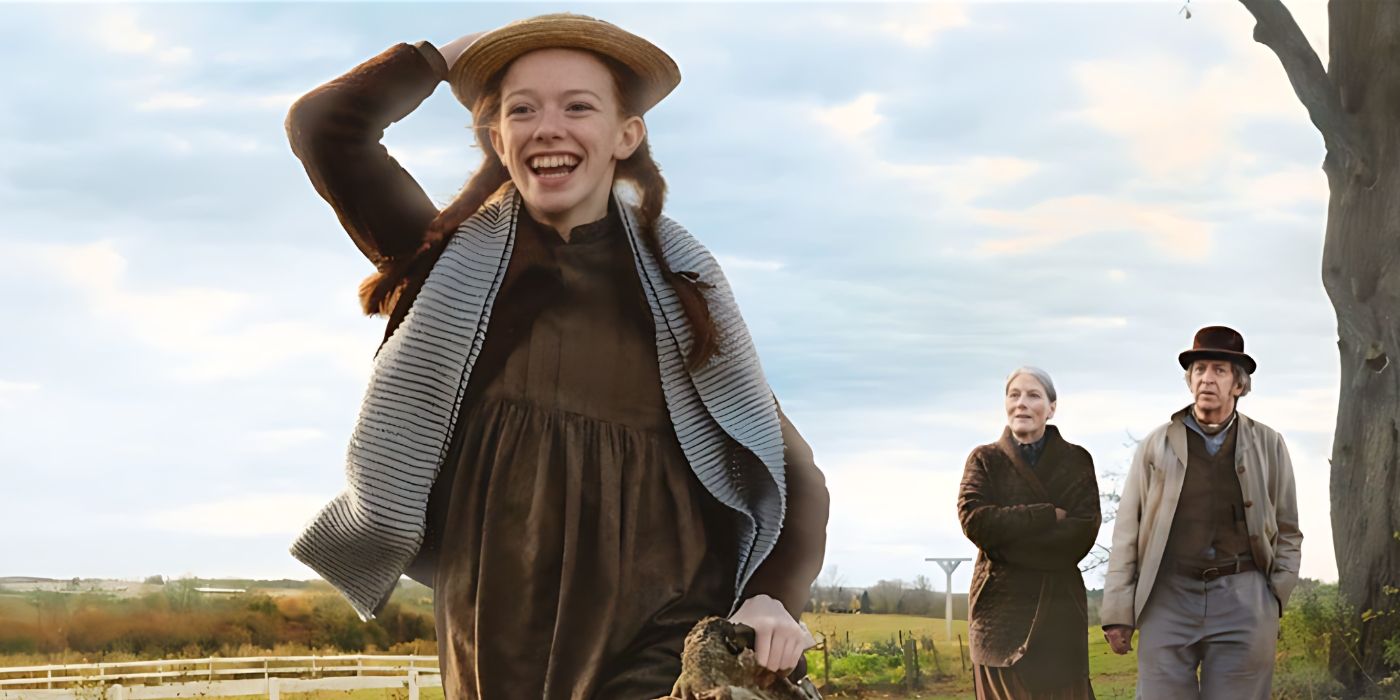
Anne with an E had all the ingredients to become one of Netflix’s defining coming-of-age shows before the world just decided to forget all about it. The series, based on Lucy Maud Montgomery’s Anne of Green Gables, follows imaginative 13-year-old orphan Anne Shirley (Amybeth McNulty), who is mistakenly sent to live with siblings Marilla (Geraldine James) and Matthew Cuthbert (R. H. Thomson) on their farm in Avonlea. The Cuthberts had actually requested a boy who could help Matthew with the farm, so Anne arrives only to learn that the closest thing she has found to a home could also be taken away from her. From there, the story gradually expands as Anne starts school, befriends Diana (Dalila Bela), and repeatedly gets herself into trouble because of her wild imagination.
At the same time, she continues to prove just how smart she actually is. Matthew and Marilla slowly stop thinking of Anne as the orphan they accidentally received and start treating her as their daughter, which is the most heartwarming part of the series. By Season 3, the story completely reverses its original premise. Anne prepares to leave for Queen’s College, and her long-running relationship with Gilbert also finally moves forward when the two admit their feelings for each other. That progression is what makes the cancellation sting so much. Anne with an E spends three seasons watching a girl desperately searching for somewhere she belongs, only to end just as her world was becoming bigger than ever.
6 ‘The Baby-Sitters Club’ (2020–2021)

The Baby-Sitters Club is an underrated Netflix gem. The series, based on Ann M. Martin’s novels, follows Kristy Thomas (Sophie Grace), who comes up with the idea of starting a babysitting business with her friends Claudia (Momona Tamada), Mary Anne (Malia Baker), Stacey (Shay Rudolph), and Dawn (Xochitl Gomez/Kyndra Sanchez). Little do they know, though, that their way to make some quick bucks will completely reshape their lives. Every babysitting job Kristy and the others take on becomes its own little problem to solve. The show grounds all of this in the characters’ personal lives, which makes their work feel like an extension of what each girl is already dealing with.
Mary Anne is trying to become more independent from her overprotective father, Stacey is hiding her diabetes because she does not want it to define her, and Kristy is struggling with the changes in her family after her mother gets remarried. Even the club itself constantly runs into disagreements over money, leadership, friendships, and who gets to make the decisions. This emotional depth is what makes the series much more interesting than its premise suggests. By Season 2, The Baby-Sitters Club starts reshaping the group in the best way. None of their storylines are magically solved by the end of the episode, which makes Stoneybrook feel like a place where these girls are genuinely growing up rather than just moving through babysitting adventures. It’s a shame that the show was canceled just as its story started getting bigger.
KioskNews shows a cleaned-up reading view extracted from the publisher’s page — the original always lives on their site, not ours.