Washington’s DeepSeek ban may deter US firms from adopting Chinese AI models: experts
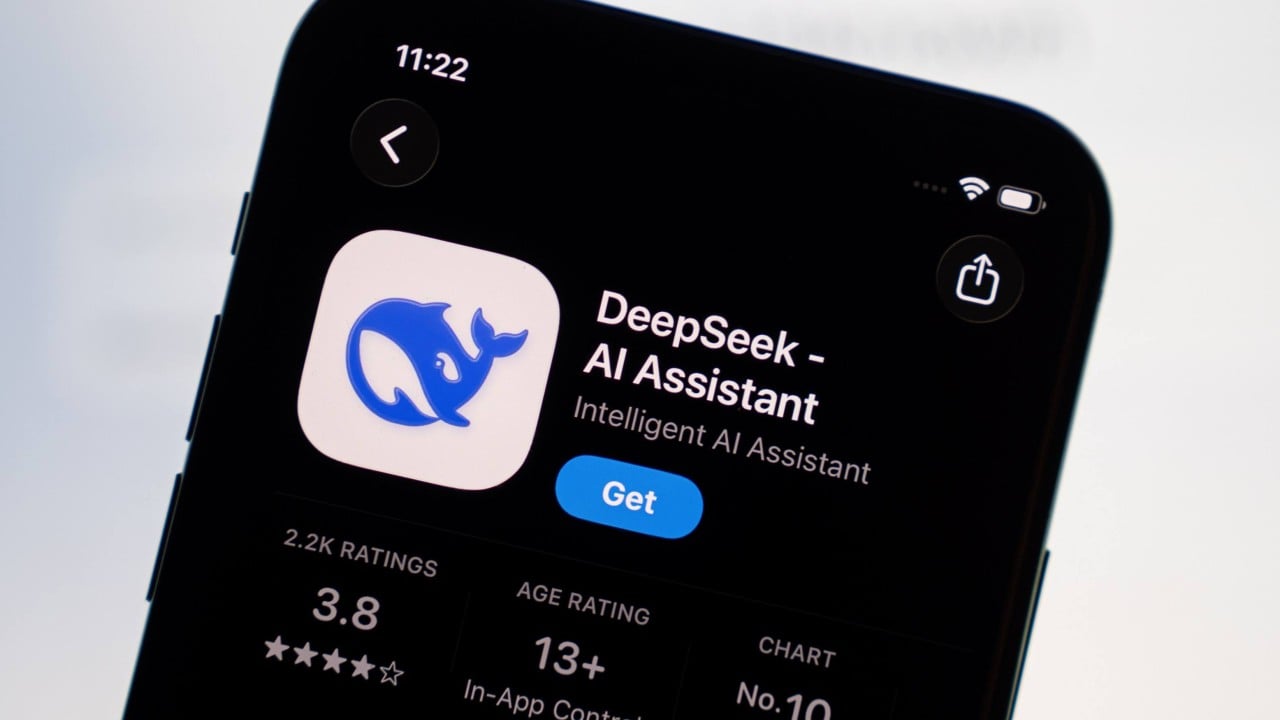
The US government’s latest ban on Chinese artificial intelligence start-up DeepSeek could have a chilling effect on the wider American business community and deter companies from adopting low-cost Chinese AI models, industry experts say.
The US Department of Homeland Security (DHS) ordered federal civilian agencies to remove DeepSeek products and third-party services built on the Chinese AI model from their IT systems, according to a directive signed in July and published on Monday.
China on Tuesday criticised the ban, accusing Washington of politicising trade and technology under the guise of national security.
Foreign ministry spokeswoman Mao Ning said Beijing opposed the overextension of national security concepts, while the commerce ministry called the ban a discriminatory measure that undermined fair competition, urging Washington to revoke it and warning that China would take necessary steps to protect its interests.
DeepSeek did not immediately respond to a request for comment on Wednesday.
While the DHS order explicitly targeted federal civilian agencies, its impact could extend to private companies that served both government and commercial clients, according to industry watchers.
Industry veteran Xiang Ligang, founder of Chinese telecommunications industry portal c114.com, acknowledged the need for government agencies to address security concerns, but warned against expanding the restrictions to the broader US market.
“DeepSeek is highly cost-efficient and the US should not shut it out, as doing so would be detrimental to the US economy and AI development,” Xiang said.
Making the DHS order public sent a clearer signal to companies beyond the federal procurement system, prompting software developers, cloud providers and systems integrators to assess whether their use of DeepSeek could jeopardise government business, according to an independent Chinese geopolitical and tech policy analyst who declined to be named.
The disclosure risked turning an internal government procurement restriction into a broader market signal, influencing how American companies designed their products and chose AI models, he said.
“This could change the cost calculations for American businesses when choosing AI models,” he added.
The move comes as US lawmakers seek to extend restrictions on Chinese AI models to private-sector suppliers serving government customers.
The growing regulatory burden is forcing American software developers to weigh the benefits of low-cost Chinese models against the risk of losing access to federal contracts.
The implications could extend beyond DeepSeek, according to the geopolitical and tech policy analyst, as the national security concerns cited by the DHS could in theory also be applied to other Chinese AI systems.
Washington was pursuing a multipronged strategy to counter the rising popularity of Chinese open-weight AI models, using procurement bans, defence supply chain rules and congressional scrutiny to raise compliance costs and political risks for American adopters, he said.
Those measures threaten to undercut the appeal of Chinese models, which have gained traction among US developers and businesses due to their competitive performance, low operating costs and flexibility for deployment on private infrastructure.
Airbnb CEO Brian Chesky has said the company uses Alibaba Group Holding’s Qwen models, citing their speed and affordability. Alibaba is the owner of the South China Morning Post.
Other prominent US tech players – including AI coding start-up Cursor, which was recently acquired by Elon Musk’s SpaceX, legal tech firm Harvey, and conversational engine Perplexity AI – have integrated models from DeepSeek or Moonshot AI.
For smaller developers, the savings can be particularly significant. A US-based developer told online tech publication Rest of World earlier this year that a coding task costing around US$10 using Anthropic’s Claude could be completed for less than 50 US cents using DeepSeek.
Beijing is also moving to tighten oversight of its own AI technologies flowing overseas.
China last week proposed new export controls covering advanced AI technologies and models amid rising security concerns, with some domestic industry figures calling for tighter restrictions.
Wang Yuquan, founding partner of venture capital firm Haiyin Capital, urged Chinese AI developers to shift towards closed-source models, arguing that open-weight releases exposed developers to foreign regulatory risks while allowing overseas platforms to profit from their technology.
Transitioning to proprietary models would help domestic developers retain control over deployment, reduce exposure to foreign bans, and build sustainable revenue streams, Wang was cited as saying in an interview with local media outlet Huxiu earlier this month.
KioskNews shows a cleaned-up reading view extracted from the publisher’s page — the original always lives on their site, not ours.