Sexual crimes among top offences committed by youth in S’pore aged 10 to under 21: MSF report
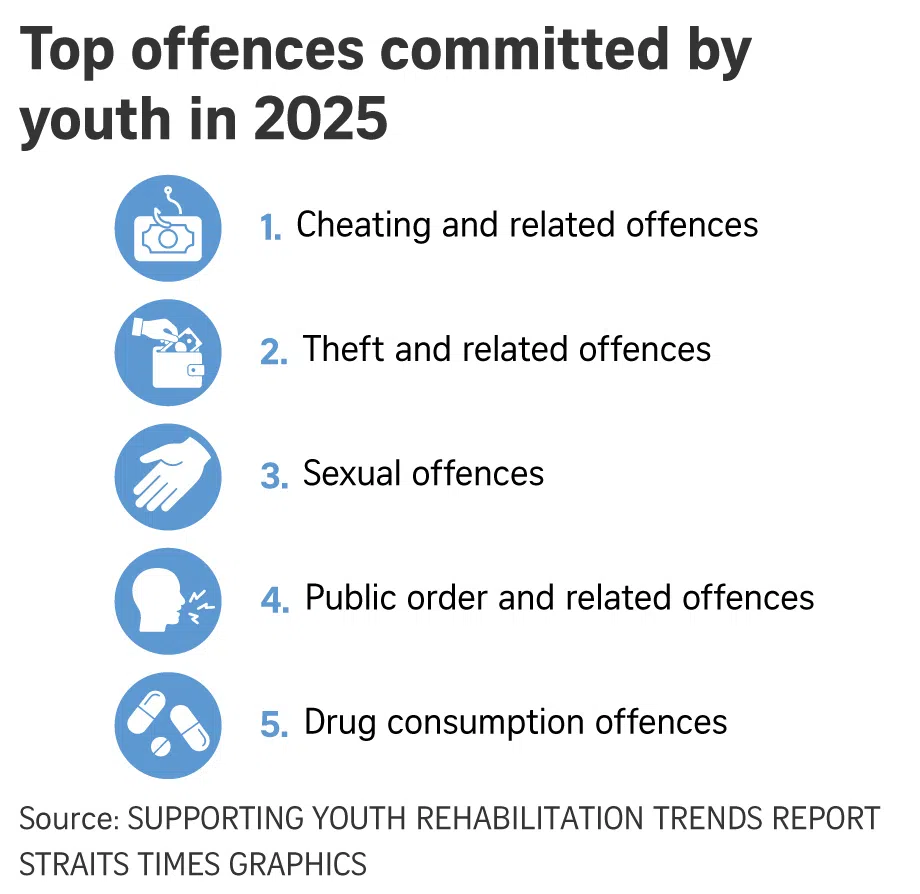
SINGAPORE - Sexual crimes remained one of the top offences committed by young people here in 2025, ranking second among those aged 10 to under 16.
Across all youth aged 10 to under 21, the number of such offences fell slightly, from 461 in 2024 to 437 in 2025. But among the younger group aged 10 to under 16, the number rose from 193 to 199.
The figures were released on Sept 29 in the Ministry of Social and Family Development’s (MSF) Supporting Youth Rehabilitation Trends Report 2026.
The top sexual crime committed by the younger age group was sexual penetration of a minor, with the number of offenders rising from 105 in 2024 to 114 in 2025. This offence is established when the victim is below 16 years of age, regardless of whether consent was given.
Other sexual offences recorded in the report include outrage of modesty, intimate recording, rape, obscene acts and voyeurism.
The Singapore Police Force and the Ministry of Education (MOE) have worked on school engagement initiatives to raise awareness of sexual offences and prevention. These include assembly talks by police officers to highlight personal safety, boundaries among youth, various types of sexual crime, and the consequences of offending.
The Government has also sought to address contributing factors to sexual crimes through early preventive education. This includes helping youth understand attitudes and beliefs leading to sexual offending and unhealthy sexual habits, while emphasising pathways to healthy sexual development, the report said.
Resource guides for professionals were also developed and disseminated to government and community stakeholders.
The Ministry of Home Affairs (MHA) has also worked with community practitioners and professionals on emerging trends linked to youth sexual offending, the role of online sexual harms, and how to identify concerning behaviours early so that intervention can take place.
A Community of Professionals (COP) run by MHA and MOE gets together biannually to discuss how to prevent and intervene in youth sexual offending.
Increase in theft offences
While sexual crimes remain a key area of concern, cheating and related offences was the top offence category committed by young people in 2025, followed by theft and related offences.
The number of youth arrested for theft-related offences rose from 571 in 2024 to 588 in 2025.
Shop theft cases within this category dipped slightly from 402 in 2024 to 394 in 2025. Food and beverages, personal care products, and cosmetics remained the items most commonly stolen by youth.
Other theft-related offences include housebreaking and theft of bicycle or motor vehicles.
To deter shop theft among youth, the authorities have put in place targeted prevention strategies, including comics aimed at engaging the young and deterring offending behaviours.
SPF and MOE also used joint school advisories and outreach initiatives to educate students, while a crime prevention module was launched for Primary 3 to 6 pupils to understand the legal consequences of shop theft.
Tan Xing Wei, assistant senior social worker at Youth Guidance Outreach Services, said sexual offending remain common among youth due to early exposure to hyper-sexualised media and unmonitored online spaces at a much younger age.
Such content could blur the boundaries between real-world interactions with peers and what young people encounter online, making it harder for them to navigate these situations, he said.
“This is concerning because both victims and perpetrators of sexual offending experience damaging long-lasting harm that could drastically alter their life trajectories at a young age.”
On theft, Tan said such offending behaviour could be a symptom of deeper issues that a young person may be facing.
Issues such as financial distress at home, lack of after-school supervision, or negative peer influence have to be addressed systematically by social workers who engage with such youth, he added.
“The core issue underlying both youth theft and sexual offending is relational disconnection and gaps in adult supervision. When youth lack strong emotional attachment at home or quality parental supervision, they seek validation, identity, and thrill in unstructured environments or online spaces,” said Tan.
KioskNews shows a cleaned-up reading view extracted from the publisher’s page — the original always lives on their site, not ours.