14 complaints, 74 alerts: Inside Delhi’s pollution control war room after Diwali
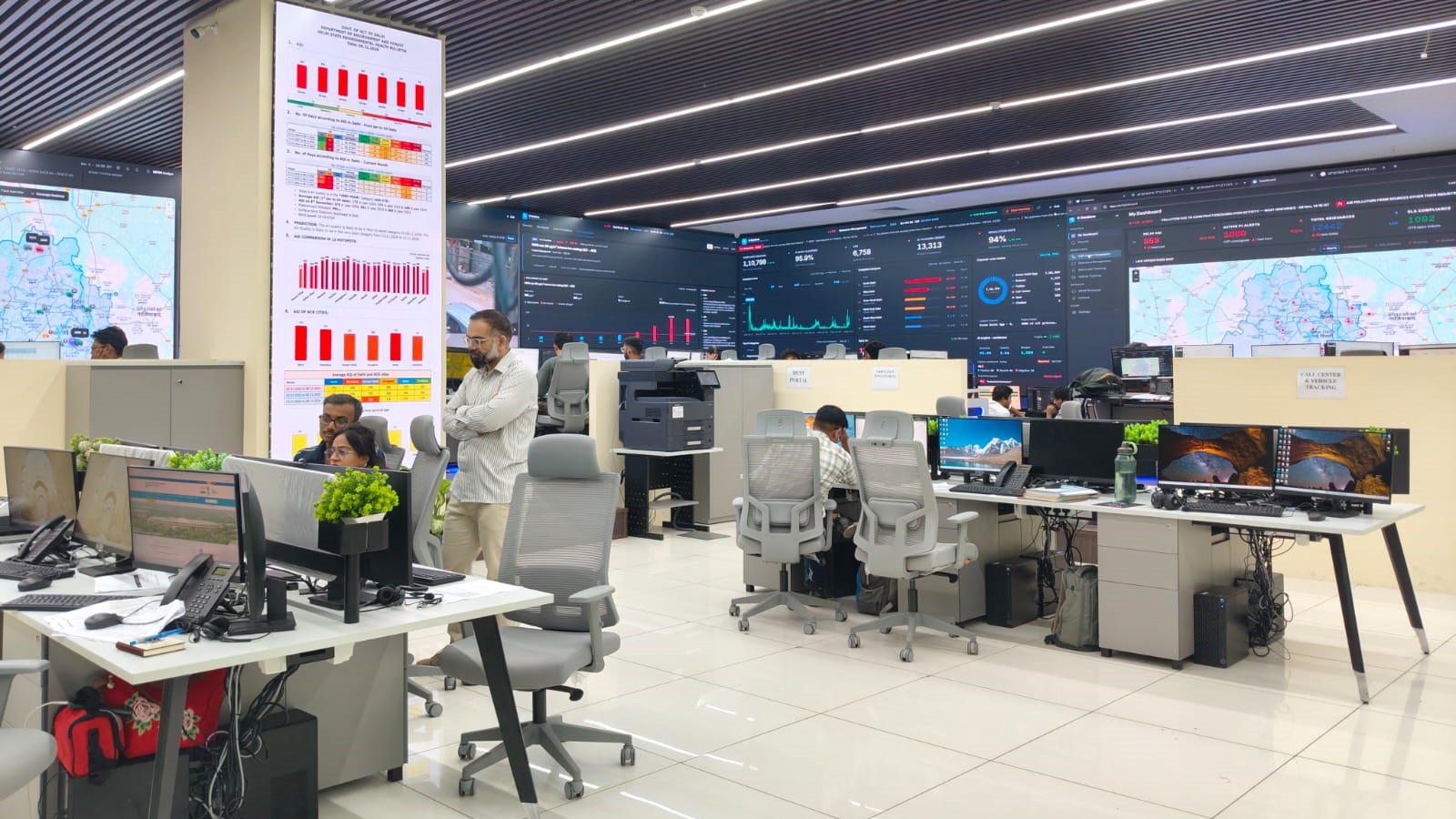
At 7.12 pm on Monday, the call centre desk at Delhi’s Integrated Command and Control Centre (ICCC) received a complaint from Mayur Vihar, about the alleged illegal bursting of firecrackers. “The caller requested that his identity be kept confidential. We are informing the nearest enforcement team,” a young data engineer said.
It was his first complaint of the evening shift, which had begun at 7 pm.
The complaints pouring into the pollution control room after Diwali went beyond firecrackers. Residents reported the burning of electronic waste and dust pollution, while AI-enabled cameras flagged construction sites with high particulate matter levels.
In the 24 hours after Diwali, the ICCC received 14 public complaints and generated 74 dust alerts. The alerts included around 51 from construction and demolition (C&D) sites between Diwali night and Monday afternoon, flagging possible violations of pollution-control norms.
How complaints are handled
At 5 pm, the centre received a complaint about plastic components from electronic gadgets being burnt, causing air pollution.
A 25-year-old data engineer, stationed at the “call centre and vehicle tracking” desk, attended the call that lasted 50 minutes. He entered the complaint, identifying the location as Mustafabad in Northeast Delhi.
Story continues below this ad
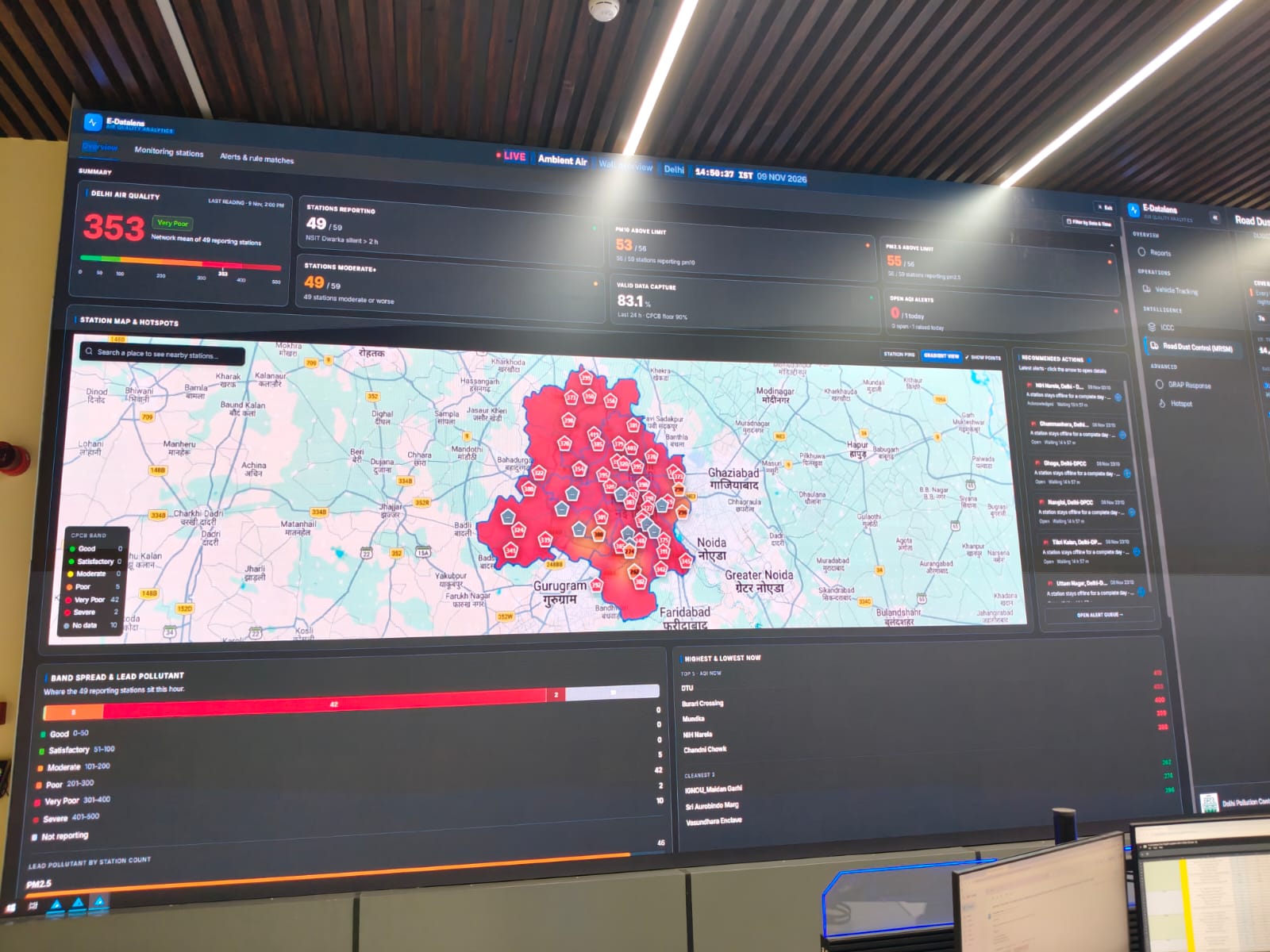 Inside Delhi’s Integrated Command and Control Centre. (Express photo by Alok Singh)
He then checked the locations of the nearest enforcement teams deployed in Vayu Rakshak vehicles — cars staffed by joint teams of junior engineers (JEs) from the Delhi Pollution Control Committee (DPCC), Municipal Corporation of Delhi (MCD) and Civil Defence personnel.
Three teams were in the vicinity, the nearest just 500 metres away. He contacted the JE and informed him about the complaint. “The response will come once the officer (team) visits the site,” the data engineer told The Indian Express.
He said the officer would also have to upload photographs of the site after inspecting it, following which the system would be updated. “If there is no response, we inform the nodal officer from the DPCC stationed at the sub-division concerned,” he said.
At another desk labelled “Dust Portal”, a woman data engineer made a call at 1.58 pm to the authorised person at a house construction site in South Delhi’s Panchsheel Park. An alert had been generated after the PM 10 concentration level, which should not exceed 300 micrograms per cubic metre, touched 1,000.
Story continues below this ad
“I informed him about the measures he could take, such as deploying an anti-smog gun or water sprinklers. I also asked him to cover any dust-generating material that had been left exposed. Within half an hour, the level came down to below 300, following which I updated the status on the portal as ‘resolved’,” she said.
Another woman data engineer, around 25 years old, said she received a complaint during the night shift about dust and air pollution caused by firecrackers near Shyam Nath Marg in North Delhi. “The complaint came around 11.23 pm. However, the action taken by the enforcement team has not yet been updated on the system,” she said.
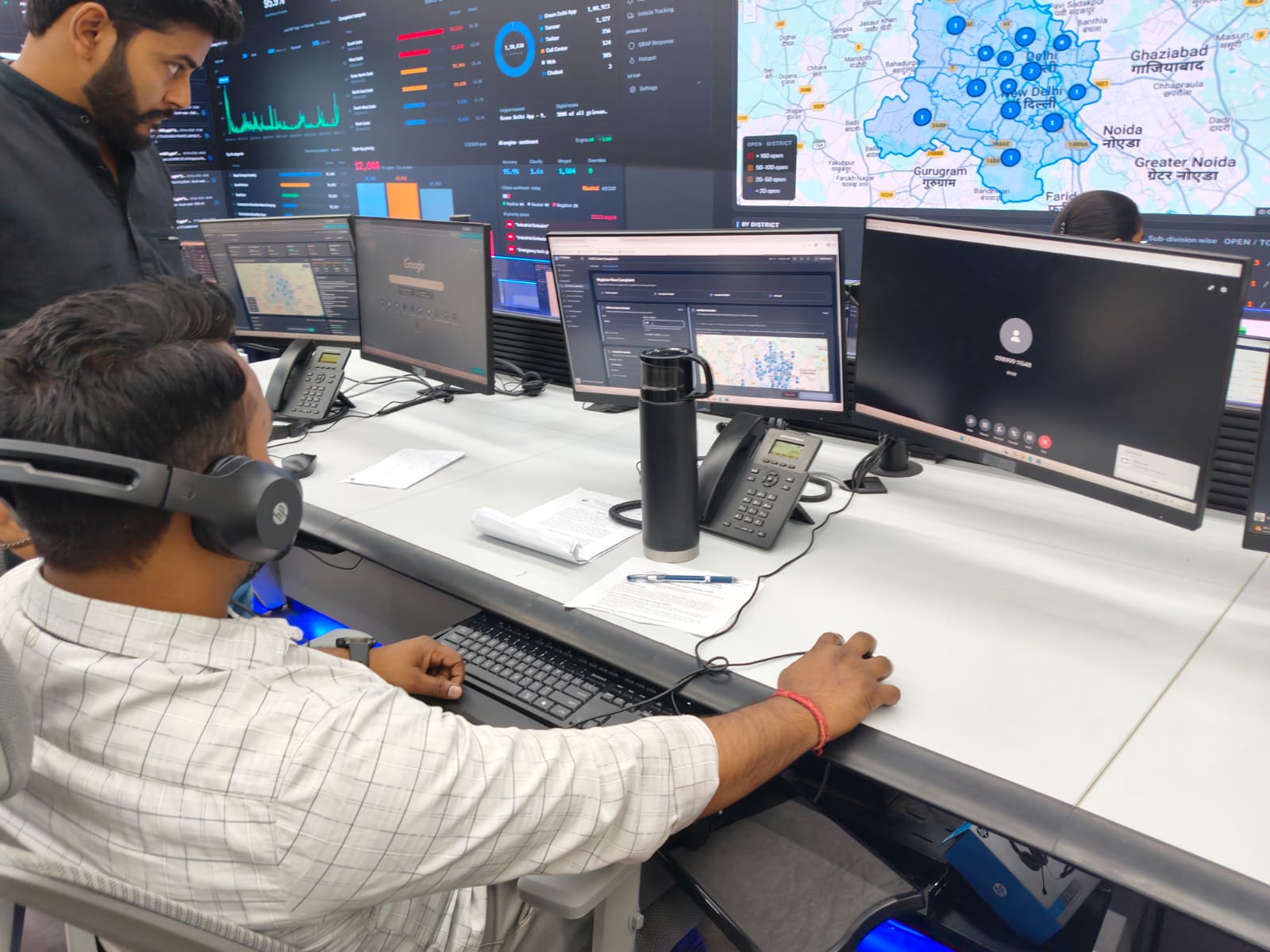 Inside Delhi’s Integrated Command and Control Centre. (Express photo by Alok Singh)
Earlier in the afternoon, a complaint was received from the Gokalpuri area about the alleged illegal transportation and sale of sand in a locality. “The nearest enforcement team was informed but it found no such violation,” the engineer said.
The ICCC, set up by the Delhi government at the DMRC IT Park in Shastri Park on October 1, had 18 staff members on duty on Diwali night — eight data engineers, eight environmental engineers and two technical staff members — against the usual 11.
Story continues below this ad
An official said the additional staff were deployed to monitor pollution levels at all 59 CAAQMS stations across Delhi. The DPCC chairman also visited the centre that night to review its functioning.
What the data showed
The peak in pollution levels was recorded between 11 pm on Sunday and 1 am on Monday, when the AQI hovered between 371 and 373. “By Monday noon, it remained around 370, the highest post-Diwali reading in the past five years. In 2022, it was 315,” an official at the centre said.
The ICCC receives alerts when the AQI rises sharply at a particular monitoring station. No such alerts were generated on Diwali night because pollution levels were more or less similar across stations.
“The system generates an alert only when pollution levels rise sharply at a particular station,” the official said, adding that pollution levels at all stations were close to the severe category, with some recording readings above 400.
Story continues below this ad
On Monday, officials held a meeting at the ICCC to prepare an action plan for the coming days.
“Every year, after Diwali, the AQI reaches the severe category as meteorological conditions also become unfavourable, with changes in wind patterns. The AQI did not rise further today because of the morning winds. However, we have to remain prepared for poor air quality in the coming days due to stubble burning in neighbouring states and a drop in temperatures,” the official said.
KioskNews shows a cleaned-up reading view extracted from the publisher’s page — the original always lives on their site, not ours.