Why Philippines is muzzling anti-China rhetoric ahead of crucial Asean talks

The Philippine foreign affairs department’s rare rebuke of officials and agencies over anti-China rhetoric could signal Manila’s bid to rein in tensions ahead of the Asean summit next week – but also internal disagreements over strategy, according to analysts.
The Department of Foreign Affairs (DFA) on Sunday said public criticism of China could undermine diplomatic efforts. “In high-stakes diplomacy, a disciplined and coherent national voice remains essential to advancing our national interests,” it said in a statement.
The Chinese embassy in Manila has recently been embroiled in a war of words with Philippine uniformed services and officials.
Last month, several senators called for Chinese ambassador Jing Quan to be declared persona non grata after he suggested Beijing could “easily win” any confrontation with Manila. Philippine President Ferdinand Marcos Jnr later called Jing’s remarks a “threat” and “not very diplomatic”.
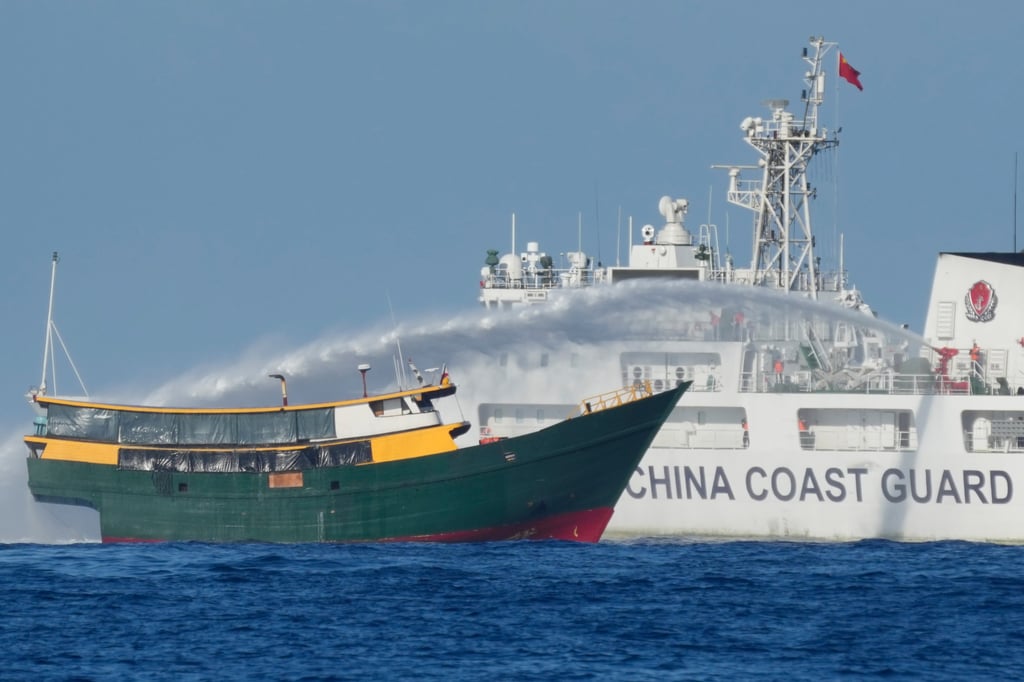
The heated exchanges are the latest in cycles of tension between the two countries over disputed waters in the South China Sea. China claims nearly the entire waterway, rejecting an arbitral decision in 2016 that ruled in favour of the Philippines as illegal.
The DFA statement added that “under the constitution, the president is the chief architect of Philippine foreign policy” and all government officials should align with this.
“Individual officials, agencies or sectors do not independently determine the direction of our international relations. Whatever personal convictions public officials may hold, their public platforms carry institutional responsibilities,” it said.
“They may not pursue preferred approaches towards China, or any other international partner, without regard for the consequences on the government’s overall policy.”
The DFA issued the statement after Foreign Affairs Secretary Maria Theresa Lazaro and her Chinese counterpart, Wang Yi, had a “frank, pragmatic and constructive” call on November 3 in an effort to maintain bilateral relations ahead of major meetings.
03:31
China and the Philippines trade accusations after clash in South China Sea
Observers said the timing of the statement was deliberate and tied to the Philippines’ role as Association of Southeast Asian Nations chair and host of its November 16 summit.
“As chair, the Philippines wants to be seen as a steady, unifying host, not a battleground for bilateral friction,” said Dennis Coronacion, associate professor of political science at the University of Santo Tomas.
Containing the rhetoric ensured the summit stayed focused on shared priorities, such as economic integration and finalising a substantive South China Sea Code of Conduct, “rather than getting bogged down in a public spat between Manila and Beijing”, Coronacion said.
The statement was intended to assuage concerns by Asean member states of the tensions becoming a distraction at the summit, he added. “Asean relies on consensus, quiet diplomacy and stability, so when polemics turn into public threats and diplomatic snubs, member states worry it will hijack the entire regional agenda.”
‘Good cop, bad cop’
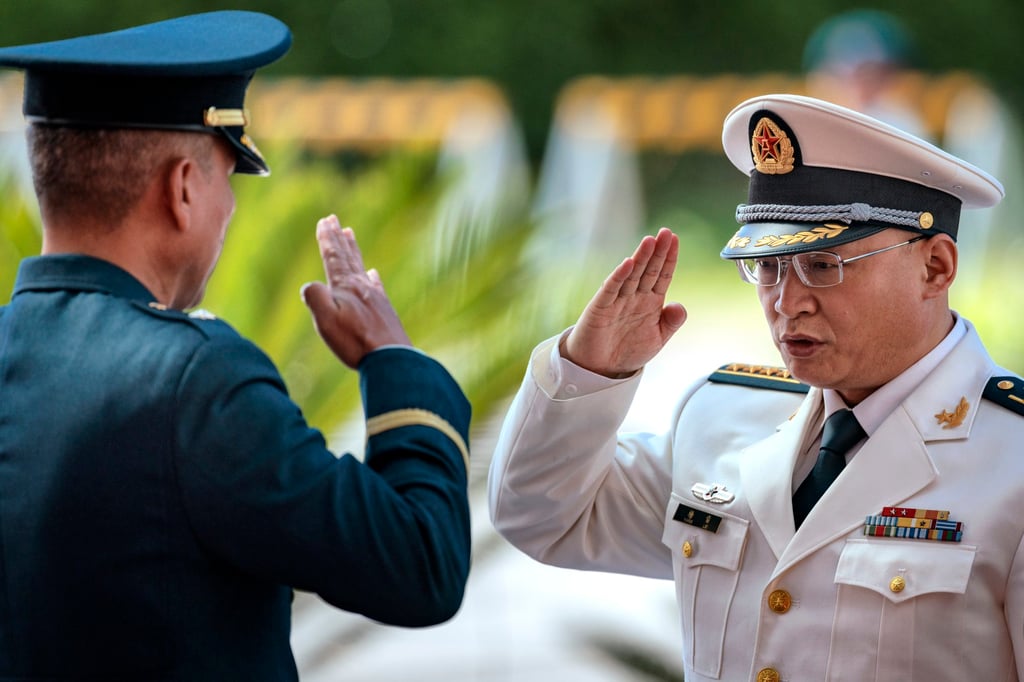
There has been precedent. During the Asean Defence Ministers Meeting on October 28 and 29 in Cebu, China sent a defence attache, the lowest rank it has dispatched to such meetings despite being a dialogue partner.
He was welcomed by Manila’s defence undersecretary rather than Defence Secretary Gilberto Teodoro Jnr, who shook hands with his counterparts from Asean countries and dialogue partners instead. Teodoro defended the arrangement, saying it was “more than courteous” for a defence undersecretary to welcome a defence attache.
Next week’s summit will see more illustrious guests. Chinese premier Li Qiang is reportedly expected to attend, although Beijing has yet to confirm this. US President Donald Trump will also be among the attendees.
“Ahead of high-stakes talks, including ongoing negotiations on the South China Sea Code of Conduct and the Apec summit in China, the DFA is ensuring Manila speaks with one disciplined, strategic voice so external parties cannot exploit internal friction,” Coronacion said.
While the Philippines has taken a more assertive stance against China in maritime disputes, analysts suggest Marcos’ statements towards China have become more measured. The president has said he was seeking a “reset” in ties in March following the economic fallout from the Iran war.
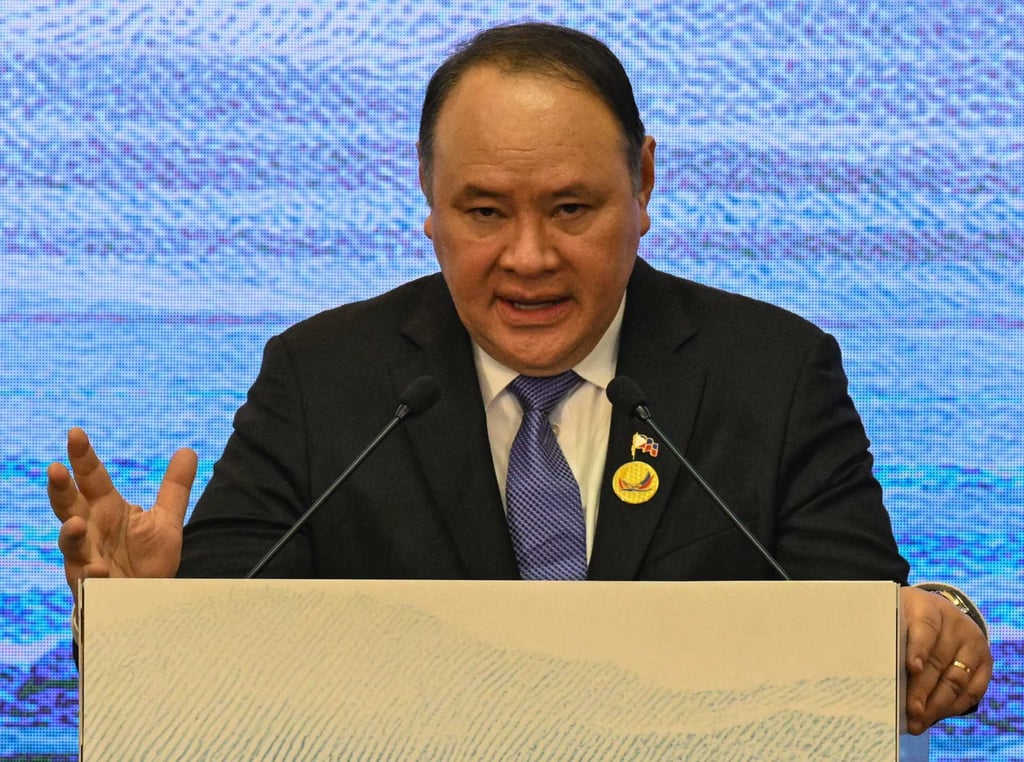
Teodoro’s hardened stance compared to Marcos’ diplomatic tone is not a divergence in policy but a “deliberate division of labour”, according to Coronacion.
“In any administration, the defence secretary and the president serve very different institutional roles,” he said.
“Secretary Teodoro’s job is deterrence, defence readiness and speaking plainly about operational threats to our sovereignty. President Marcos, as chief architect of foreign policy, must keep diplomatic channels open and manage the broader bilateral relationship, especially ahead of the Asean and Apec summits”.
This was the “classic ‘good cop, bad cop’ dynamic”, he said. “Teodoro draws the hard security red lines, while Marcos preserves the diplomatic space to negotiate.”
Manila’s negotiating stance, however, could be undermined if the “friction” among government bodies as to communication styles was left unchecked. “When executive agencies, uniformed services, and lawmakers appear to pull in different directions, Beijing can exploit those divisions to stall talks or question our diplomats’ authority.”
Other observers were not as optimistic about the efficacy of the DFA’s move.
Victor Andres Manhit, president of the Manila-based think tank Stratbase Institute, said the government “must not allow diplomatic considerations to weaken its defence of Philippine sovereignty”.
“Diplomacy remains essential, but it cannot replace transparency and public accountability. There must be room for responsible public discussion, especially when developments at sea directly affect our sovereign rights, national security and the livelihoods of Filipino communities,” he said in a statement on Tuesday.
Gary Ador Dionisio, dean of the De La Salle-College of Saint Benilde’s School of Diplomacy and Governance, called the rebuke “unnecessary”.
“Although DFA wants to reduce diplomatic uncertainty and prevent public exchanges from narrowing the president’s room for negotiation, it sends signals to China and the Asean community that the national government is not in control of these issues,” he said.
The foreign affairs department’s public intervention “suggests that at least some differences have become difficult to manage internally”, he added.
As Asean chair, the Philippines should defend its interests “while demonstrating its capacity to convene difficult conversations,” Dionisio said, adding that while other member-states had different relationships with Beijing, “we are certain they share an interest in preventing maritime incidents or diplomatic confrontations from escalating”.
KioskNews shows a cleaned-up reading view extracted from the publisher’s page — the original always lives on their site, not ours.