Will Myanmar call ‘Asean’s bluff’ over plan for its calibrated normalisation?
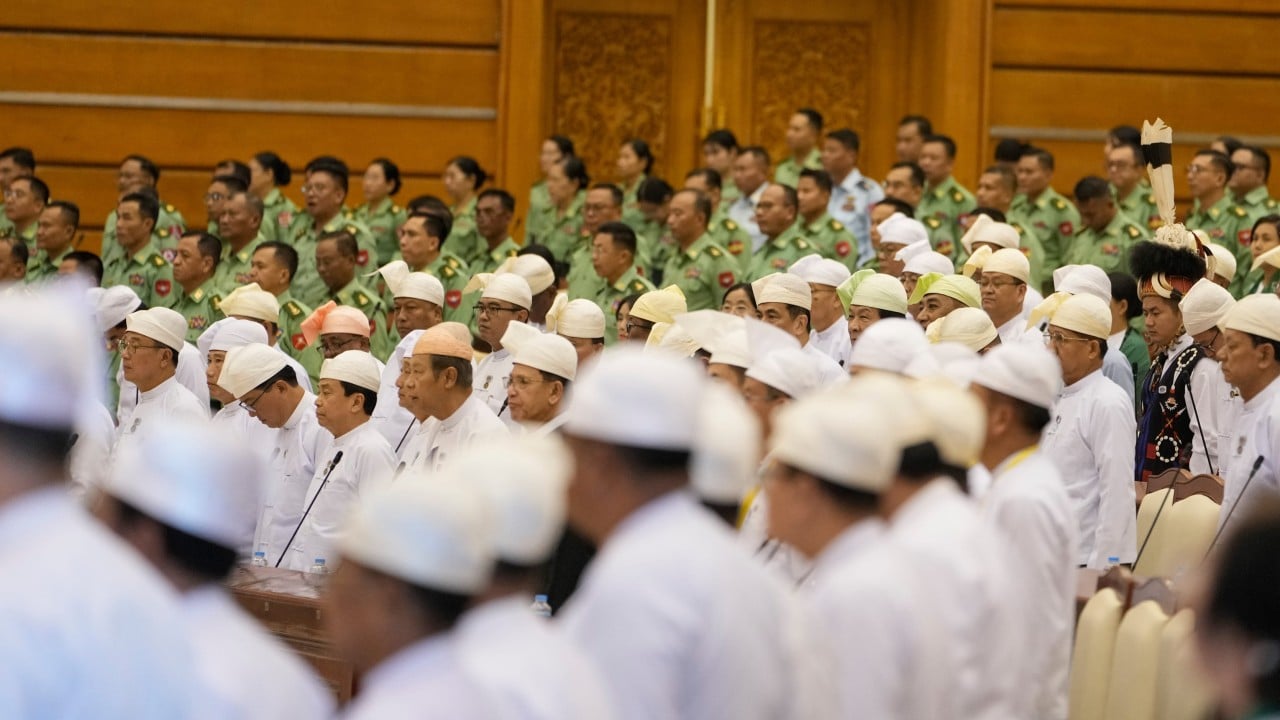
Asean’s “calibrated engagement” with Myanmar risks backfiring, analysts warn, as the bloc moves towards rehabilitating the military-backed civilian government without meaningful peace concessions.
Leaders of the 11-member Association of Southeast Asian Nations said at their summit in Manila on Sunday that they might consider restoring Myanmar’s full representation in the bloc if Naypyidaw were to commit to the bloc’s long-standing plan to restore peace and bring about political reconciliation in the war-torn country.
The leaders also agreed to maintain their policy of excluding Myanmar from Asean’s summits and foreign ministers’ meetings for now.
They agreed to pursue “calibrated engagement” through a “phased and progress-based” approach in which Myanmar would commit to “sustained and concrete progress” under Asean’s proposed plan known as the five-point consensus (5PC), the leaders said in a joint decision adopted at the summit.
“We also encourage efforts by individual Asean member states through constructive engagement with all relevant stakeholders, in consultation with the Asean chair, to advance substantive progress in the implementation of the 5PC.”
The statement appeared to be an endorsement of several Asean members, including Thailand, Laos, Cambodia and Malaysia, having met separately with Myanmar at the bilateral level in recent months.
The “calibrated engagement” approach to deal with the Myanmar crisis originated from a previous proposal by Bangkok, specifically by Thai Foreign Minister Sihasak Phuangketkeow, outlined earlier this year.
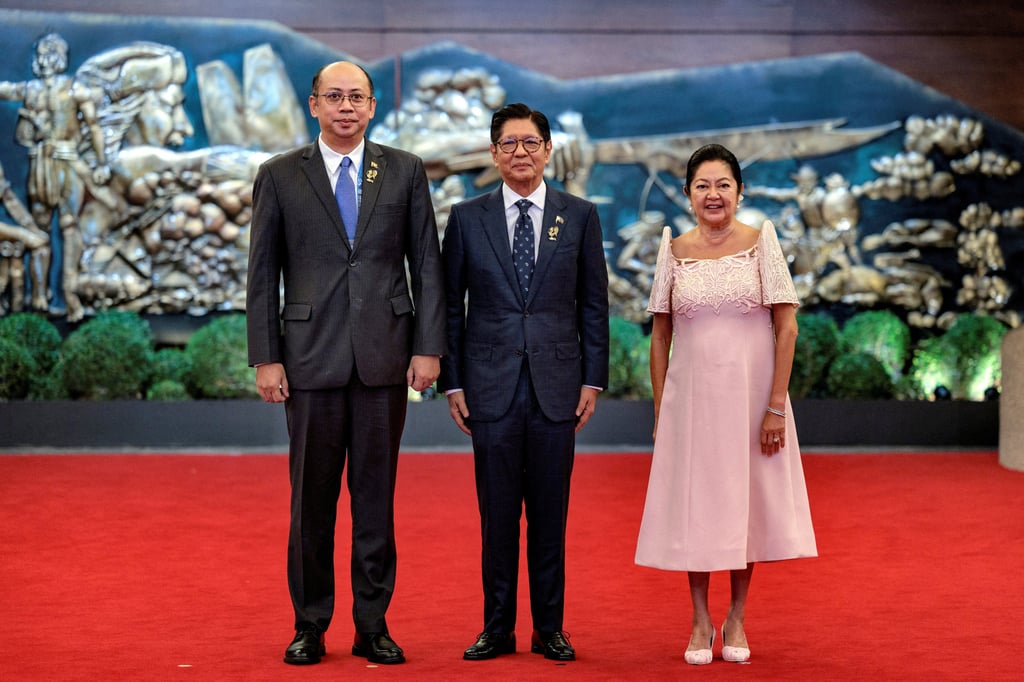
Hunter Marston, director of the Southeast Asia Program at the Lowy Institute, said the inclusion of the phrase was “a clever compromise” by Asean.
“The 5PC has failed to achieve any meaningful results in the past five years, and Asean risks losing control over the diplomatic process concerning Myanmar. Allowing for Thailand’s preferred approach of ‘calibrated engagement’ while insisting that Naypyidaw demonstrate tangible progress on the 5PC represents a pragmatic middle ground,” Marston said.
However, Marston warned that Asean’s approach could either be a step towards progress or backfire.
“If Naypyidaw is able to rejoin Asean without giving ground or offering even minimal reforms, it would have succeeded in calling Asean’s bluff and exposing the latter’s fecklessness,” Marston said.
Among the 5PC’s key targets, Asean calls for immediate cessation of violence and constructive dialogue among all parties in Myanmar.
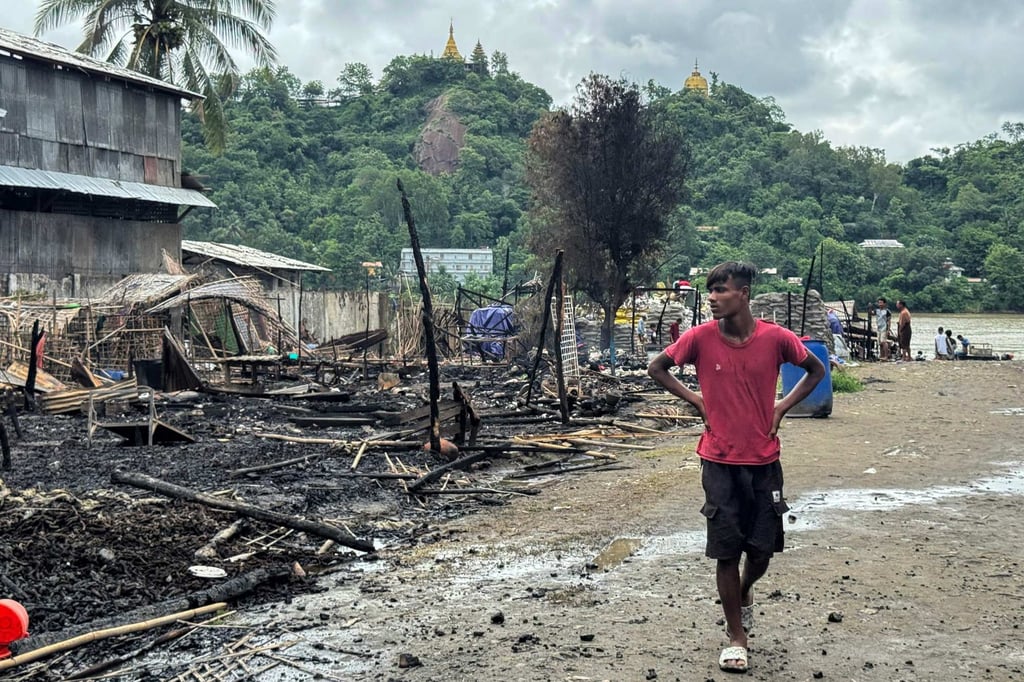
Asean launched the 5PC in April 2021, more than two months after the military junta led by then senior general Min Aung Hlaing deposed the then elected civilian government, triggering nationwide protests, brutal crackdowns, a severe humanitarian crisis and a civil war.
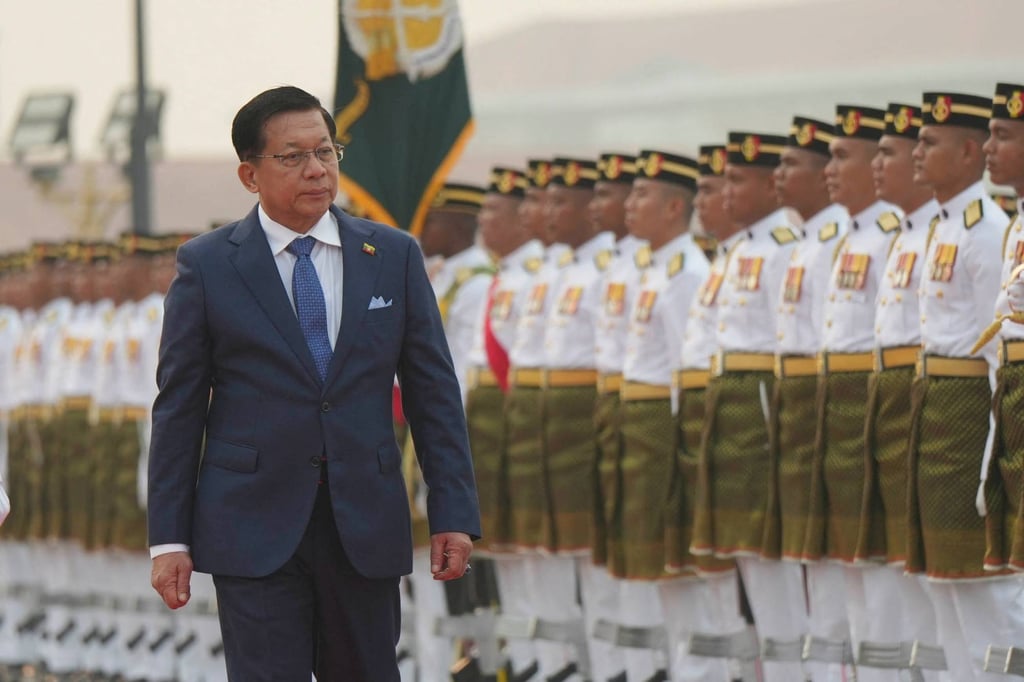
Min Aung Hlaing stepped down as leader of the military junta in March and became president in April following the victory of the military-backed Union Solidarity and Development Party in the 2025-2026 general election, which was widely condemned as a sham.
Joanne Lin, a senior fellow and coordinator at the Yusof-Ishak Institute’s Asean Studies Centre, said Asean had adopted a feasible approach towards Myanmar.
“That is potentially useful because Myanmar is unlikely to meet every element of the 5PC in full in the near term. A phased approach gives Asean room to recognise incremental progress without abandoning the framework altogether,” Lin said.
If the country is allowed greater representation following discernible improvements in civilian protection, humanitarian access and engagement with different stakeholders, Asean could be seen as holding some leverage, according to Lin.
“However, if phased reintegration begins simply because bilateral relations are warming, without corresponding changes on the ground, Asean risks giving away its main remaining leverage,” Lin warned.
“The key question is whether Asean can agree on credible benchmarks and apply them consistently.”
Vannarith Chheang, a public policy and global affairs lecturer at the Singapore-based Nanyang Technological University, said there appeared to be progress towards a common understanding among Asean members on the issue despite lingering differences among them.
Much would depend on the “political will and sincerity” of the current Myanmar government in implementing the 5PC.
“Singapore has a firm and consistent position on this. However, Singapore might soften its stand [by] following the majority of Asean member states” during its chairmanship of the bloc next year, Chheang said.
According to Lin, Asean’s latest decision on Myanmar has given Singapore a clearer framework to work with.
“Singapore is unlikely to try to roll back the bilateral engagement already taking place among member states, as those are sovereign choices,” she said.
“So Myanmar could become one of the first tests of whether Singapore can preserve Asean’s cohesion while keeping the 5PC as the common benchmark.”
While Singapore could insist that Naypyidaw show progress on the 5PC, it “will not insist on holding the moral high ground” in view of the continuous bilateral engagements between other Asean members and Myanmar, according to Marston.
“If other countries continue to normalise ties with Naypyidaw, we may well see Singapore adopt a looser approach in favour of accelerating Myanmar’s reintegration into Asean,” Marston said.
The US could also influence Asean’s approach towards Myanmar, he added. “If Washington engages directly with the government of Min Aung Hlaing, it will incentivise Asean states to do the same.”
Washington’s Myanmar policy has shifted from isolation of Naypyidaw following the 2021 coup to engagement as it seeks to secure access to the country’s rare earth minerals and its cooperation in fighting transnational scams.
In recent weeks, US administration officials, including Assistant Secretary Michael Vance, have held direct and secret meetings with Min Aung Hlaing in Naypyidaw and Tokyo.
KioskNews shows a cleaned-up reading view extracted from the publisher’s page — the original always lives on their site, not ours.