Starlink episode points to tightropes in changing political economy
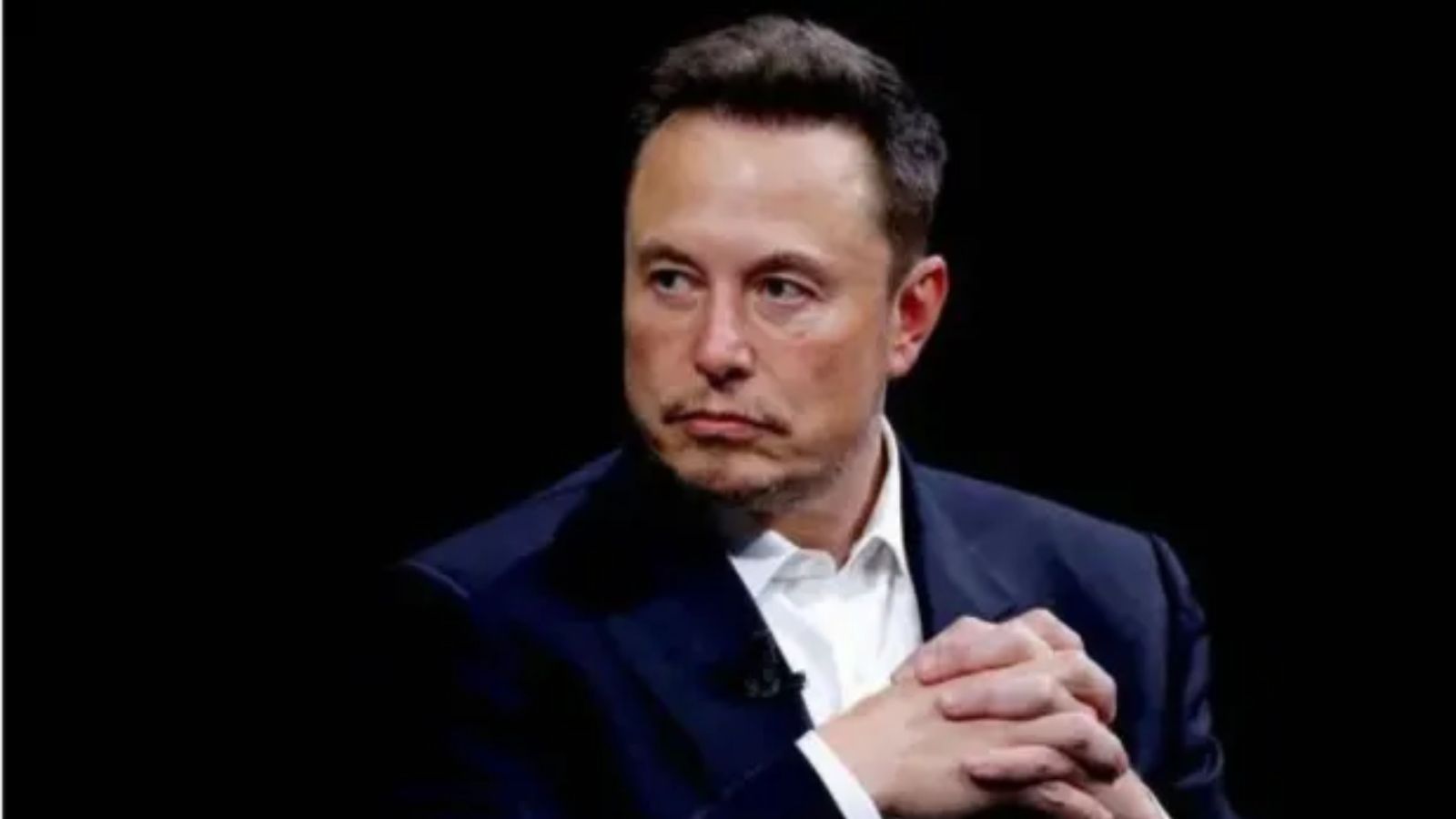
There is something deliciously ironic about Elon Musk accusing Reliance Industries of oligarchic behaviour. One of the world’s richest men has complained that one of India’s richest is blocking Starlink’s entry into the Indian market. The Indian government insists that Starlink is subject to the same regulatory requirements as its competitors, foreign or Indian. Whether Musk’s accusation holds merit remains to be established, but the high profile utterance raises questions that go well beyond satellite broadband. It touches on the character of Indian capitalism, its relationship with the state, and the changing political economy of globalisation.
The temptation to dismiss the episode as a quarrel between billionaires would miss the point. What is interesting in this episode is the difference between two traditions of capitalism, the sources of their extraordinary private fortunes, and the circumstances under which governments permit competition to temper established commercial interests.
India’s experience with capitalism has always been complicated by the relationship between business and the state. The much-derided licence-permit raj was initially justified by the scarcity of capital and the need to direct investment towards national priorities. In practice, it also created substantial opportunities for rent-seeking. The ability to obtain a licence, secure foreign exchange or negotiate an exception could be as important to commercial success as the ability to produce innovatively. Navigating that environment was itself an important source of competitive advantage. The resulting industrial structure rewarded political access and regulatory knowledge alongside productive capability. Established business houses acquired advantages that were difficult for potential entrants to overcome.
While the reforms of 1991 fundamentally altered this landscape, they did not eliminate the intimate relationship between economic power and political authority. As the economy expanded, some of the most valuable opportunities arose in sectors where the government continued to control access to scarce resources such as telecommunications spectrum, to name only one.
The vital point for this piece however is not to assert that every Indian fortune is indecorous, but simply that markets cannot be presumed to be competitive merely because ownership is private. An economy can liberalise extensively like we have and still retain formidable barriers to entry.
America’s history offers an interesting contrast. Its 19th-century industrial expansion produced the great fortunes of John Davison Rockefeller, Andrew Carnegie, Cornelius Vanderbilt and others, often accompanied by monopoly power, political influence and ruthless commercial practices. American capitalism required antitrust legislation precisely because the market, left to itself, did not reliably preserve competition. The Sherman Act of 1890 and the subsequent development of competition policy reflected a recognition that successful capitalism could generate destructive concentration of economic power.
What distinguishes the American experience, however, is the tradition of technological disruption and occasional institutional resistance to monopoly. New firms have repeatedly emerged to challenge established industries, drawing on deep capital markets, research universities, entrepreneurial networks, government-funded scientific research and a large domestic market. Musk’s own fortune is an example of this process. Tesla challenged an established automobile industry, while SpaceX transformed the economics of space launches and subsequently built an entirely new satellite communications business.
But the American story also requires qualification. SpaceX benefited enormously from public procurement, NASA contracts and decades of publicly financed research. Tesla benefited from policy incentives and public investment in the transition towards electric vehicles. The American state has been present in most innovative industries in some way. The relevant distinction, however, is between state intervention that creates opportunities for innovation and competition and state intervention that primarily protects established producers from challengers.
The Starlink outburst brings these differences between India and America into sharp relief. Satellite broadband is a technologically demanding business, with huge fixed costs, vast economies of scale and potentially large benefits for remote areas. It is this aspect that is especially relevant for India. It is, however, also a sector in which security and spectrum management along with international obligations necessitate regulatory responsibilities. Naturally satellite operators, whatever their identity, should be subject to regulation.
In this background, it is interesting to note that Starlink, Reliance Jio and Eutelsat OneWeb have obtained preliminary approvals but are still awaiting the final steps needed for commercial operations, such as security clearances, data integrity and spectrum assignment. There is, nevertheless, a legitimate economic question about the design and operation of entry barriers. Some barriers are necessary to protect public interests. Others are created or preserved because incumbent firms benefit from them. Still others arise from administrative inertia or risk aversion. We have so often heard of bureaucrats in India citing potential vigilance charges against them as a reason for preserving the status quo. Whatever the reason, competition suffers and this is why competition policy must also examine the conditions under which potential competitors are permitted to enter.
The question is whether India possesses sufficiently strong institutions to sustain competition when the commercial stakes are high and political influence is concentrated. The Starlink incident comes amid a period of difficult negotiations over the broader India-US economic relationship. In general, globalisation itself has become more conditional, more negotiated and explicitly political.
The lesson to draw from all of this is that capitalism has a persistent tendency to produce concentrations of wealth and power which can eventually threaten the competition that created them. The question is whether a nation’s institutions can resist that tendency. Musk may eventually obtain permission to launch Starlink. Consumers in underserved areas may benefit and existing operators may discover that competition can once again stimulate innovation. However, a market is not genuinely open merely because one powerful foreign entrepreneur has managed to enter it.
The writer is pro-VC and dean, School of Humanities and Social Sciences and professor of Economics at Shiv Nadar University. Views are personal
KioskNews shows a cleaned-up reading view extracted from the publisher’s page — the original always lives on their site, not ours.