As CATL’s grip on Chinese EV makers loosens, Xpeng doubles down on battery production
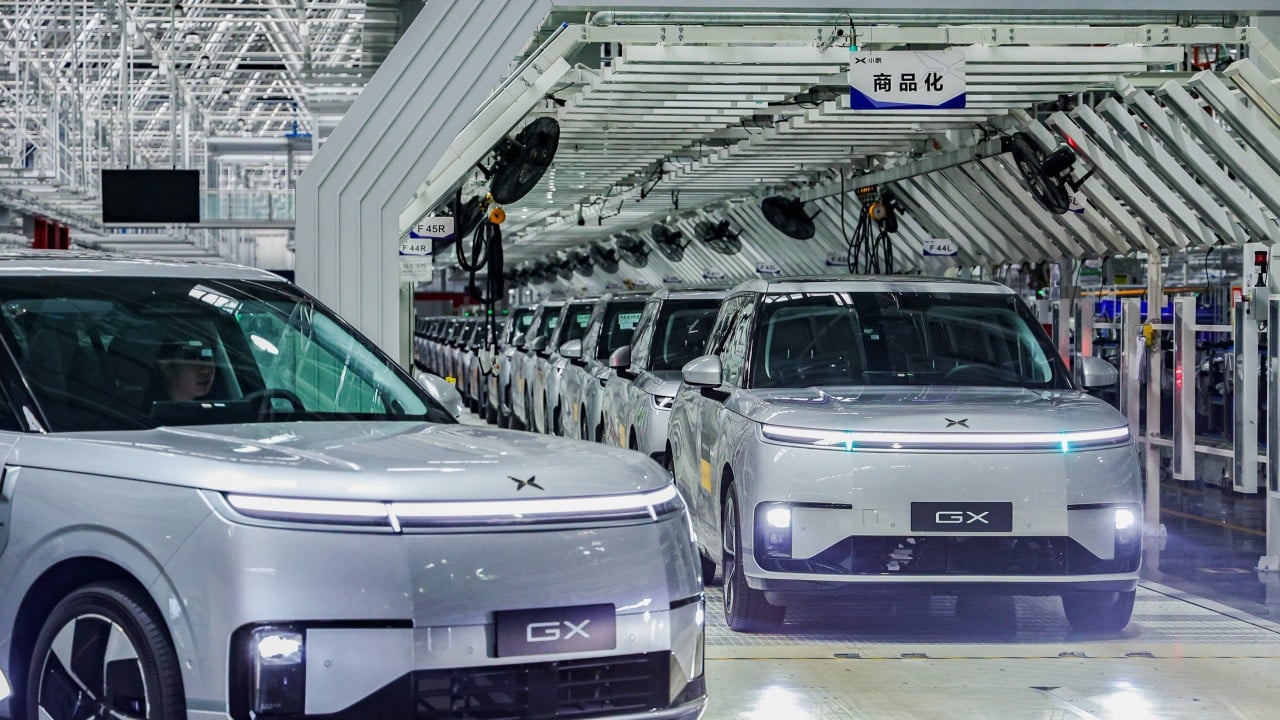
Chinese electric vehicle (EV) maker Xpeng is ramping up its battery pack manufacturing despite widening losses, seeking greater supply chain independence as carmakers continue to diversify away from Contemporary Amperex Technology Ltd (CATL).
The Guangzhou-based firm recently signed a 1.8 billion yuan (US$270 million) agreement with Zhaoqing municipal government in southern China’s Guangdong province to establish an integrated automotive project, according to a social media post by the local government on Monday.
The project would include new battery pack production lines with an annual capacity of about 200,000 units, alongside new vehicle models and a global after-sales spare parts supply chain centre.
A battery pack is the complete energy-storage system installed in an EV, consisting of battery cells, a management system, thermal management technology and other hardware.
Often regarded as the heart of an EV, it typically accounted for about one-third of a vehicle’s total cost, according to a 2021 report sponsored by Swiss-Swedish industrial technology giant ABB.
While cost savings from bringing battery pack assembly in-house would be relatively limited, carmakers were increasingly looking to reduce reliance on any single supplier’s control at the pack level, said Lucas Zhang Liutong, director of Hong Kong-based consultancy WaterRock Energy Economics.
“In-house packing is a low-hanging fruit,” Zhang said. “It can make [battery] cells more interchangeable and strengthen the automaker’s negotiating position when facing battery leaders like CATL and BYD.”
Chinese carmakers, including Xiaomi and Li Auto, continue to diversify their battery supply chains amid deteriorating profitability and weakening domestic EV demand.
Xpeng, CATL’s third-largest client in 2021, had already switched most of its battery sourcing to CALB Group and EVE Energy in recent years, with only its Mona model using batteries supplied by BYD, according to a company source.
The latest investment comes as Xpeng’s net loss widened 129 per cent year on year to 870 million yuan in the third quarter.
With carmakers diversifying suppliers, CATL’s share of China’s EV battery market declined for six consecutive months, falling to 40 per cent in October, although it remained the market leader, according to data from the China Automotive Battery Innovation Alliance.
Second-tier battery makers were rapidly gaining ground while smaller players were accelerating their exit from the market, creating a more fiercely competitive industry landscape, said Cui Dongshu, secretary general of the China Passenger Car Association, in an analysis released on Monday.
SCMP Plus is a new premium news platform that gives you an
all-inclusive edge to stay ahead on China news.
To access our exclusive content you’ll need to subscribe.
Already a subscriber?
LOG IN
At the same time, CATL and other Chinese battery makers faced growing overcapacity risks as energy-storage installations in China fell short of expectations and potential US import restrictions clouded demand prospects, analysts said.
KioskNews shows a cleaned-up reading view extracted from the publisher’s page — the original always lives on their site, not ours.