Hong Kong world’s first airport to receive digital identity certification from IATA
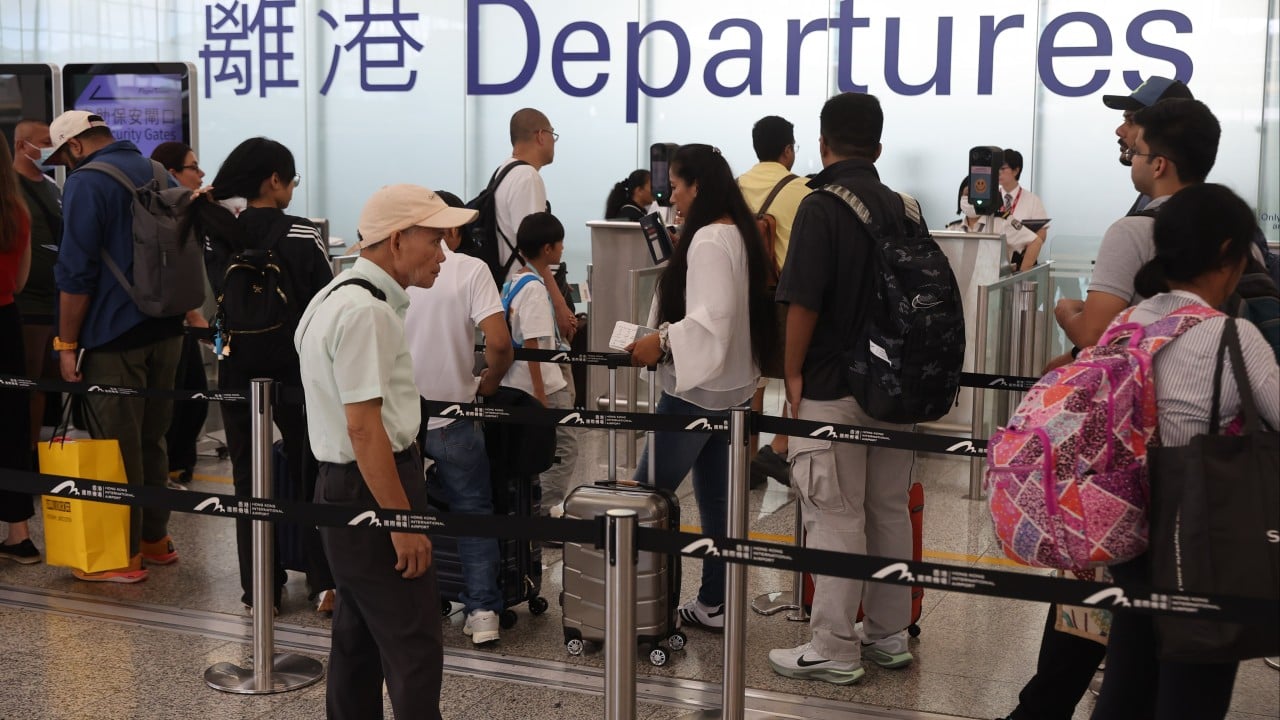
Hong Kong International Airport (HKIA) has become one of the first two organisations certified under an international aviation industry group’s digital identity programme, as it seeks to expand its facial recognition system beyond the city.
However, the wider adoption of facial recognition technology has been slower than expected, due to government regulations and privacy requirements, according to a senior aviation industry official.
The International Air Transport Association (IATA) announced on Wednesday that Hong Kong airport was one of the first recipients of its “One ID” certification. The certification sets standards for using digital identity and biometrics to allow passengers to pass through airport checkpoints without repeatedly presenting their passports and boarding passes.
At a media round table during IATA’s World Passenger Symposium in Macau on Wednesday, Nick Careen, its senior vice-president for operations, safety and security, acknowledged that the industry had struggled to persuade governments to change regulations on identity checks and sharing passenger data.
“Until governments truly unlock the legislation and regulations required, not only around data privacy, but also around identification checks and the requirement for that to be done physically … we are going to have a slow adoption rate, unfortunately,” he said.
“It’s just not moving at the pace we would have liked.”
Careen said differences in regulations between countries remained the biggest obstacle to making biometric identification systems work across borders.
Asked whether geopolitical tensions, including the fluctuating relationship between China and the United States, could hinder the implementation of One ID, Careen dismissed the concern.
“It’s not going to be a light switch,” he said. “If the US decides that they don’t want to get involved and they don’t want to participate, that’s fine. It would be unfortunate, but it’s fine.”
However, Careen added that he did not expect Washington to stay out, as American travellers shared the same desire for smoother journeys.
IATA executives also defended the security of One ID when questioned about the risks of sharing biometric information between different organisations and jurisdictions.
They argued that the framework could be safer than existing arrangements, under which airlines already shared passenger information with governments, because it gave travellers more control over who could access their data.
Under the proposed approach, passengers would give consent for each journey and organisation, with their information deleted after a specified period, according to IATA.
Careen said the system would be more transparent about how personal information was shared.
Francis Fong Po-kiu, honorary president of the Hong Kong Information Technology Federation, said concerns about sharing biometric information across borders were understandable.
“People’s caution is totally natural – we expect maximum security at international borders,” he said.
Fong argued that One ID could offer stronger privacy protection than everyday online applications.
He noted that the framework’s use of decentralised digital identity technology and encrypted tokens allows airports to verify passengers without retaining their original biometric images, reducing the risks associated with storing sensitive personal information.
“IATA’s explanation makes total technical sense,” he said, adding that such systems could offer greater privacy protection than conventional applications.
However, Fong stressed that his assessment was based on an ideal implementation and AI-assisted hacking could make cybersecurity threats more complicated.
Hong Kong airport already uses facial recognition through its Flight Token system, introduced in 2021, which allows departing passengers to pass through key airport checkpoints without repeatedly showing their travel documents.
According to the Airport Authority (AAHK), more than 80 per cent of departing passengers are eligible to use Flight Token throughout their departure and over 93 million passengers have used the system since its launch.
AAHK chief executive Vivian Cheung Kar-fay said the certification showed that the airport’s biometric identification processes met IATA’s international standards.
“As we work with airlines, airports, and government authorities to expand Flight Token beyond Hong Kong, this certification provides a trusted foundation for interoperable and seamless digital travel.”
Hong Kong airport was certified in three areas – contactless travel, biometric handling, and privacy, consent and governance.
Air New Zealand was the other recipient of One ID certification. It was certified for the digitalisation of admissibility, which verifies whether passengers have the documents needed to enter a destination.
The airline said it had conducted a trial with Hong Kong airport to test how digital identity could be used across borders, reducing the need for passengers to present documents and queue at checkpoints.
KioskNews shows a cleaned-up reading view extracted from the publisher’s page — the original always lives on their site, not ours.