India sizes up US F-35 stealth jets in landmark first on home turf
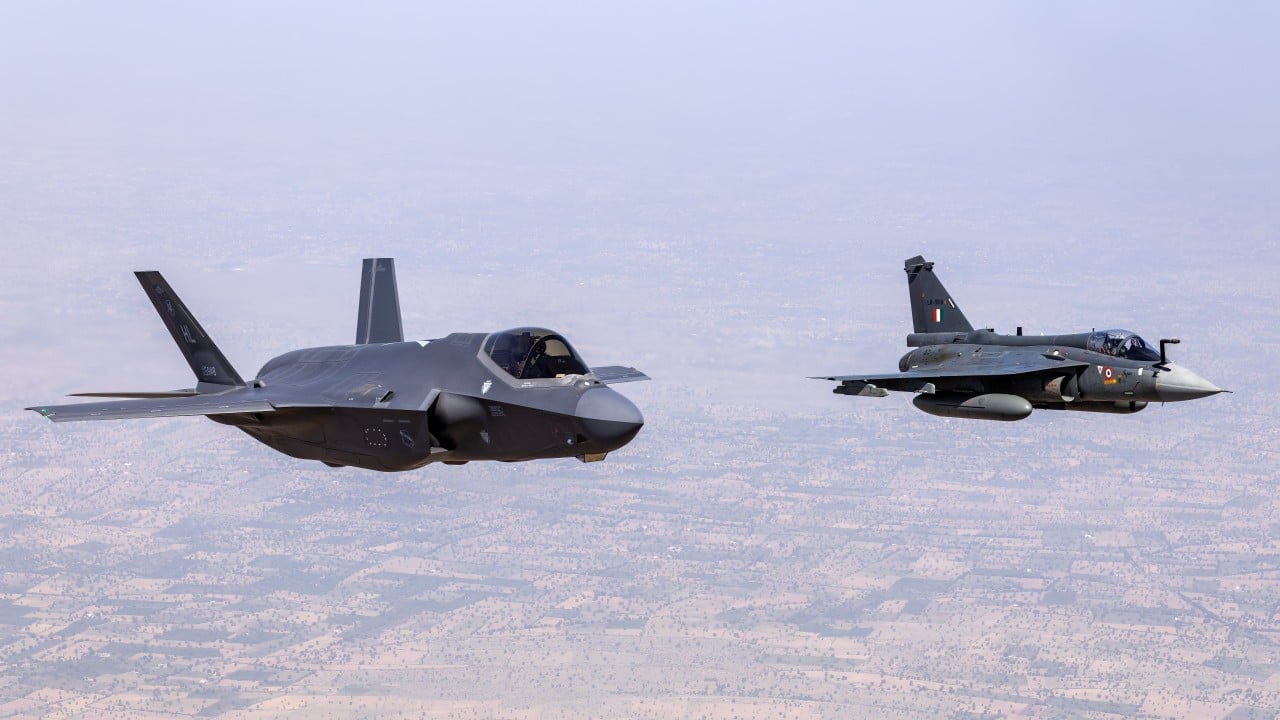
US F-35 stealth fighters have joined Indian warplanes for military exercises near the Pakistan border in recent days, marking the first time America’s most advanced multirole combat aircraft has taken part in joint drills in India.
The US jets’ participation in the drills “signals a degree of military confidence and interoperability that is difficult to manufacture through communiques”, Sushant Singh, a South Asian studies lecturer at Yale University and former Indian Army officer, told This Week in Asia.
“It also allows India to compare Western networked air-power concepts with its mixed Russian, French and indigenous fleet.”
Analysts say the F-35s’ participation in Exercise Tarang Shakti 2026 offers India’s military insights into how modern, fifth-generation fighters operate, as it struggles to get its own Advanced Medium Combat Aircraft project off the ground. It also serves as a test bed for cross-platform synergy and operational readiness.
Apart from the United States, Australia, the United Arab Emirates, France, Germany, Sri Lanka and Bangladesh are taking part in the drills, alongside several observer nations, according to India’s defence ministry.
US Ambassador Sergio Gor confirmed in a social media post on September 27 that six F-35 Lightning IIs and more than 200 US Air Force personnel were joining Tarang Shakti 2026, which is being held at Jodhpur Air Force Station in Rajasthan state, about 200km (124 miles) from the Pakistan border, from September 26 until next Monday.
Sameer Patil, director of the Observer Research Foundation think tank’s Centre for Security, Strategy and Technology, said Indian officials would be measuring the F-35’s performance against the Russian-developed Sukhoi Su-30MKI, which forms the backbone of India’s air force.
“They will also assess the aircraft’s stealth characteristics,” he said, noting that India’s fifth-generation fighter project had been held up by the complexities of achieving ultra-precise stealth manufacturing, as well as difficulties securing a suitable jet engine.
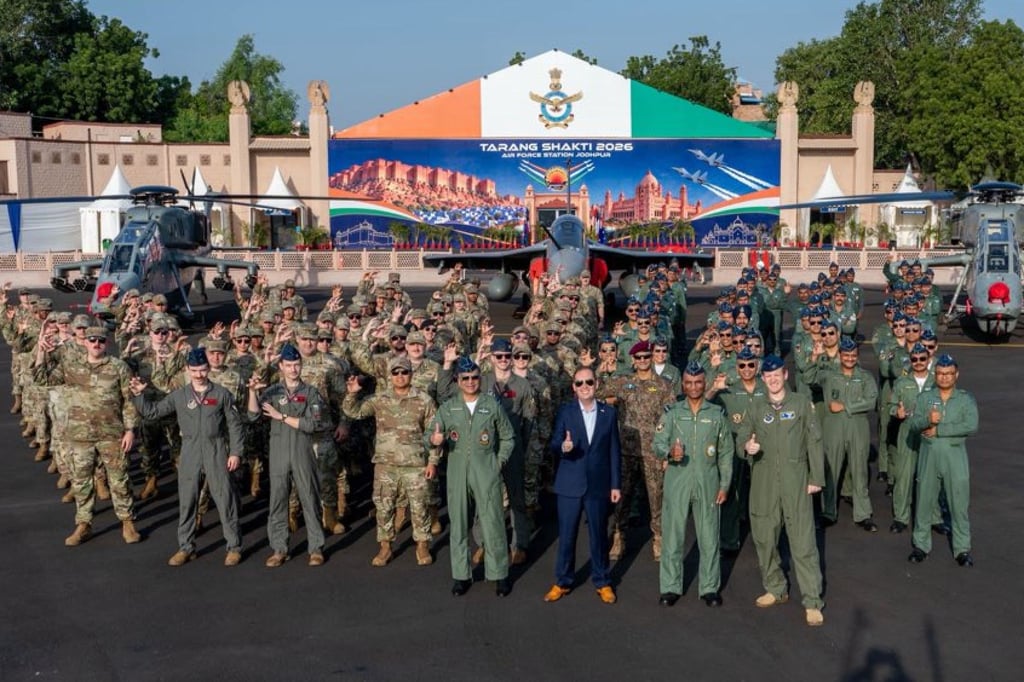
Rajeswari Pillai Rajagopalan, a security analyst and resident senior fellow at the Australian Strategic Policy Institute, agreed that the presence of operational fifth-generation US fighters in India for joint drills for the first time offered Indian pilots and air force leaders a unique opportunity to observe and learn.
“Equally significant is the fact that there are several different [Indian] fighters including Rafales, Su-30MKIs and Tejas alongside the F-35, which will also validate how different aircraft from different generations can operate together in a mission,” she said.
Guarded secrets
US President Donald Trump publicly stated last year that Washington was considering selling F-35 stealth fighters to India, but security analyst Olli Pekka Suorsa told This Week in Asia that New Delhi’s close defence ties with Moscow made such a move unlikely.
The US Air Force was also likely keeping “the aircraft’s true low observability a secret” by masking the F-35s’ true radar profile with the use of specialised, bolt-on radar reflectors, said Suorsa, an assistant professor of security at the Rabdan Academy in Abu Dhabi.
Such capabilities were typically only “demonstrated in high-trust exercises like those between Nato allies, amongst other F-35 operators, or in war”, he said, referring to the transatlantic security alliance.
Nor would the US reveal the aircraft’s true electronic countermeasures capabilities, Suorsa said, though Indian pilots would likely get a good idea of the F-35s’ basic manoeuvres and aerial performance.
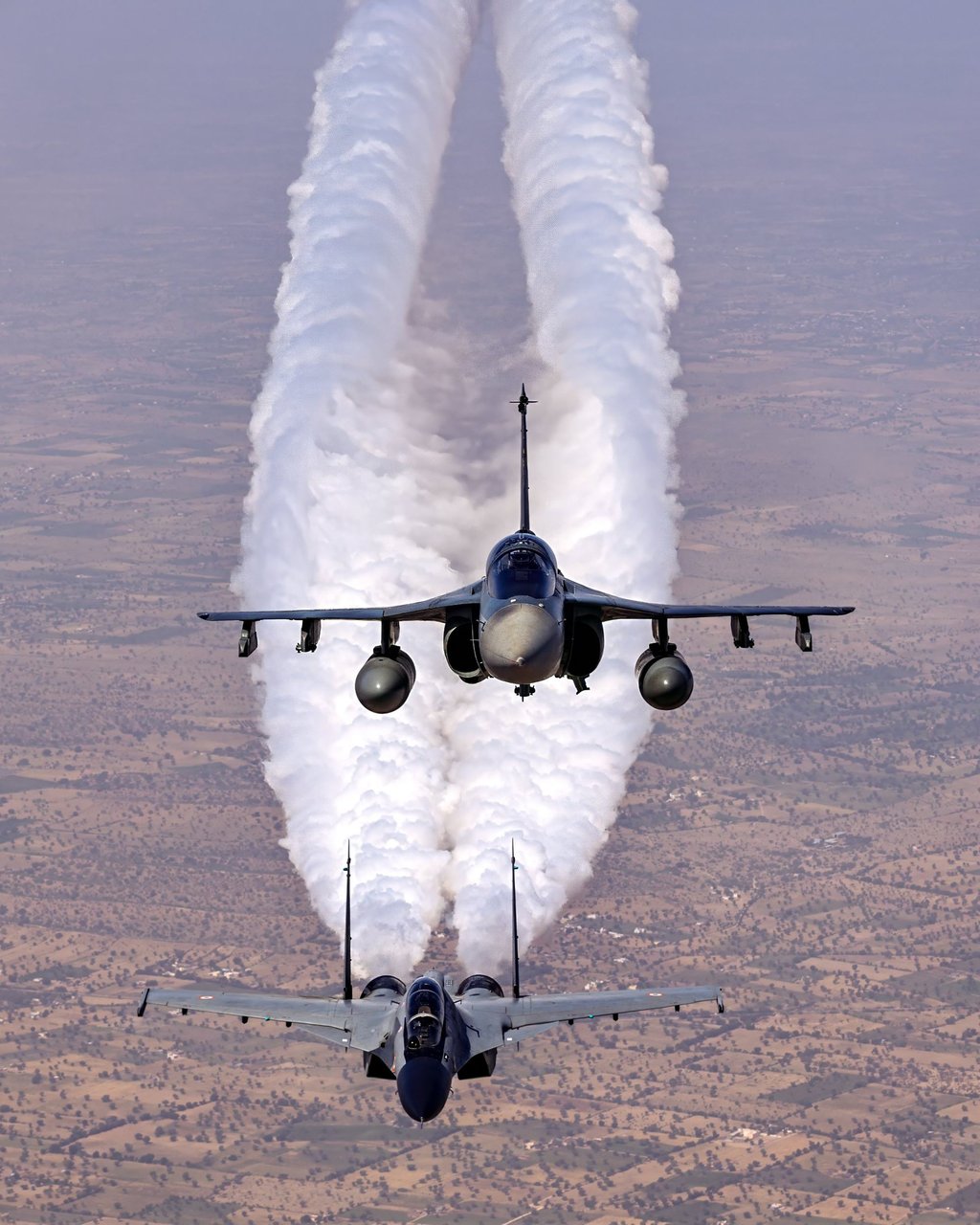
American pilots would likewise get to fly against India’s Russian-developed Su-30MKIs, which, alongside the S-400 surface-to-air missile system, continue to form the core of India’s air power capabilities, he said.
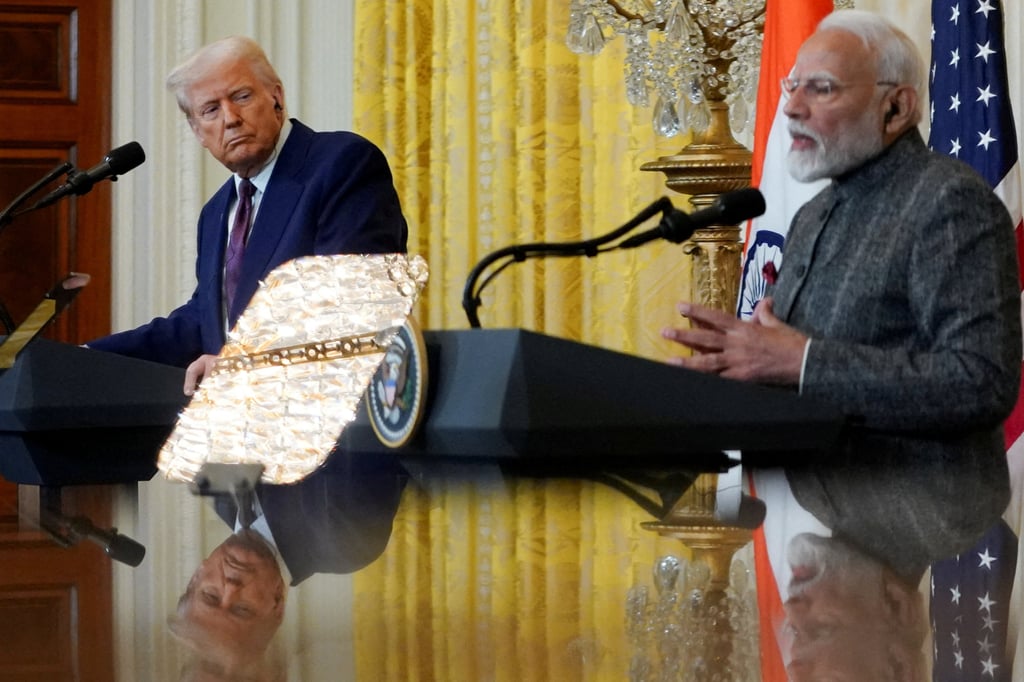
Tarang Shakti 2026 is being held against the backdrop of disputes over US tariffs, disagreements over India’s Russian oil imports and differing approaches to regional security, including US engagement with Pakistan.
Yet arms sales appear to have continued uninterrupted, according to Patil, who pointed to India’s purchase of the US-made FGM-148 Javelin anti-tank guided missile system in August.
“While certain disagreements remain, both countries share converging threat perceptions in the Indo-Pacific,” Patil said.
Singh, the former military officer, said US-India defence cooperation had acquired a “strategic logic resilient to political turbulence”.
“F-35 participation is therefore a hedge against diplomatic volatility, and not evidence that disagreements have vanished,” he said.
The US identified India as a critical partner in its latest National Security Strategy, released late last year, calling for improved relations “to encourage New Delhi to contribute to Indo-Pacific security”.
Against that backdrop, Exercise Tarang Shakti 2026 was “a show of strength and resilience”, Rajagopalan said.
KioskNews shows a cleaned-up reading view extracted from the publisher’s page — the original always lives on their site, not ours.