Why US-Russia Diesel Deal Highlights Deep Energy Ties Between Giants

US President Donald Trump has announced that the United States will buy Russian diesel, a striking shift after threatening penalties on countries that continued trading in Russian energy. While critics have called the move hypocritical, the agreement reflects a pressing need on both sides. The United States is grappling with record-high diesel prices that have fuelled energy inflation, while Russia, one of the world's largest refining powers, has seen its fuel-producing capacity battered by an intensifying Ukrainian drone campaign.
Record-High Diesel Prices In US
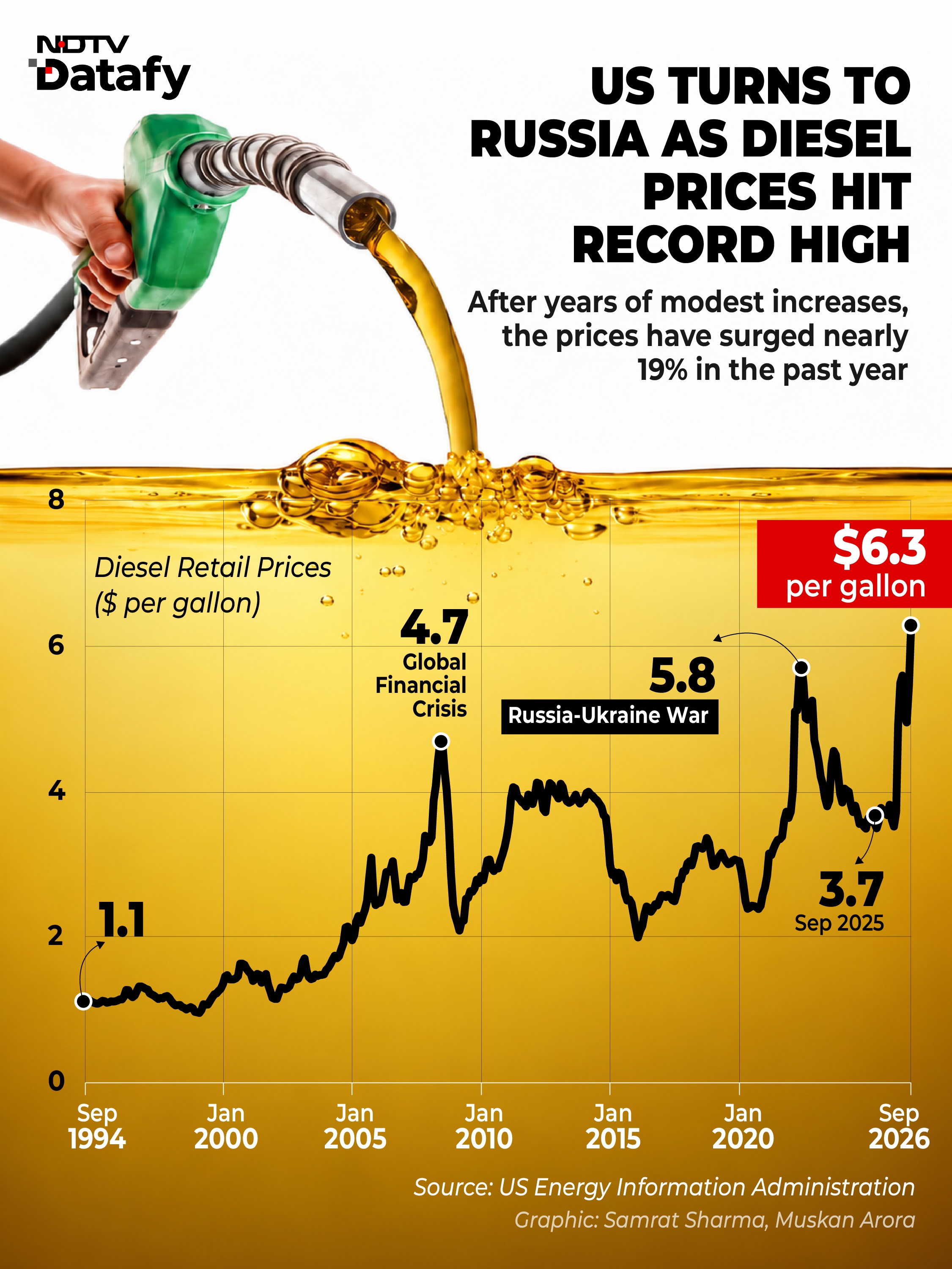
Geopolitical turmoil and sanctions on major energy producers such as Russia and Iran have tightened global fuel markets and pushed diesel prices sharply higher. Retail diesel prices in the US stood at about $3.7 per gallon in September 2025, but surged nearly 70% to around $6.3 per gallon by September 2026, according to the US Energy Information Administration.
As a result, energy inflation in the United States has remained elevated for much of 2026, adding to costs across transport, farming, manufacturing and freight sectors.
Ukrainian Drone Strikes Have Crippled Russia's Refining Industry
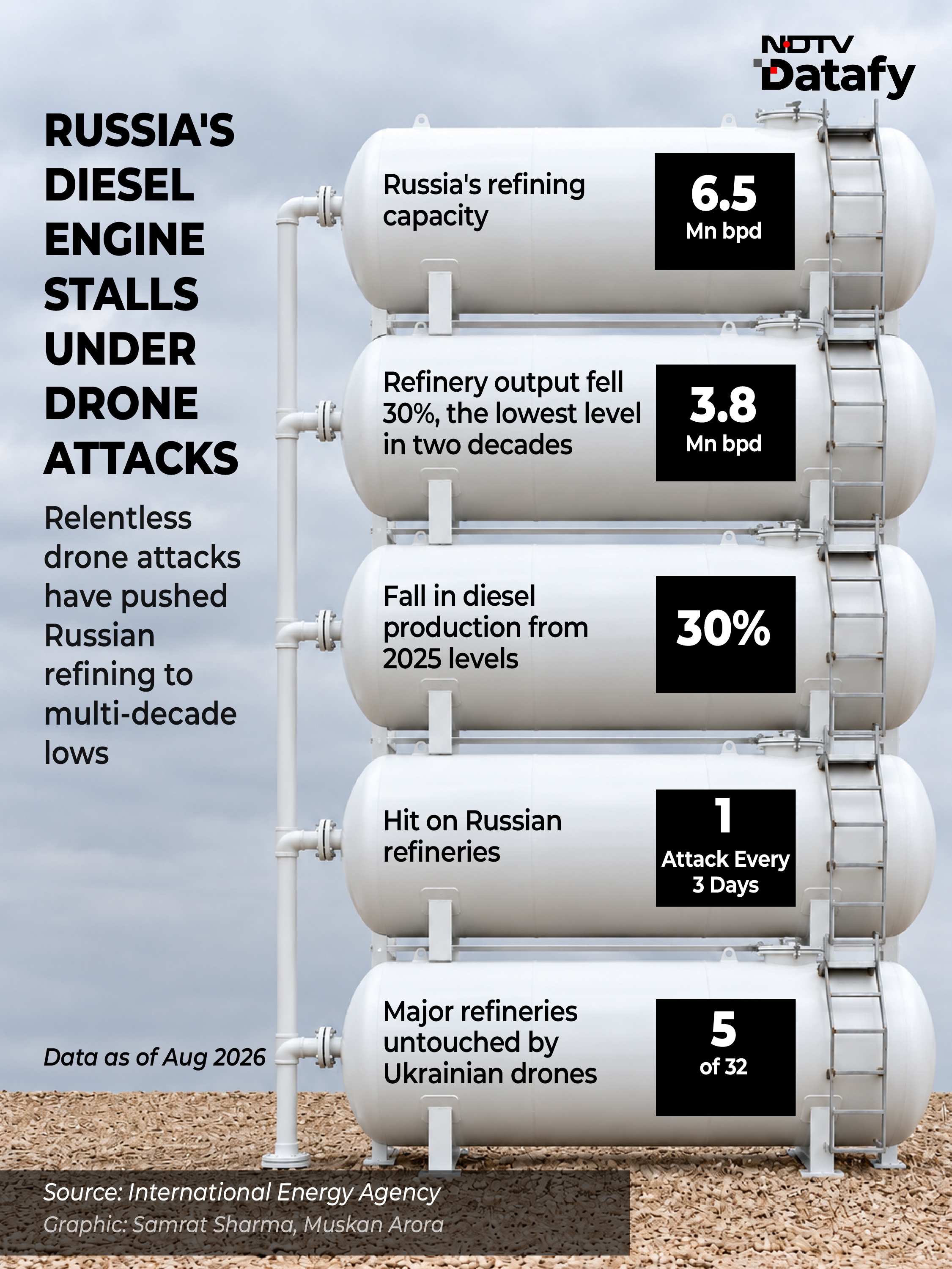
With 32 major refineries and around 6.5 million barrels per day of installed refining capacity, Russia has historically been the world's third-largest producer of refined petroleum products after the United States and China. However, a sustained Ukrainian drone campaign has inflicted severe damage on Russia's refining network over the past 18 months.
In June 2026, Russian refinery throughput fell to 3.8 mb/d, the lowest level in more than two decades and roughly 30 per cent below previous year levels. Gasoline production has declined by about 20 per cent from 2025 levels, while diesel output is estimated to have dropped nearly 30 per cent, forcing Moscow to restrict fuel exports to protect domestic supplies.
"In the first eight months of 2026, a Russian refinery was hit on average once every three days," according to a commentary by the International Energy Agency.
The proposed diesel deal highlights an uncomfortable reality: despite years of sanctions and political hostility, global energy markets remain deeply interconnected. For Washington, additional Russian supplies could help cool diesel prices and ease inflationary pressure ahead of a challenging economic period. For Moscow, access to a large buyer could generate much-needed export revenues at a time when refinery outages and export restrictions have squeezed its fuel trade.
KioskNews shows a cleaned-up reading view extracted from the publisher’s page — the original always lives on their site, not ours.