South Korea’s Lee clears out ‘self-reliance’ camp ahead of Trump G20 summit
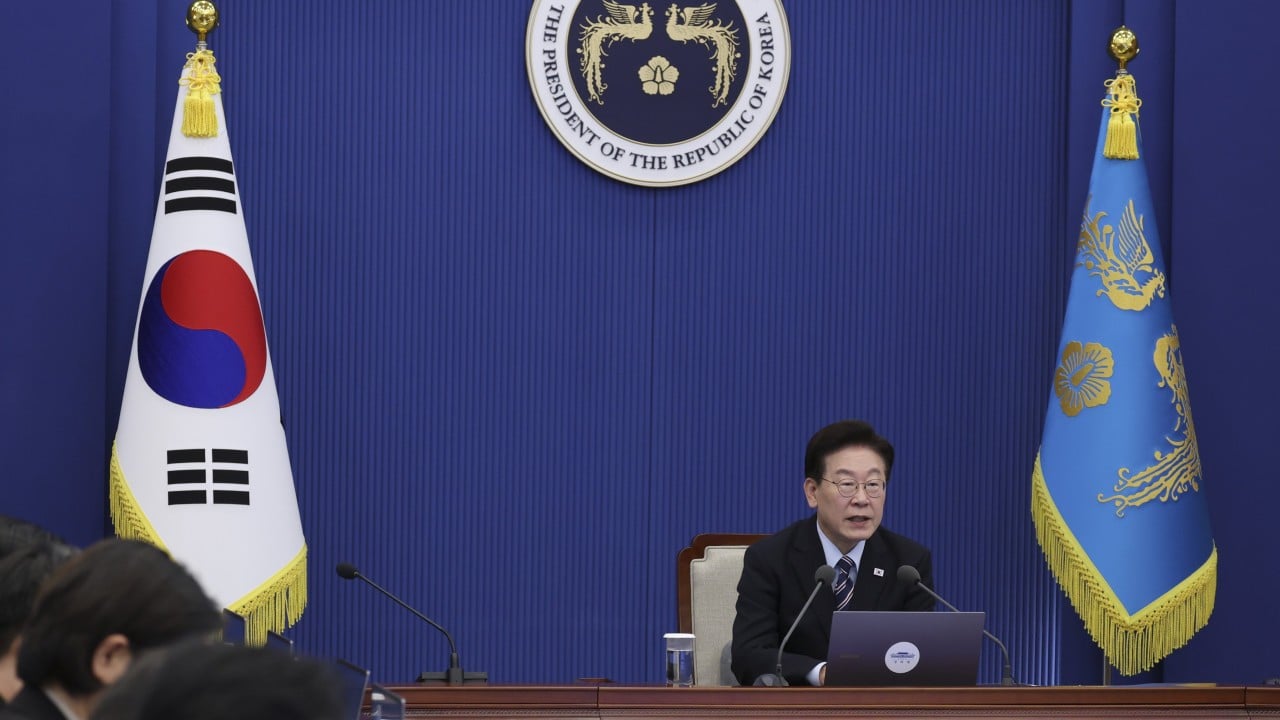
South Korea’s reshuffling of its top diplomatic and security officials could help repair strained ties with Washington and, in turn, ease complications in Seoul’s relationships with Beijing and Pyongyang, analysts said.
President Lee Jae Myung on Monday moved to replace his foreign minister, unification minister and intelligence chief – a shake-up that removes two prominent advocates of greater diplomatic autonomy from Washington and inter-Korean reconciliation.
While the changes suggest a shift towards a more alliance-centred approach, observers said they were more likely to reflect a tactical adjustment than a wholesale reversal of Lee’s foreign policy.
The overhaul comes as negotiations with Washington over key security issues – including South Korea’s acquisition of nuclear-powered submarines, the transfer of wartime operational control and the revision of a bilateral nuclear cooperation agreement – have made little headway.
Outgoing National Intelligence Service (NIS) director Lee Jong-seok and Unification Minister Chung Dong-young were regarded as leading figures in the administration’s jaju (self-reliance) faction, which favours greater strategic autonomy and a more balanced approach towards China and the United States.
Their counterparts in the dongmaeng (alliance) faction, led by National Security Adviser Wi Sung-lac, place greater emphasis on Seoul’s alliance with Washington. Wi has retained his post.
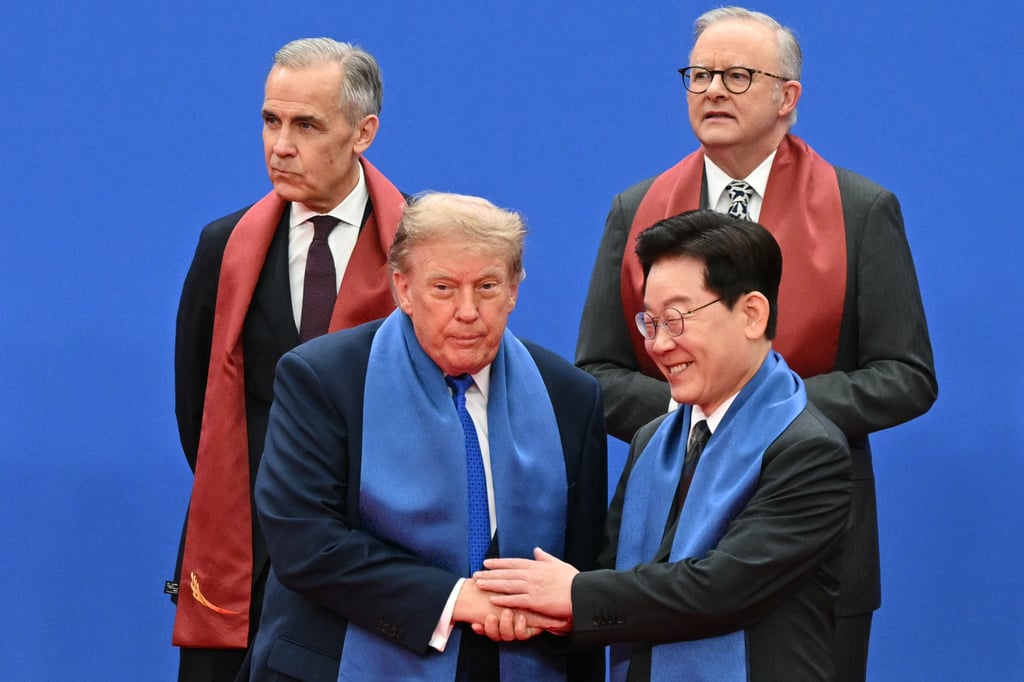
Observers said the reshuffle also signalled President Lee’s desire to mend fences with Washington ahead of next month’s Group of 20 summit in Miami, where Seoul is reportedly exploring a meeting with US President Donald Trump – potentially over a round of golf.
“This reshuffle could be seen as a victory by the [pro-US] alliance faction over the self-reliance faction,” Kim Joon-hyung, parliamentary floor leader of the splinter opposition Rebuilding Korea Party, said. “This is apparently designed to appease Washington, but it remains to be seen how well it will go down with Washington.”
Washington reportedly harboured reservations about Chung and Lee Jong-seok’s foreign policy positions, particularly their push to maintain a balance between China and the US.
Bilateral intelligence cooperation also deteriorated during Lee Jong-seok’s tenure as NIS chief. Earlier this year, Chung publicly disclosed an unconfirmed North Korean uranium enrichment site in Kusong, reportedly prompting Washington to restrict the sharing of sensitive intelligence with Seoul – compounding friction as President Lee clashed with Washington over Seoul’s regulatory crackdown on US-listed e-commerce company Coupang following a massive customer data breach.
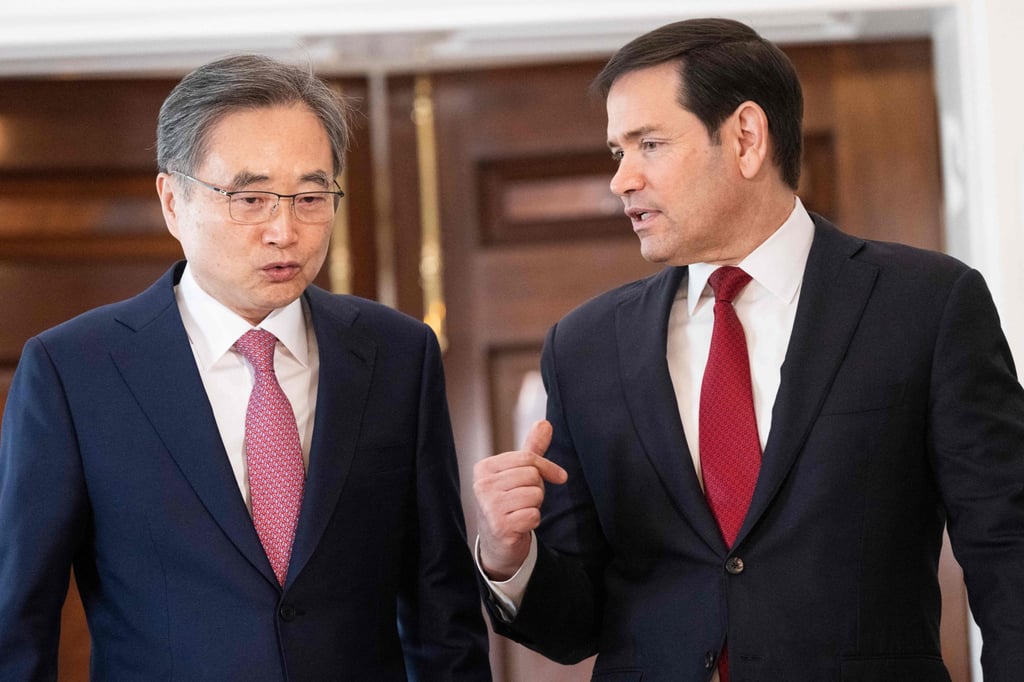
Under Monday’s nominations, Wi’s deputy, second deputy national security adviser Lim Woong-soon, has been nominated as the new foreign minister. Outgoing Foreign Minister Cho Hyun is reportedly among the candidates being considered for South Korea’s ambassador to Washington.
Former justice minister and judge Kang Kum-sil has been nominated to replace Lee Jong-seok as NIS chief, putting her on track to become the first woman to head the agency since its establishment in 1961.
Meanwhile, Hong Ihk-pyo, a former Democratic Party lawmaker who recently served as Lee’s senior political affairs secretary, has been nominated as the new unification minister.
The appointments are expected to consolidate Wi’s influence as national security adviser, potentially tilting policymaking towards a more alliance-centred approach, observers said.
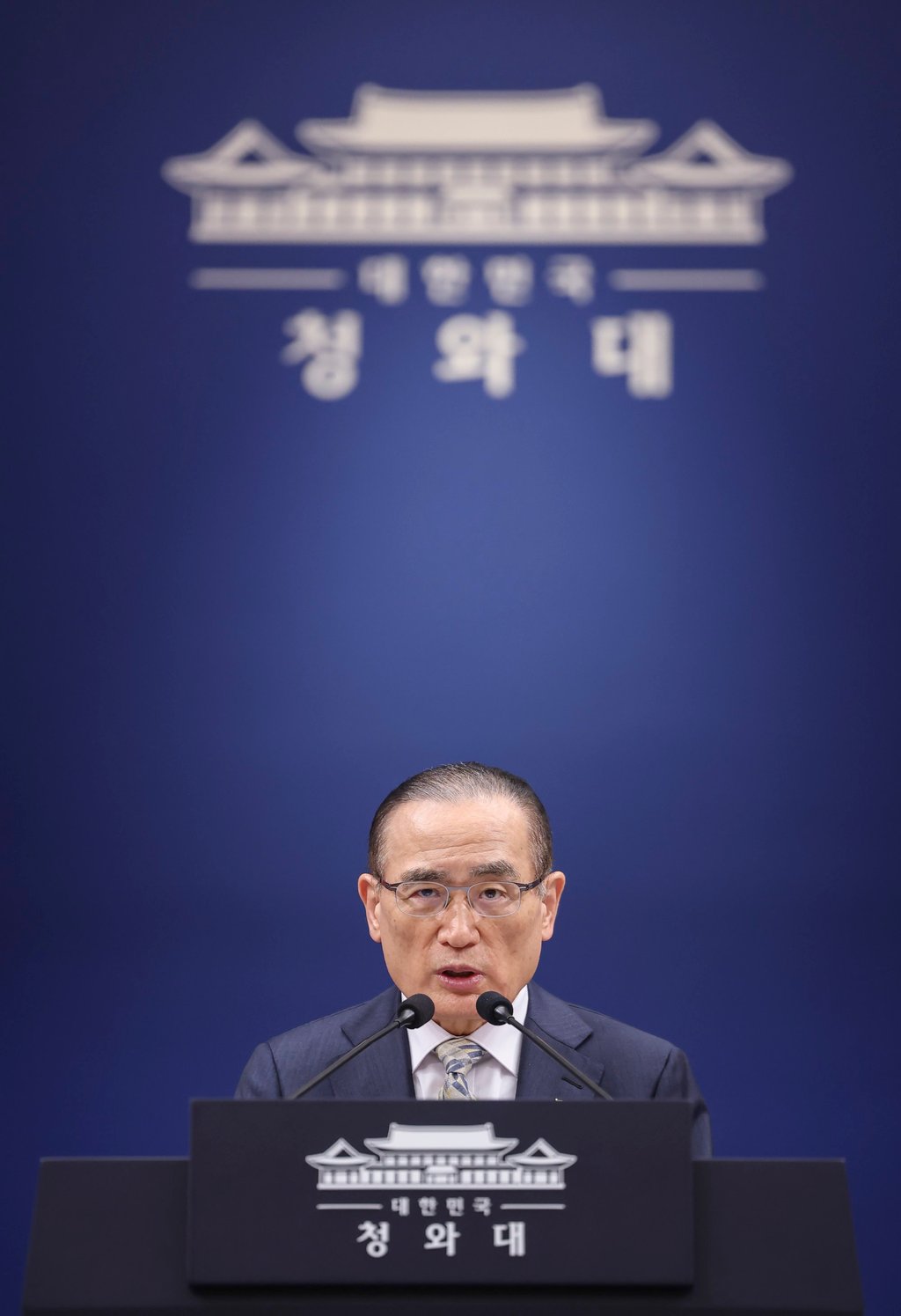
“This cabinet reshuffle is interpreted as a step towards restoring relations with the United States and strengthening the foundations of the South Korea-US alliance,” said Kim Jae-chun, an international relations professor at Sogang University. “The appointments suggest an intention to repair ties with Washington by replacing officials regarded as advocates of greater diplomatic autonomy.”
Cho, who was himself seen as an advocate of strengthening the US alliance, was also replaced – apparently to minimise potential backlash from the government’s traditional support base over the removal of more autonomy-minded officials, Kim added.
The nomination of Lim, who is considered close to Wi, as foreign minister also pointed to continuity in the administration’s broader diplomatic direction, he said.
As for Hong, Professor Kim described the unification minister nominee as a moderate pragmatist with expertise in diplomacy, security and inter-Korean affairs. Unlike Chung, who drew criticism from conservatives for advocating sanctions relief to facilitate dialogue with Pyongyang, Hong was unlikely to make controversial public statements that could complicate ties with Washington, Kim said.
Presidential Chief of Staff Lim Kwang-hyun dismissed concerns that the sweeping changes signalled a shift in the administration’s foreign or North Korea policies, saying the move was meant to “inject vitality into the government administration and accelerate the implementation of state affairs”.
“With the international order in flux, we will seek to achieve maximum results through pragmatic diplomacy and take the lead in opening the path to peaceful coexistence on the Korean peninsula, while firmly protecting the people’s safety and welfare,” he told reporters on Monday.
Choi Jin, director of the Institute of Presidential Leadership, said friction with the Trump administration over Seoul’s earlier autonomy-driven approach had stalled both bilateral cooperation and efforts to revive inter-Korean and US-North Korean dialogue.
“The reshuffle can therefore be understood as a response to the difficulties the government’s dialogue-oriented policy and efforts to address outstanding issues had encountered because of US reservations about some of the previous officials,” Choi said.
“The underlying view is that difficulties in South Korea-US relations tend to spill over into Seoul’s relations with both Beijing and Pyongyang,” he said, adding that the shake-up was intended to inject fresh momentum into those diplomatic initiatives without abandoning overall policy continuity.
“The new appointees are not considered particularly hostile towards China. They are also seen as being receptive to a policy of diplomatic balance between the United States and China and are therefore expected to pursue such an approach,” Choi said.
Not all observers viewed the shake-up as a net positive. Yang Moo-jin, a professor at the University of North Korean Studies, warned that the Korean peninsula remained unstable despite Seoul’s outreach to China and Russia alongside its US alliance.
“At a time when we need active diplomatic efforts to manage the situation, these changes risk creating a vacuum in diplomacy,” he said.
The centre-left Hankyoreh daily echoed that caution in an editorial on Tuesday, pointing to the unresolved North Korean nuclear issue and growing concerns over sphere-of-influence politics among major powers.
“It is imperative to pursue an independent and multifaceted foreign policy that does not rely solely on the United States,” it said.
KioskNews shows a cleaned-up reading view extracted from the publisher’s page — the original always lives on their site, not ours.