Malaysia's AG warned Najib's house arrest could affect political stability, country's image: Pardons Board minutes
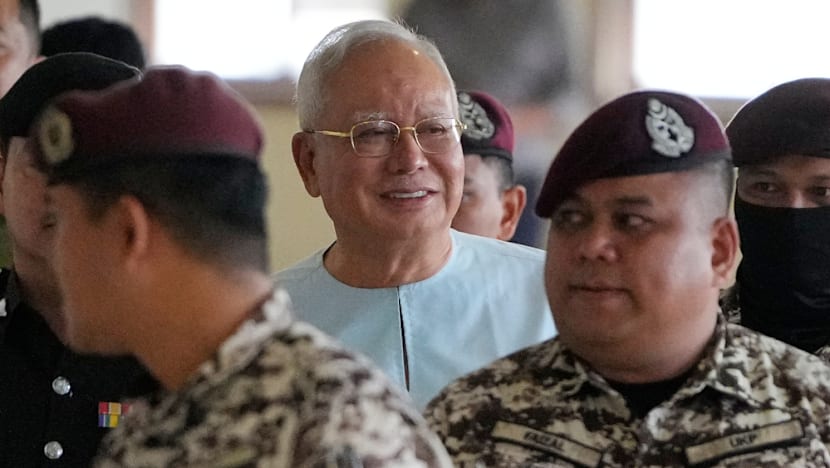
Federal Territories Minister Hannah Yeoh, who sits on the board and is from the Democratic Action Party (DAP), also opposed the move.
New: You can now listen to articles.

This audio is generated by an AI tool.
18 Nov 2026 03:08PM
KUALA LUMPUR: Malaysia’s Attorney-General Dusuki Mokhtar had warned that allowing jailed former Prime Minister Najib Razak to serve the remainder of his first prison sentence under house arrest could affect the country’s political stability, international image, investments and economy, according to purportedly declassified Pardons Board minutes.
The minutes of the Sep 18 meeting, which have been circulating on social media, showed that Dusuki opposed the move, arguing that there were no legal provisions for house arrest under Malaysia’s law, and that Najib should continue serving his prison sentence in Kajang Prison.
“(Dusuki) said that the move would have implications on political stability, the country’s image at the international level, investments and the economy. He stressed that the prisoner should continue serving his sentence,” read the Malay-language minutes of the meeting, which lasted for 45 minutes at the Istana Negara and was chaired by Malaysian king Sultan Ibrahim Sultan Iskandar.
Federal Territories Minister Hannah Yeoh - who also sits on the Pardons Board - had shared Dusuki’s views and maintained the position she had taken at an earlier meeting, according to the minutes.
Fellow board member and former Inspector-General of Police Razarudin Husain also agreed with Dusuki’s views, but added that he would abide by the king’s final decision on the matter.
According to a report by local news portal Malaysiakini, the minutes were declassified for court purposes, in response to the Bar Council’s legal challenge against Najib’s house arrest order.
CNA has contacted Dusuki, Yeoh and the Bar Council about the legitimacy of the minutes, which was shared on Facebook by Tony Pua, the chairman of the Democratic Action Party's (DAP) disciplinary committee.
Former Federal Court judge Harmindar Singh Dhaliwal - who also sits on the board - said that while Malaysia has no specific law governing house arrest, Article 42 of the Federal Constitution empowered the king to grant “pardons, reprieves and respites” for offences, according to the declassified minutes.
Another member, Supri Hashim, pointed out that Najib still faces several pending court cases that could carry additional prison sentences.
Dusuki said that the board should factor in Najib’s ongoing bankruptcy proceedings over more than RM1.7 billion (US$385 million) in unpaid taxes.
Sultan Ibrahim, however, had previously said the court cases were a separate matter and that Najib still had the right to contest them in court.
Najib, 73, has been imprisoned since August 2022, when Malaysia’s top court upheld his conviction for abuse of power, criminal breach of trust and money laundering involving funds from SRC International, a former subsidiary of 1MDB, in his first graft trial linked to the multibillion-dollar looting of the state investment fund.
His original 12-year prison sentence was halved to six years by the Pardons Board in 2024, while his fine was reduced from RM210 million to RM50 million.
The King had granted Najib a conditional pardon, provided he paid a RM50 million fine.
According to the minutes, Yeoh also suggested during the meeting that someone else, such as the chief secretary to the government, sign off on the board’s decision instead of her.
When she again raised the possibility of political repercussions for the government, the king noted that the chief secretary was not a member of the board and ordered Yeoh to fulfil her duties as federal territories minister and sign the conditional pardon order.
Former police chief Razarudin added that if someone else signed the order instead of Yeoh, it would create more issues and give the impression that she was absent from the meeting.
According to the minutes, Dusuki and Yeoh did not make any comments on the draft clemency order as they were against the decision.
FROM KAJANG PRISON TO HOUSE ARREST
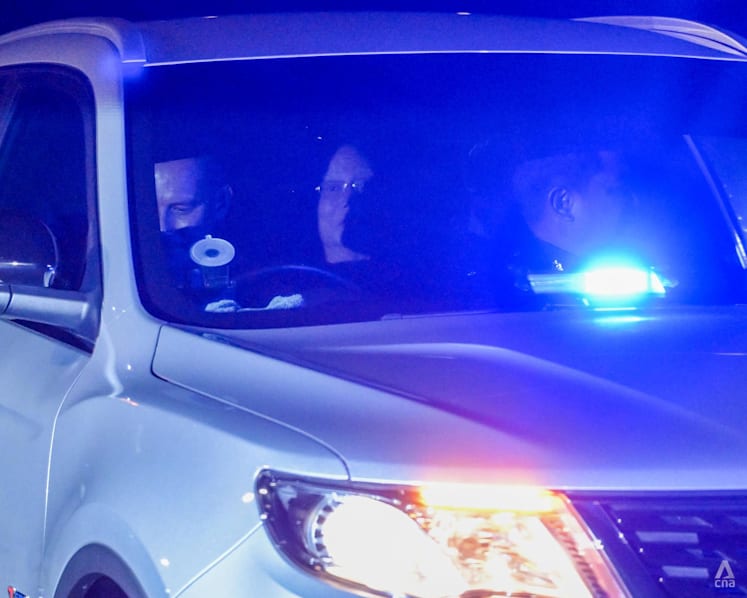
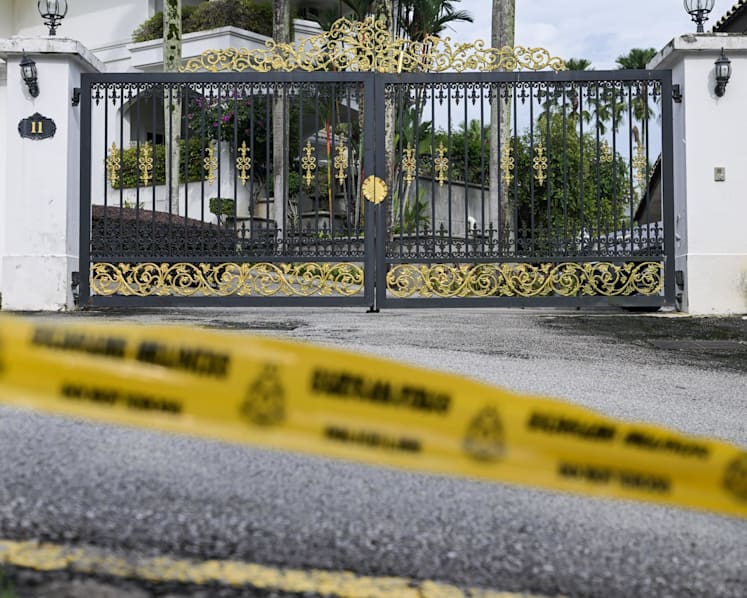
Najib, 73, began serving his sentence at his residence at No 11, Jalan Langgak Duta on Nov 10, after several days of legal uncertainty over the implementation of his house arrest order.
The former prime minister had initially left Kajang Prison on Nov 6 after his RM50 million fine was paid, but was brought back hours later after the Attorney-General’s Chambers called for his house arrest to be temporarily suspended pending legal clarification.
A day later, Sultan Ibrahim said the conditional pardon was “clear, explicit and without any ambiguity” and warned that any attempt to dispute the order would amount to defying the monarch's decree.
Thus, the High Court on Nov 10 cancelled an earlier discharge order and issued a new conditional release order, after which Najib was taken to his Kuala Lumpur residence to begin house arrest.
The conditional pardon granted by Sultan Ibrahim allows Najib to serve the remainder of his sentence at home until his scheduled release on Aug 23, 2028.
As part of the restrictions on his house arrest, Najib is barred from participating in political activities, making media statements or appearing on social media, Home Minister Saifuddin Nasution Ismail told parliament on Nov 12.
The conditions also restrict where Najib can live, who can visit him, when he can leave his home and which phones and telecommunications devices he can use.
Any breach of the conditions will result in Najib being immediately returned to prison, said Saifuddin in response to questions in parliament.
Saifuddin also revealed then that a written request by Najib for a second residence to be included in his house arrest arrangement was not approved.
KioskNews shows a cleaned-up reading view extracted from the publisher’s page — the original always lives on their site, not ours.