Tamil links to West Asia: What underwater excavations in Chola capital reveal
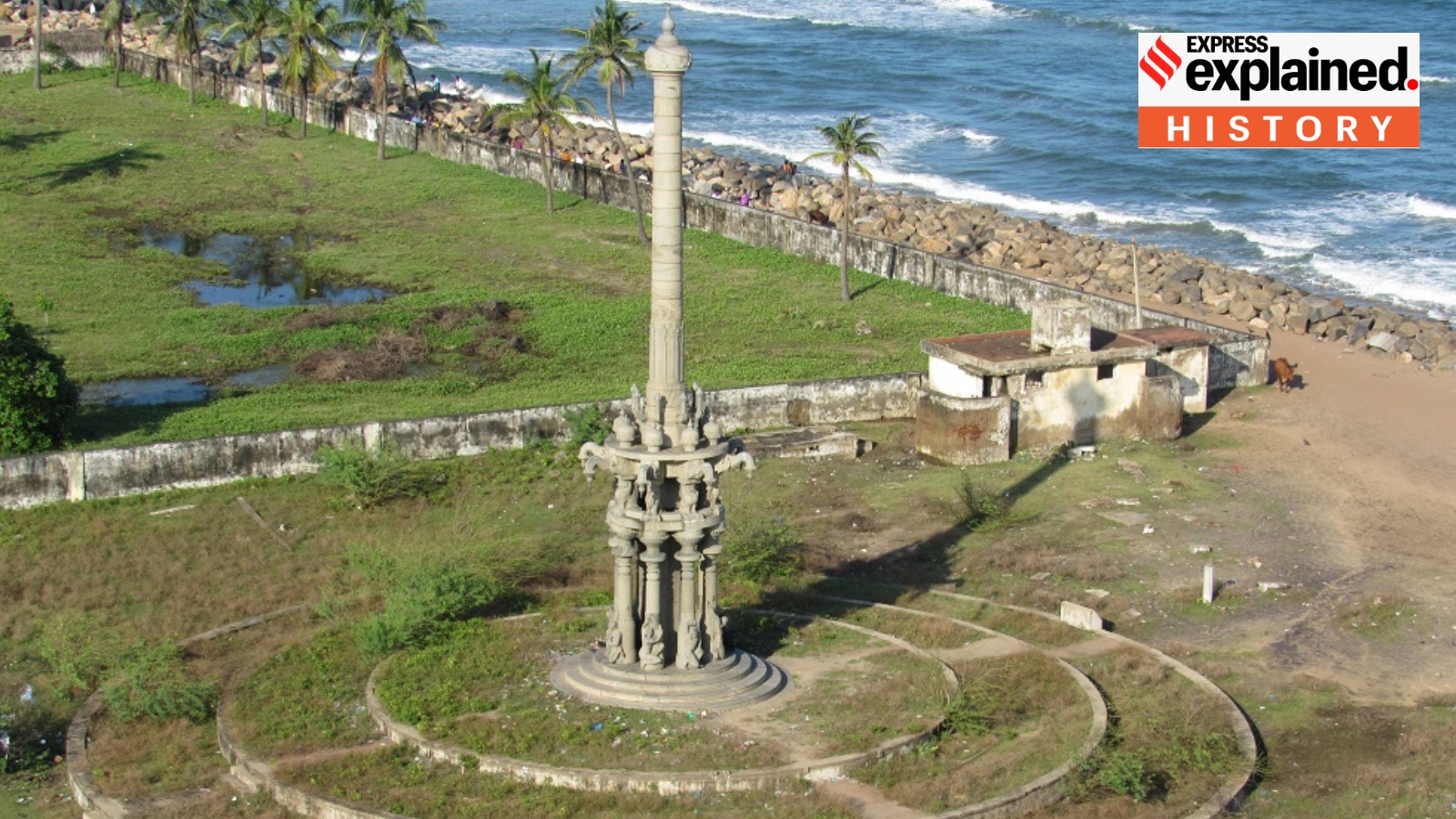
Fresh underwater excavations off Poompuhar, the ancient Chola port city in Tamil Nadu, have yielded new evidence of the settlement’s maritime connections. The 18-day exploration, conducted by the Tamil Nadu State Department of Archaeology (TNSDA) in collaboration with the Indian Maritime University, recovered a fragment of a West Asian “torpedo jar”, four terracotta ring wells, and more than 250 ceramic fragments, among other finds.
Poompuhar, located in present-day Mayiladuthurai district, features prominently in Sangam and post-Sangam literature. Archaeological investigations over the decades have uncovered evidence of its links with wider Indian Ocean trade, while much of the ancient settlement is believed to now lie beneath the sea.
Why is Poompuhar of such importance, and what have excavations so far revealed?
Sitting at the mouth of the Cauvery
Located at the mouth of the 800-km-long Cauvery river, where it empties into the Bay of Bengal, Poompuhar — also known as Kaveripoompattinam — is believed to have been the capital of the early Cholas. In a 2011 archaeology report, R. Poonkundran, K. Sridharan and others write: “This city seems to have been in existence from 5th-4th century BCE as the carbon date of a log of wood recovered from Poompuhar clearly shows.”
Poompuhar is said to have been divided into three major divisions: Maruvurppakkam, Pattinappakkam, and Nalangadi. Maruvurppakkam was situated along the seashore, Pattinappakkam to the west, while Nalangadi lay between the two.
Tamil Nadu’s hidden trade network
The port is described as having been very busy and crowded during the Chola period. Merchandise exported from the city was stamped with a tiger symbol, indicating that it came from Chola country. Merchants from across India and Southeast Asia thronged the city, seeking a market for their commodities. “Articles from Ganges region, food products from Ceylon and spices from Java were imported,” note Poonkundran and Sridharan.
The recent findings offer further evidence of this. Among the significant discoveries is a fragment of a fine-ceramic West Asian “torpedo jar”, with an estimated total diameter of 30 cm to 35 cm. Historically used to transport liquid cargo such as wine and olive oil across oceanic trade routes, the vessel is proof of Poompuhar’s maritime links with West Asia and the Mediterranean world.
Story continues below this ad
This discovery, however, is not entirely new. In their 1996 research paper, “Marine Archaeology Explorations in the Kaveripoompattinam Region”, authors Sila Tripati, A.S. Gaur, and others noted: “Ships starting from Tamralipti in West Bengal and Palur in Orissa used to visit Poompuhar, whence all sea-going vessels set sail for the Southeast Asian countries, Arabia and Rome.”
In In Search of Lost Cities (2025), Sreelata Menon wrote, “Ships from Rome, Egypt, China and Arabia docked and undocked around the clock at the harbour… Cargo of all kinds, including horses, was loaded, unloaded, checked and stamped with the Chola customs seal – a tiger symbol.”
The many objects of Poompuhar
Among other prominent findings were brick structures, terracotta ring wells, storage jars and clay patches that appear to have belonged to the Sangam period. Tripati and Gaur noted: “These structures are probably the remains of a public building, wharf and reservoir also of contemporary date.” They added that the discovery of megalithic pottery and associated ware, along with the other remains from the offshore area, proves that the ancient habitation of Poompuhar extended beyond the present shoreline.
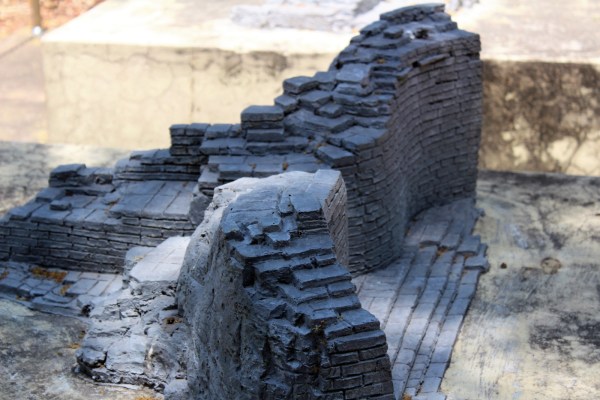 The Pallavaneswaram excavations in Poompuhar of Tamil Nadu’s Mayiladuthrai district. Photo: Wikimedia Commons
The recent excavations have found that, since ring wells were traditionally constructed on dry land to access freshwater, their presence on the seabed could indicate a buried palaeochannel — an ancient riverbed that was eventually submerged as a result of coastal erosion and rising sea levels.
Lost city
Story continues below this ad
It is believed that catastrophic floods lashed the coast and swallowed major portions of the city around the 4th or 5th century CE.
Menon shed light on another legend: the king of the port, grieving the death of his son, failed to celebrate Indra Vizha — a traditional festival where farmers worshipped Indra (also called Vendhan) as the ruler of rain, thunder, and lightning to secure a bountiful harvest. Enraged by this, the goddess of Poompuhar caused the sea to swallow the entire city.
Archaeological studies have also pointed to the possibility of a major tsunami striking Poompuhar around the third century CE and contributing to its submergence.
While scholars have differing opinions on this, one view is that either the entire city was submerged and rebuilt after the sea receded, or only a part of the city was engulfed by the sea. Poonkundran and Sridharan wrote, “The latter seems to be more probable.”
KioskNews shows a cleaned-up reading view extracted from the publisher’s page — the original always lives on their site, not ours.