Opium In Hidden Compartment: Parcel Exposes Cross-Border Crime Network
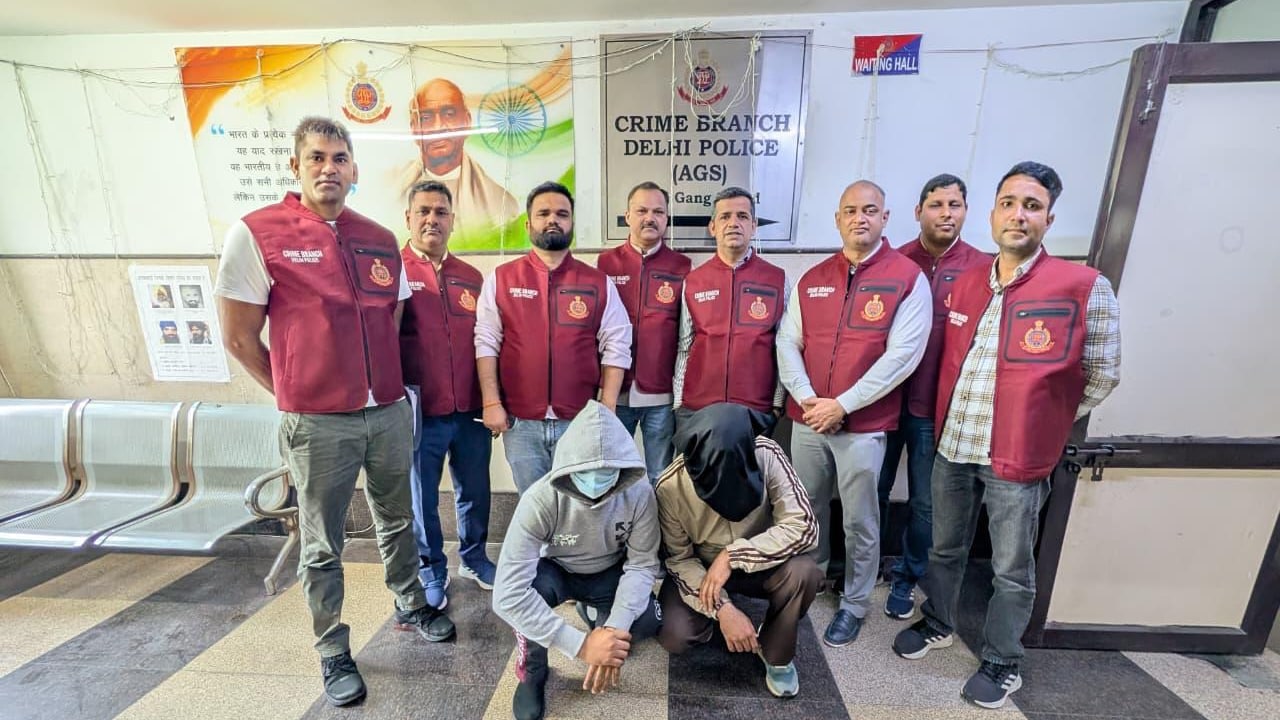
A parcel that looked like nothing more than a box of snacks and household items has led Delhi Police to what they describe as an international narco-terror network, one that stretches from Punjab, Haryana and Rajasthan all the way to Canada. Delhi Police have uncovered a suspected "drugs-for-weapons" pipeline allegedly linked to Canada-based Khalistani terrorist Arshdeep Singh, better known as Arsh Dalla.
The investigation traces back to 7 February 2026, when the Delhi Police Crime Branch received a tip-off about a courier parcel headed to Canada from Delhi. The information suggested narcotics were hidden inside, tucked among food items and household goods.
Acting on the tip, a Crime Branch team went to a courier company's facility in Delhi's Moti Nagar area and intercepted the parcel.
On the surface, the box looked ordinary enough, packed with snacks, biscuits, sweets and other everyday items. But a closer inspection uncovered a specially built "false bottom" inside the carton. Hidden beneath it was around 2.998 kg of opium.
Also Read: On Camera, Delhi Cops Attacked With Chilli Powder, Bricks After Bike Seizure
Police say the parcel had been carefully put together to slip past routine security checks and customs screening.
Investigators went through the accused's mobile phones, collected digital evidence, checked bank accounts and UPI transactions, and used technical surveillance to identify other people involved in the network. This led to raids at several locations across Punjab, Haryana and Rajasthan.
The recoveries kept mounting. Another parcel bound for Canada yielded 921 grams of opium. A third export consignment turned up 1.196 kg. Police also say they recovered 23 grams of opium from the possession of one of the accused, Simranjit Singh.
In total, 5.138 kg of opium was recovered across the various locations during the investigation, an amount police say falls under the "commercial quantity" category.
Four Men, Four Roles
Delhi Police have arrested four people in connection with the case: Simranjit Singh, Hardeep Singh, Yadvinder Singh (also known as Jasan Sandhu), and Jeevan Singh. Police say each handled a different part of the operation.
Hardeep Singh, 28, from Barnala in Punjab, is alleged to have been the network's operational coordinator in India. He is accused of collecting opium from "dead-drop" locations using GPS coordinates, arranging its supply and packaging, and running operations based on instructions from handlers abroad.
Yadvinder Singh, alias Jasan Sandhu, 30, from Sirsa in Haryana, is accused of being involved in procuring, concealing and packaging the opium. Police describe him as a key link between those operating in India and the accused based overseas. Information from him helped police trace another parcel being sent from Rajasthan to Canada.
Also Read: He Was 23 When He Fled After A Murder. Delhi Police Caught Him At 65
Simranjit Singh, 24, from Bathinda in Punjab, is accused of handling the dispatch of the parcels. Police allege he booked parcels using forged KYC documents and other people's identities, hiding the opium among ordinary goods for shipment.
Jeevan Singh, 23, from Balotra in Rajasthan, has been identified as the operational link and dispatcher for the Rajasthan-based part of the network. Police say information about another parcel, from which opium was recovered, came through him. His leads also helped trace a further parcel sent from Punjab to Canada, and the search for those who sent it is currently underway.
The most serious part of the case, according to Delhi Police, is what they have called a "drugs-for-weapons" nexus. Police say the opium sent to Canada was sold there, and the money made was used not just to grow the drug trade but also to fund terror-related activities.
Police claim part of these funds was used to run Arsh Dalla's gang and network abroad, while another portion was sent to handlers overseas. The investigation found that, in return, weapons were allegedly being dropped by drones from Pakistan into border areas of Punjab.
In effect, police say, while opium was being smuggled out of India, the money it generated was helping build a weapons supply chain, with the arms allegedly meant for gang members and their associates active in Punjab.
Police have also laid out the financial side of the network. According to them, opium was bought in India at around Rs 1.5 lakh per kilogram, or roughly Rs 150 per gram.
Once it reached Canada, however, the same opium was allegedly sold for between 50 and 100 Canadian dollars per gram, which works out to roughly Rs 3,300 to Rs 6,700 per gram in Indian currency.
That price difference meant opium bought cheaply in India could be sold for many times its value in Canada, generating large profits. Police say this money was then used to expand the drug network, fund the gang, and procure weapons.
KioskNews shows a cleaned-up reading view extracted from the publisher’s page — the original always lives on their site, not ours.