Money manager eyes Asia-Pacific property for growth, but tells investors to keep bet on US
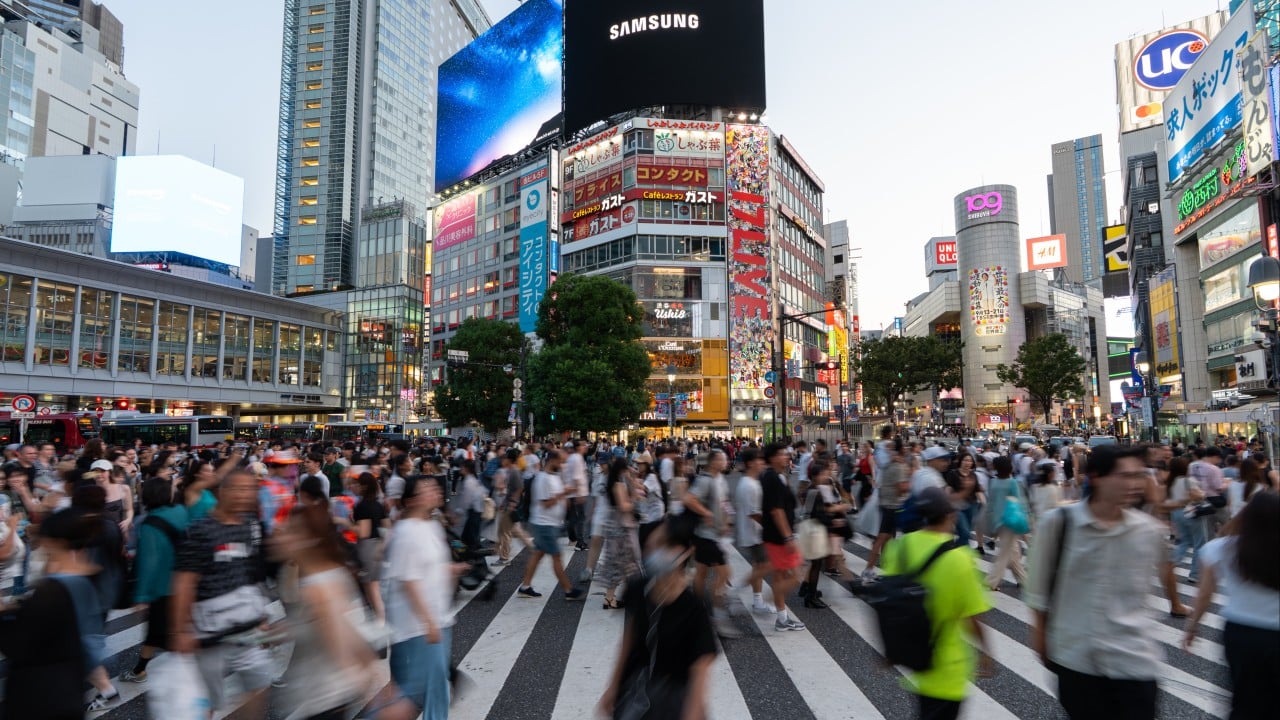
US-based money manager Principal Asset Management says it is poised to become more active in Asia-Pacific property markets, believing investors have been “underweight” in the region’s office property segment.
Richard Hill, its senior managing director and head of global real estate research and strategy, said the group was also seeing continued interest from institutional investors in the Asia-Pacific region looking to access opportunities in US commercial real estate as it was “too big to ignore”.
“In my global travels, meeting with investors, whether it be in the US or in Europe or even the Middle East, investors are waking up to the reality that they are structurally underweight in the Asia-Pacific region relative to its share of total global commercial real estate valuations,” Hill said in an interview.
Principal is part of the Principal Financial Group, headquartered in Des Moines, Iowa, which managed US$808 billion in assets in the second quarter of the year, according to its latest financial report.
Hill said the appetite for Asia-Pacific commercial properties was underpinned by elevated interest rates in the United States and elsewhere, leading investors to look for fast-growing markets to drive growth.
“We are in a higher interest rate environment today, really across the world, than we have been at any point in time over the past 15 years,” he said, noting that “the only way” to drive returns in such an environment was to find commercial real estate opportunities that were growing fast enough to offset higher financing costs.
“You do that by picking the right property types in the right markets, and you do that by manufacturing net operating income growth through development and redevelopment opportunities,” Hill said. “So the reality is, I think investors are now expanding the universe of markets that they’re willing to look at to find those returns.”
The US Federal Reserve embarked on a new monetary policy tightening course last month with a quarter-point increase in its benchmark interest rate, the first in three years, to rein in inflation. In August, the inflation rate in the world’s largest economy remained at 3.4 per cent, well above the Fed’s long-term target of 2 per cent.
Investors are now coming to the reality that the only way you’re going to drive returns is through fundamentals
In the first half of the year, investment in Asia-Pacific commercial real estate rose by 29 per cent year on year to US$103.7 billion, according to financial data provider MSCI.
The region’s share of global cross-border investment had been climbing since 2022 and hit a record 32 per cent late last year, it said.
“For the better part of the past two to three years, many investors were hoping for a lower interest rate environment to drive returns,” Hill said. “That’s off the table now, and so investors are now coming to the reality that the only way you’re going to drive returns is through fundamentals.”
Australia, Japan, Singapore and South Korea were likely to be the focus of investors’ interest in the region, he said, adding that no time frame had been set for Principal’s plan to be more active in the region, which only accounted for “percentage points” of the group’s portfolio.
Meanwhile, Hill cautioned investors against pulling out of the US commercial real estate market amid heightened geopolitical uncertainties and rising interest rates.
Foreign investment in US commercial real estate was estimated to have accounted for just under 5 per cent of total transaction volumes in the second quarter of this year, Hill said, down from a peak of 22 per cent in the fourth quarter of 2015.
“The US market is too big to ignore, but we do recognise the bar for investing in US commercial real estate has risen,” he said. “The US is the largest commercial real estate market in the world, and if you are not investing in the United States, you are making a conscious decision to be structurally underweight in commercial real estate on a global basis.”
US President Donald Trump signed an “America First Investment Policy” memorandum early last year that said the US would “use all necessary legal instruments”, including the Committee on Foreign Investment in the United States (CFIUS), to block China-affiliated investments in American “technology, critical infrastructure, healthcare, agriculture, energy, raw materials or other strategic sectors”.
In the order, Trump said his administration would “protect” American farmland and real estate near “sensitive facilities”.
KioskNews shows a cleaned-up reading view extracted from the publisher’s page — the original always lives on their site, not ours.