From spectacle to scale: why China’s robotics firms face a ‘critical juncture’
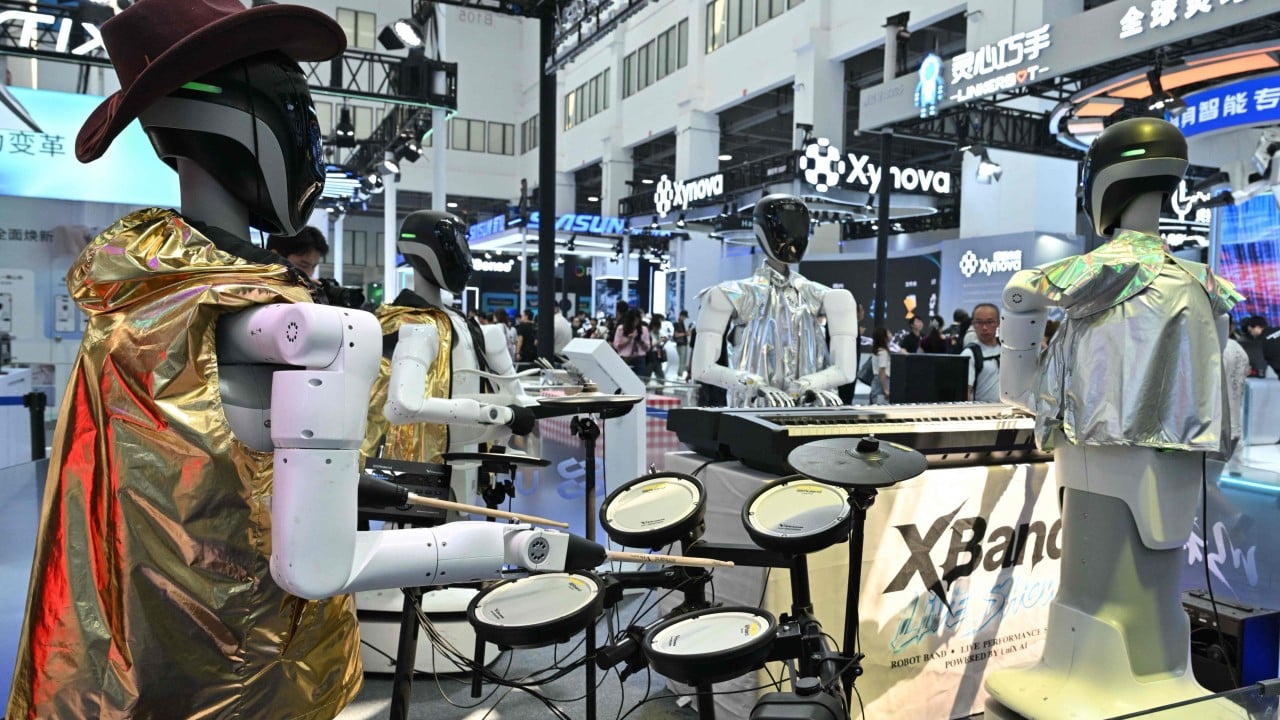
At China’s annual World Robot Conference (WRC) that kicked off on Wednesday, the hall was filled with humanoid robots wowing visitors with feats of dexterity: from playing table tennis to performing drum solos.
These eye-catching displays have helped China’s robotics industry win global attention – and raise huge amounts of capital – over the past couple of years. But at this year’s summit, the overriding sentiment among executives, investors and policymakers was starkly pragmatic: the era of viral parlour tricks is over.
Across the industry, the race is now on to make the leap from small-scale trials to large-scale deployment, as firms come under pressure to generate real-world returns. Xu Xiaolan, president of the Chinese Institute of Electronics and a former vice-minister at China’s Ministry of Industry and Information Technology, said on Wednesday that the embodied intelligence industry was at a “critical juncture”.
“The core goal over the past two years has been to push applications into the real world,” Xu said, pointing to emerging uses in public services, logistics, manufacturing, healthcare and emergency response.
China leads the world in manufacturing humanoid robots, accounting for 97 per cent of global shipments in the first half of the year, according to Morgan Stanley. The country is rapidly scaling up production, with deliveries set to rise from an estimated 12,000 units last year to 50,000 in 2026 – and 446,000 by 2030, the firm projected.
The shift to mass production will also transform competition in the industry, with firms needing to deliver robots that offer “reliability, autonomy and economic value in real operating environments rather than locomotion performance alone”, Morgan Stanley said in a report published ahead of the conference.
The opening of the five-day event in Beijing, which features more than 300 robotics companies, up 36 per cent from last year, coincided with the debut of industry leader Unitree Robotics on Shanghai’s Star Market. Its shares closed up 460 per cent on the first day of trading.
KioskNews shows a cleaned-up reading view extracted from the publisher’s page — the original always lives on their site, not ours.