These unusual mud prawns are making a splash in Terengganu
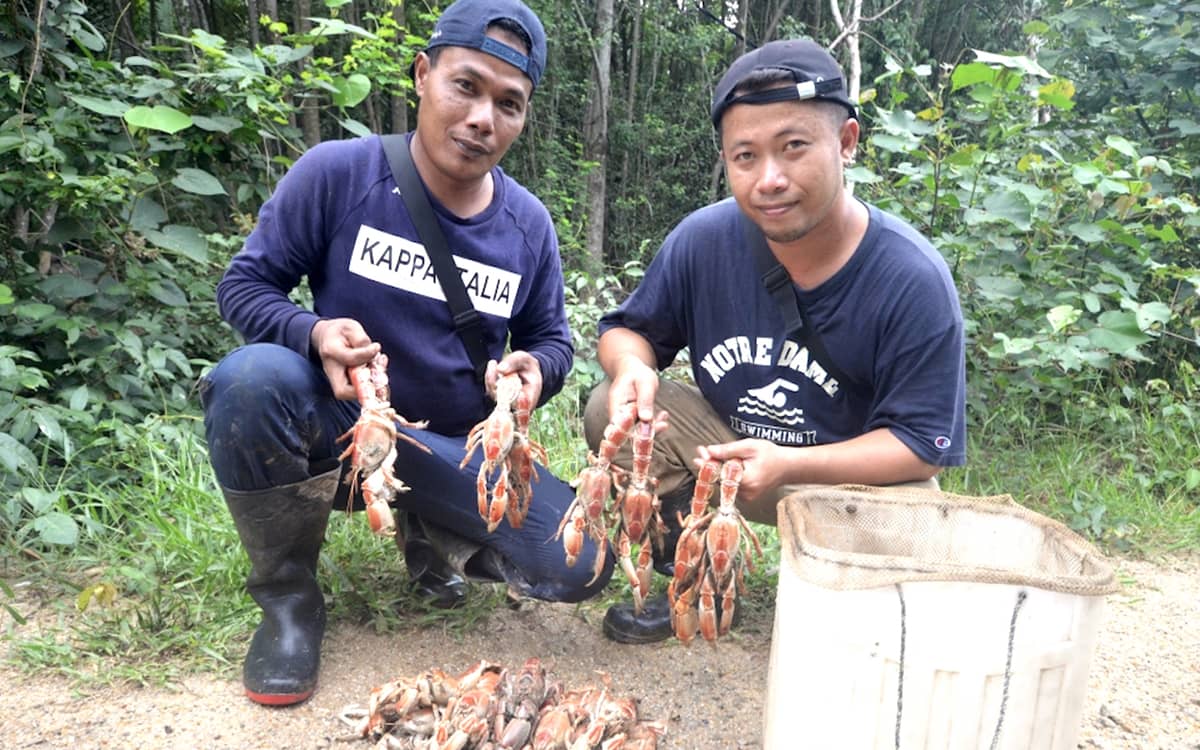
For years, Azuan Mahadi made his living catching creatures such as eels, mud snails and giant freshwater prawns from rivers and wetlands around his home.
Then, during a trip to Riau, Indonesia two years ago, he encountered something new: udang pusu, a prawn with an unusual appearance and surprising flavour. A friend served them fried with oyster sauce, and Azuan was hooked.
“My first taste of the prawns made me appreciate their delicious, sweet flesh,” the 31-year-old recalled. “I ate about 10 of them but still wanted more because they were so tasty!”
The flavour, he noted, reminded him somewhat of mud crab.
Azuan also learnt how the prawns were caught: they live in muddy burrows in mangrove and nipah palm swamps, and Riau fishermen coax them out by pouring a mixture of water and edible lime into the holes.
The process takes patience, with the prawns usually emerging after around 45 minutes to an hour.
Later, Azuan began wondering whether the same creatures might be hiding in the nipah swamps near his own home. He started searching for them, initially with nothing more ambitious in mind than putting something different on the family table.
That changed after he posted photographs of his catches on social media: curious customers began asking whether they could buy some, and the little-known crustaceans soon became another source of income.
Azuan now receives orders for around 80kg of prawns a week, selling them for RM25-RM30 per kg depending on size. As orders have grown, his friend Shahrul Izwan Mat Ghani has begun helping him out.
The work remains unpredictable, however: “The catch is not always consistent, and I am not always lucky enough to find large ones, which customers prefer.”

Udang pusu are typically found in brackish-water areas where mangroves and nipah palms thrive. Their name comes from the mud mounds, or “pusu”, built around the entrances to their burrows.
They become easier to spot during the flood season, when they may emerge onto the mounds or move among the trees. Their odd appearance initially made Azuan hesitate to regard them as food at all.
“Previously, I thought they were not edible because of their rather unusual appearance,” he revealed. But these days, searching for them has become part of his routine.
Azuan usually heads out between 8am and 1pm, working through the swamp to fulfil customer orders before returning to clean the catch thoroughly.
He pays particular attention to the heads, removing certain internal parts before sale so the prawns are properly prepared for cooking.
For Azuan, who has spent more than a decade learning the rivers and wetlands around him, his catches of udang pusu are another reminder that familiar landscapes can still hold surprisingly tasty surprises!
KioskNews shows a cleaned-up reading view extracted from the publisher’s page — the original always lives on their site, not ours.