‘We thought that doesn’t happen here’: Inside the crime that shocked a nation
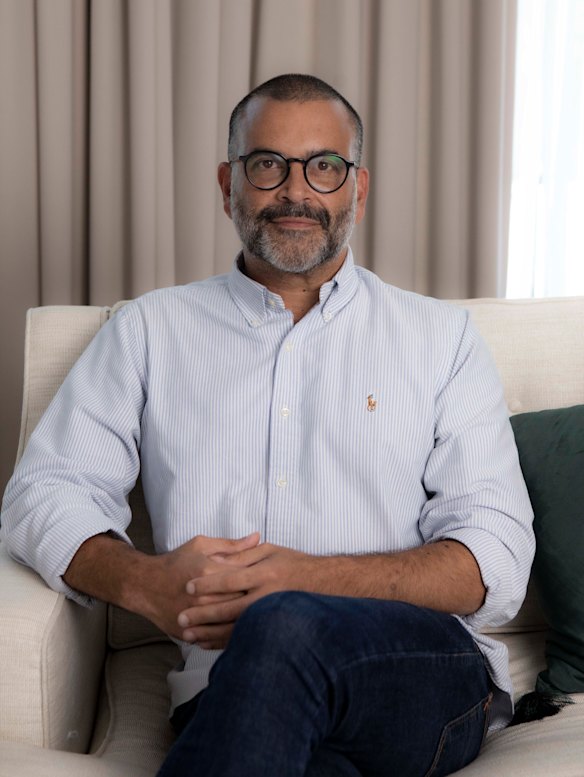
When Darren Dale got a call from barrister Andrew Boe telling him a young black man had died at the hands of police, his response was visceral and immediate.
“I thought, ‘This is happening again,’” says Dale, who has been a producer at the award-winning Blackfella Films since 2002 and has run the company since founder Rachel Perkins departed in 2022. “I started following the case, and then [policeman Zachary] Rolfe gets off at the murder trial … and I just thought, ‘God, we have to keep telling these stories.’”
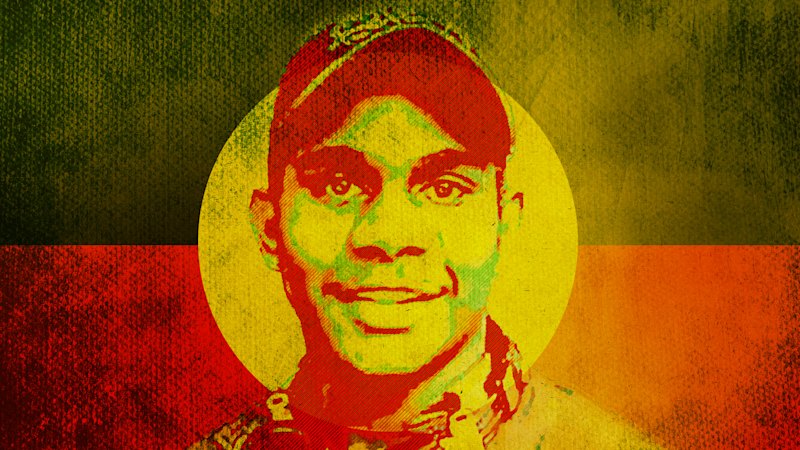
Dale had produced Tony Krawitz’s The Tall Man (based on Chloe Hooper’s book) in 2011, a feature documentary about the 2004 death in custody of Palm Island man Cameron Doomadgee (Boe had represented the family in court). Dale had hoped that shameful episode in Australia’s history might be, well, history. But the 2019 death of Kumanjayi Walker, killed by three gunshots fired at close range by NT policeman Rolfe, showed him how wrong he’d been.
The four-part documentary series 2.6 Seconds marks Dale’s debut as a director. And it’s a remarkable, masterful piece of storytelling that should be compulsory viewing for anyone who cares about justice in this country.
Drawing on a wealth of interviews, court testimony and body-worn police camera footage – much of it never before seen – the series examines the circumstances leading up to the shooting, the incident itself, its immediate aftermath, the murder trial in 2022 (which saw Rolfe acquitted) and coronial inquest in 2025, and the broader implications of all this for policing and black-white relations in the Territory and beyond.
By Dale’s own reckoning, The Tall Man was made for an audience intrinsically interested in Indigenous issues. In the Kumanjayi Walker story, he felt there was a chance to make something with broader reach.
“I thought with the interest in true crime, you could try and make this not shouty, not fingerwaving, but actually a story that allowed you to present this extraordinary, truth-is-stranger-than-fiction kind of thing,” he says, adding that the decision to not use a “voice of God narration”, but to allow all the participants to speak for themselves, was central to his mission of “trying to have a conversation that stopped being shouty, stopped being binary”.
As one of Dale’s interview subjects says in the series, people tended to fall into one of two camps in respect to this story. “Everyone thought either the cop was a villain or that Kumanjayi deserved it,” says Dale. “That is the world we live in now – we can’t have two contradictory thoughts, or thoughts that could change over time as more things are revealed.”
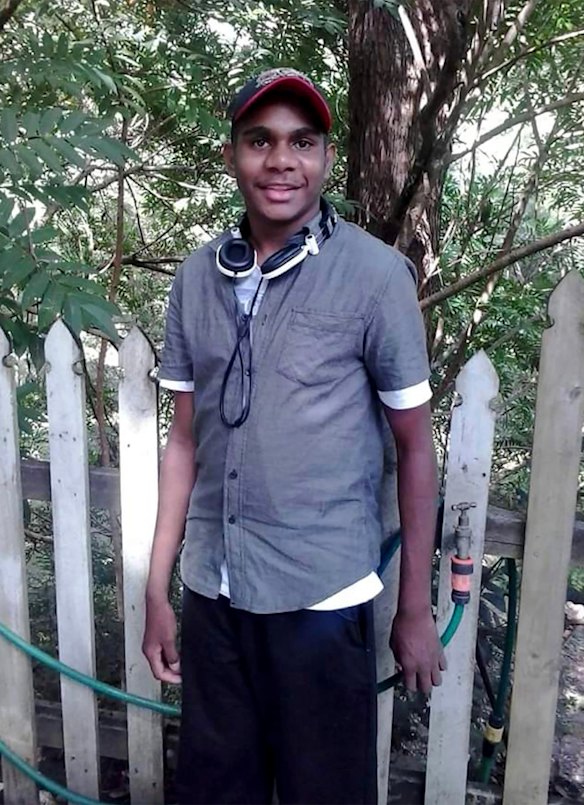
In the first episode, the audience gets to learn something about the two men who would eventually be brought together in such devastating circumstances. A troubled teen born, likely with fetal alcohol syndrome, into extreme poverty, Walker was in and out of juvenile detention, and in fact on the run – to attend his grandfather’s funeral – from a minimum-security prison on the night he was killed.
Rolfe is from Canberra, a former soldier with a hero complex, always ready to rush into dangerous situations. Two state police forces knocked back his application before the NT accepted him and deployed him to its Immediate Response Team (IRT); though 80 per cent of the cases he was likely to deal with involved First Nations people, he was given just four hours of cultural sensitivity training before being sent out into the field.
When Walker was spotted in Yuendumu, there were ways the situation might have been defused, insists Boe, the lawyer. Instead, it triggers an escalation that results in Rolfe and two IRT colleagues being sent from Alice Springs to assist in the capture – and ultimately, the death – of the teenager.
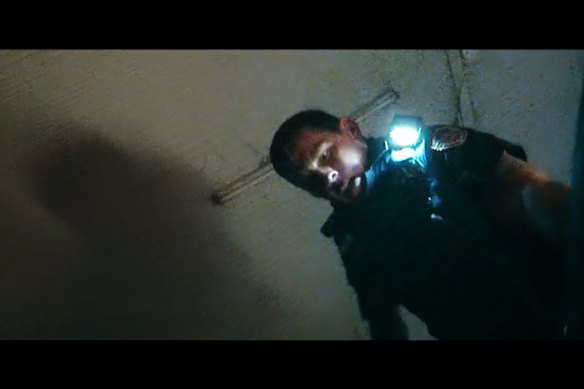
With extensive use of footage recorded on the police officers’ body-worn cameras, the second episode shows what happened on the night of November 9, 2019. Most critically, it captures the 2.6 seconds during which Rolfe shot Walker three times at close range, and the steps police took, and failed to take, in the immediate aftermath.
Through footage shot on phone cameras, it also shows what was going on outside the police station to which a dying Walker was moved, and where CPR was undertaken (but mouth-to-mouth was not, on the grounds it might be unhygienic). Requests for news of Kumanjayi, or for a family member to be allowed in to see him, were blanked.
As an ambulance sped off, the crowd was led to believe the young man was inside, on his way to potentially life-saving surgery in Alice Springs. In fact, he was already dead. It was Rolfe inside the ambulance, nursing a tiny puncture wound to the shoulder (the result of Walker stabbing him with a pair of nail scissors), and being hurried away from what police feared would soon become a hostile community set on payback.
“I really wanted to tell the two stories happening side by side,” says Dale. “You’ve got a community 11 metres away from a dying boy, who want to comfort him, and you see the panic of the police officers. It’s like the sheriff’s come into town, shot someone, and then a cyclone has started, and everyone is just swept up, and the fallout is catastrophic.”
It’s impossible to watch this episode without feeling the pain of the community so cruelly kept from their boy – and worse, lied to. But equally, it’s impossible not to feel that the police had good reason to fear for their safety, no matter how culpable they might have been in the situation.
“No one comes away from it unscathed,” says Dale. “I wanted the audience to understand what it was like for those police officers.”
Do you have some empathy for them?
“Of course I do. Julie Frost [the officer in charge at Yuendumu], you can feel the misogyny towards her as a female police officer. Three out-of-towners come to her patch, and she tries to give them directions. Are they followed? No. Is there a level of misogyny? I would say yes. Probably a high level.
“The mirror that this story holds up to us as a society, I think at all points, you see us reflected back to ourselves,” he continues. “This isn’t just a black and white story. It’s a story on so many levels. Justice isn’t black and white – except black people come out of it worse most of the time.”
Earlier this year, The Perfect Neighbour – about the racially motivated shooting of a black woman by her white female neighbour in the US state of Florida – was nominated for a best documentary Oscar. It was hailed for its extensive use of body-worn camera footage.
Dale’s series is no less revolutionary. To make it, he needed to win over not only the judicial system but also the NT Police and the Indigenous community most traumatised by the case. And to do so, he applied the principle he says he and Perkins have always abided by: “You tell people what you want to do, be really honest, and then do what you say you are going to do.”
In newly installed NT Police commissioner Martin Dole, he had someone who appears committed to transparency. “I think he really believes we have to confront this,” says Dale. “He says it’s not going to be easy to turn racism around in a police force, but I think their participation at least shows they’re willing to confront a dark day in the history of the NT police and for the Northern Territory, and also for our country.”
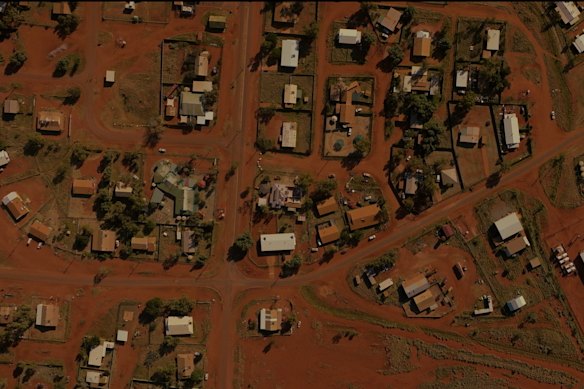
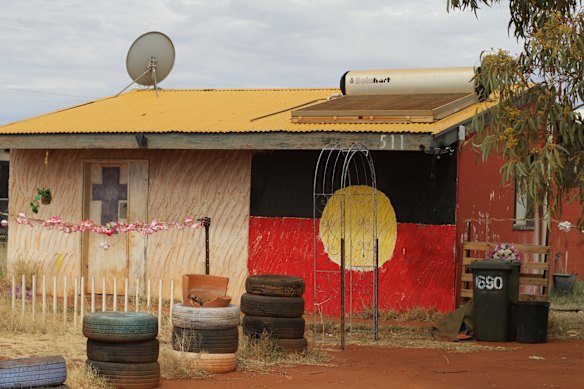
Dale’s relationship with Yuendumu goes back to 2001, when he spent seven months there making a film with Perkins as part of Federation celebrations. Still, winning over a grieving town was no easy feat.
“Many of them didn’t want to talk about it. Someone being shot by a policeman with a gun in a remote community, people say it over and over in the film: ‘We thought that happened in America, that doesn’t happen here’. People were genuinely scared that if you stepped out of line, you could be shot.
“Some people might go, ‘Oh, that’s stupid, how could that happen’,” he adds. “Well, it happened. A young boy was shot.”
In one sense, the case of Kumanjayi Walker is remarkable because it is thankfully rare in this country for anyone to be shot dead by police. But in some respects, it’s not remarkable at all. Since the Royal Commission into black deaths in custody handed down its final report in 1991, 644 Indigenous people have died in (police, prison or juvenile) custody.
For Dale, it’s time we all stopped looking away, time we started trying to understand how this could happen, and how to make sure it doesn’t simply keep doing so.
“If you can just get people to see each other as humans, if we care more about young men like Kumanjayi Walker and Zachary Rolfe, we will all be better for it,” he says.
“I used to think in terms of grand gestures and big acts and we need to change the world, but I think maybe I was wrong. If you just look and feel something, that’s the first act. Just see that boy and what happened and think about it – if it was your grandson, if it was your cousin, if it was your brother, your daughter, your mate at work, and that happened, really think about how you would feel.
“If you can take that feeling and that leads to you having a conversation or taking one small action,” says Dale, “just caring would mean a lot for everyone.”
2.6 Seconds: Death in the Outback premieres at 8.30pm on Tuesday, November 10, on SBS and NITV and streams on SBS On Demand.
Want more TV? We’ve got you.
- Newsletter: Find out the next TV, streaming series and movies to add to your must-sees. Get The Watchlist delivered every Thursday.
- November streaming picks: A guide to the best new shows this month.
- Hamish Blake: The beloved but “useless” comedian takes us inside his new series.
- The year’s best rom com? Why this episode of Nobody Wants This really stands out.
- The One About Matthew Perry review: This celebrity doco plays it far too safe.
- First Bluey, now Allen? The studio behind Bluey has made its first feature film.
- Watch (below): Deputy TV editor Meg Watson recommends the best new shows to start this week.
KioskNews shows a cleaned-up reading view extracted from the publisher’s page — the original always lives on their site, not ours.