Chacha Nehru’s aww-inducing trunk call
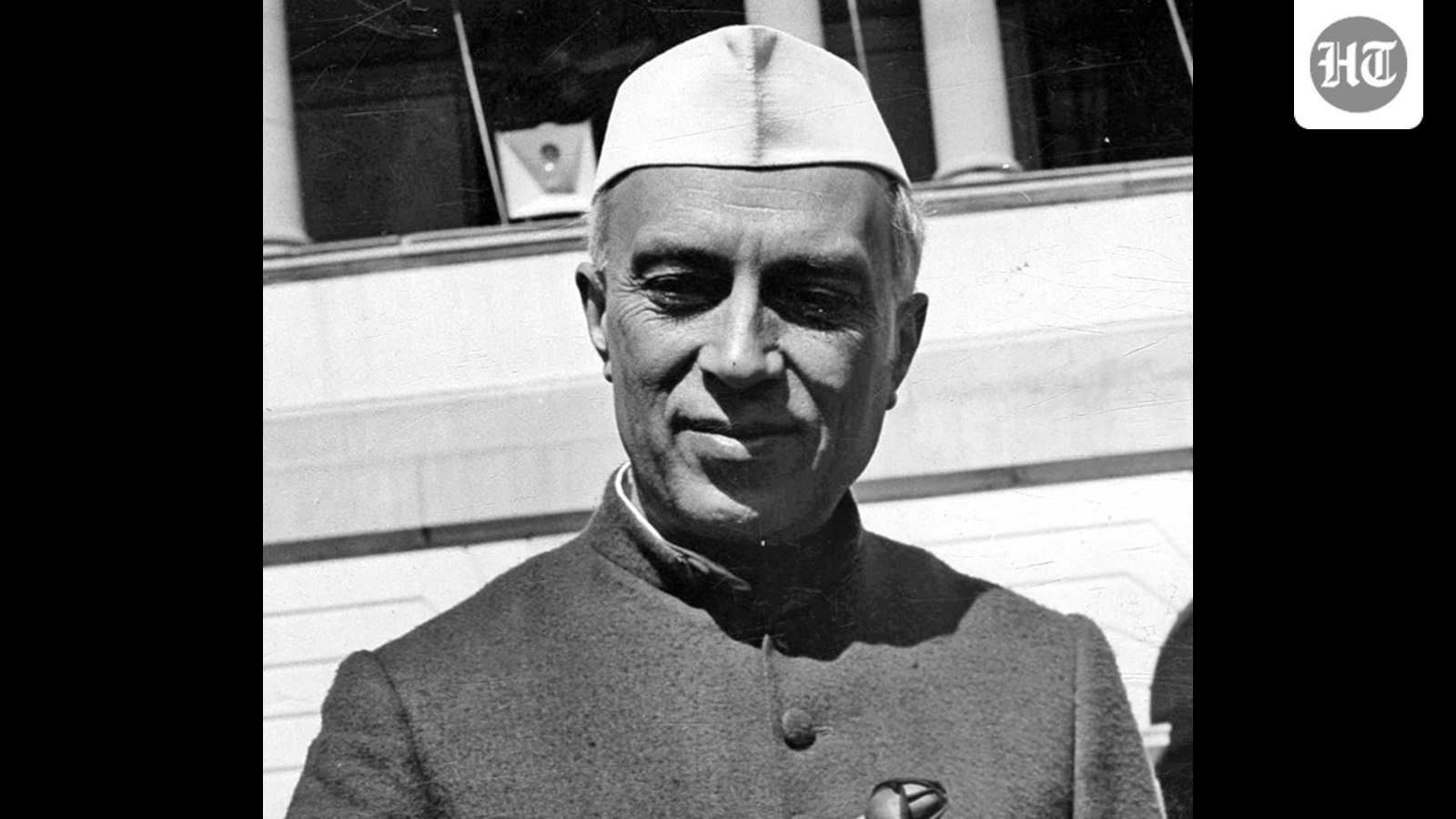
With Children’s Day, 14th November, falling on a Saturday this year, the nation’s children will be cheated out of a fun holiday. However, a workaround is quite likely in the works, given that schoolteachers look forward to this day with as much excitement as their wards – it’s the day they get to be goofy on stage for the children’s benefit.
How much the children squealing in delight at their teachers’ antics will know about the man whose birthday they are commemorating, Chacha Nehru, is moot. But one of the delightful stories that explains just why our first Prime Minister was so beloved of children traces roots to his first post-independence visit to Bangalore and Mysore, in December 1948.
Earlier the same year, on September 13, the first Home Minister of independent India, Sardar Vallabhai Patel, launched Operation Polo, a military intervention to liberate and integrate Hyderabad, one of the last princely states to hold out against the Indian Union. It was swift and effective; the Nizam’s forces surrendered on September 18.
On Christmas Day 1948, following large-scale communal violence in Hyderabad, Nehru addressed a large public meeting there for the first time since Independence, reassuring the people that matters had been taken in hand. Two days later, he flew to Bangalore for a series of public engagements, beginning with the laying of the foundation stone of the recently created Department of Electrical Communication Engineering’s (ECE) first dedicated premises at the Indian Institute of Science (IISc). After which, he hopped across to the recently established Raman Research Institute next door to look up Nobel Laureate Sir CV Raman.
Nehru then proceeded to Jakkur, to inaugurate the new Government Flying Training School (GFTS), set up on 200 acres of land gifted to Mysore state by the aviation-loving last Maharaja of Mysore, Jayachamarajendra Wadiyar (JCW), on the condition that it only be used to set up a training school.
The next morning, JCW’s personal pilot, Capt Sundaram, flew the PM to Mysore by the Maharaja’s private plane, a Dakota VT-AXX, with Sundaram’s wife Usha as the sole crew member. In May 1949, she would become the first graduate of the GFTS, and independent India’s first woman pilot. In Mysore, Nehru accepted from the Maharaja the gift of the Cheluvamba Mansion, an erstwhile royal residence, to be repurposed to serve the nation as the cutting-edge Central Food Technological Research Institute (CFTRI). He also accepted his very first honorary degree – Doctor of Science – from the University of Mysore.
In between all this frenetic activity, Nehru attended the first post-independence Mysore khedda – the traditional wild elephant-capturing operation – which the Maharaja had organized in the Prime Minister’s honour at the Kakanakote forests along the Kabini river. No less than 35 wild elephants were captured during this operation (khedda was finally outlawed in 1972, under the landmark Wildlife Protection Act championed by the then-PM, Indira Gandhi).
In June 1949, Nehru opened his official mailbag to discover that it was stuffed with letters from children in Japan, requesting him to send them an elephant! The two Indian elephants that had been star attractions at Tokyo’s Ueno Zoo had been ordered killed by the Japanese government during WWII, for fear of what would happen should they break free during an air raid. And now, the children said, there were only “pigs and birds” to look at “which give us no interest.”
Nehru, who spent a lot of time each day writing and responding to letters, even children’s letters, was deeply moved. On September 25, one of the elephants captured during the Kakanakote khedda, a 15-year-old female that the PM named Indira after his daughter, reached the Ueno Zoo to a great welcome from thousands of excited Japanese schoolchildren. The sweet letter accompanying the very large gift asked the children to look upon Indira as “a messenger of affection and goodwill from the children of India.”
(Roopa Pai is a writer who has carried on a longtime love affair with her hometown Bengaluru)
KioskNews shows a cleaned-up reading view extracted from the publisher’s page — the original always lives on their site, not ours.