ThermoWorks debuts shorter version of its RFX Meat wireless probe for small cuts
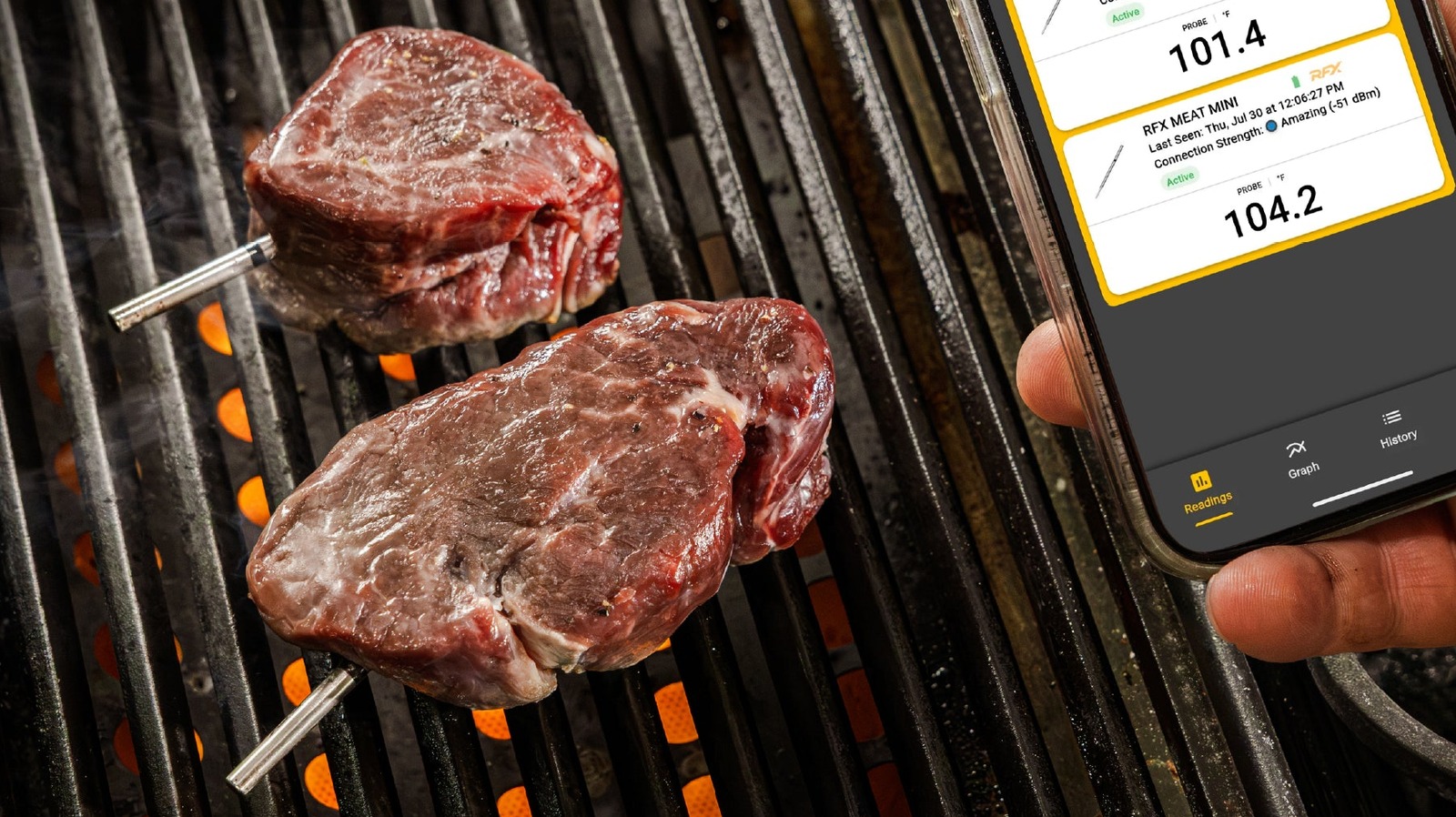
The RFX Meat Mini offers nearly identical performance to the full-sized grilling probe.
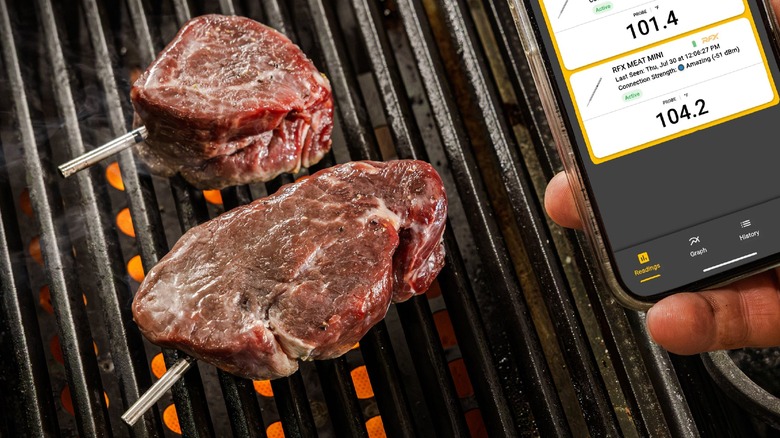
ThermoWorks
ThermoWorks' RFX Meat probe is an excellent grilling tool. Once you connect it to a Wi-Fi-enabled RFX Gateway, you can monitor food temperatures on your phone from anywhere. And while wireless temperature probes have been around for a while, the RFX line offers ThermoWorks' proven track record for accuracy. That's one essential tool to have in the pocket of your apron.
As good as the RFX Meat is, the 4.7-inch probe is too long for smaller cuts of meat, poultry and fish. With a minimum immersion line of 3.15 inches, the grilling tool wasn't a great option for things like filet mignon or individual portions of salmon. That changes now, thanks to the new RFX Meat Mini. This shorter version offers almost all of the same features as the original RFX Meat, including four internal temperature sensors, an IP69K waterproof rating (so it's dishwasher safe) and the ability to withstand temperatures up to 1,000 degrees Fahrenheit. The Mini still comes with a charging block that's powered by a AAA battery, which ThermoWorks says is good enough for over 175 charges. The best part is the maximum immersion line is 2.6 inches, and the minimum line is just 2.36 inches.
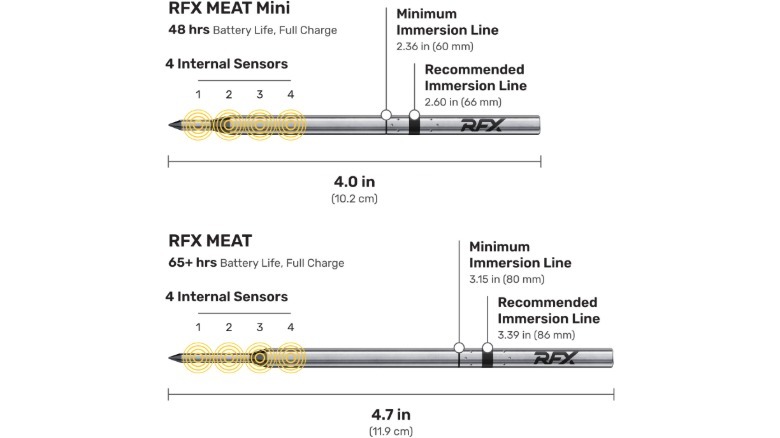
Other than length, the major difference between the RFX Meat and RFX Meat Mini is longevity. The Mini will last up to 48 hours on a charge, while the RFX Meat can go for over 65 hours. 48 hours is plenty for the longest low-and-slow barbecue session you'd undertake at home, and battery life on the Mini isn't likely to be a concern if you're docking it in the charging block when it's not in use. Only commercial cooks are likely to push the limits of the RFX Meat lineup's battery life.
Like the RFX Meat, the Mini's major differentiator amongst the competition is that it operates on a 433MHz radio frequency rather than Bluetooth or Wi-Fi. This is how the probe connects to the RFX Gateway, which in turn syncs up with your home network and the ThermoWorks app. Radio waves are less susceptible to interference from the thick walls of a grill or smoker. The Gateway also accommodates a separate, wired ambient temperature probe. This setup enables more accurate grill readings than you'd get from wireless food probes that have an ambient sensor on the end; those devices have to contend with evaporative cooling during long cooks, which can impact temperature accuracy.
The RFX Meat Mini is available now for $99, the same price as the RFX Meat (when it isn't on sale). ThermWorks is currently offering a 20 percent discount on the Mini when you purchase either the RFX Gateway or the RFX Meat Starter Kit (which includes a Gateway). Due to the Sub-1GHz radio frequency the probe runs on, you'll need a Gateway in order to use the RFX Meat Mini.
KioskNews shows a cleaned-up reading view extracted from the publisher’s page — the original always lives on their site, not ours.