Argentina signs up to US-led statement on industrial overcapacity
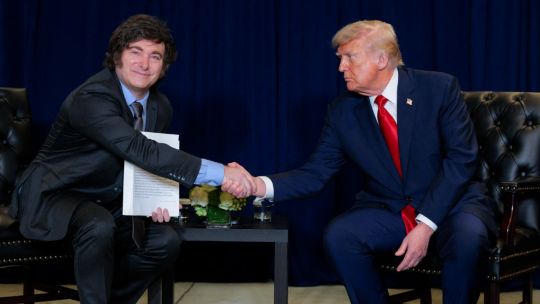
Argentina has joined the United States and 13 other economies, including the European Union, in issuing a joint statement calling for action to address structural excess capacity and production in key manufacturing sectors.
The statement, announced by the US Trade Representative's office (USTR) on Wednesday, was signed on the margins of a meeting of the Organisation for Economic Cooperation and Development (OECD) Trade Committee, following discussions at last week's G20 trade ministers' meeting in Milwaukee, Wisconsin.
The declaration warns of industrial capacity that persistently exceeds global demand as a result of non-market policies and practices. It does not name China directly, but the issue of excess industrial capacity has been a longstanding source of tension between Beijing and the United States and other major economies.
The signatories commit to examining excess capacity and production and to working through dedicated sectoral platforms, initially focusing on industries including automobiles and electric vehicles, batteries, semiconductors and solar panels.
The 15 signatories are Argentina, Australia, Canada, the European Union, France, Germany, India, Italy, Japan, Mexico, Poland, South Korea, Türkiye, the United Kingdom and the United States.
But several major G20 economies, including China, Brazil, Indonesia, Russia, Saudi Arabia and South Africa, did not sign up.
The US has argued that excess production sustained by non-market policies distorts global markets and puts pressure on producers in other countries. The new initiative calls on participating economies to address policies and practices that perpetuate structural excess capacity.
KioskNews shows a cleaned-up reading view extracted from the publisher’s page — the original always lives on their site, not ours.