5 Thriller Series That Are Perfect From Beginning to End

Sign in to your Collider account
Starting a thriller is the easy part. All it takes is one intriguing mystery or terrible decision, and the audience is hooked for a couple of episodes at the very least. The real challenge is holding onto that same tension. The longer a story runs, the more chances it has to overcomplicate things, or worse, lose all momentum.
The only shows that avoid that rut hold on to their central narrative while giving their characters room to evolve in every direction. This way, every new twist feels like it is moving the story somewhere rather than just buying more time for bad writing. Here are five such thriller series that stay in complete control of their stories and make the ending feel as exciting as everything that came before it.
1 ‘Dark’ (2017–2020)

Dark is Netflix’s first-ever German original series, and it begins with the disappearance of a child in the small town of Winden. However, it doesn’t take long for that mystery to expand into something much bigger than the audience could have imagined. The search for this missing boy brings together four families into a mystery stretching across different generations of the town. The story also follows Jonas Kahnwald (Louis Hofmann), who is still struggling with his father Michael’s (Sebastian Rudolph) suicide. What’s interesting, though, is how all of these strange events in Winden lead to a wormhole hidden inside the town’s caves that allows people to travel through time.
Suddenly, Dark turns into a completely different show as characters begin traveling between different periods of Winden’s history, only to discover that events from decades ago are directly connected to whatever is happening in the present. The series keeps introducing different versions of the same characters and builds on its central mystery without ever losing control of it. Now, a show with this many timelines, characters, and convoluted stories could have easily fallen apart in the middle, but Dark manages to bring everything together in a finale that truly feels earned. Dark Season 1 is excellent at asking questions, but Seasons 2 and 3 prove that the writers actually know exactly how to answer them all.
2 ‘Mr. Robot’ (2015–2019)
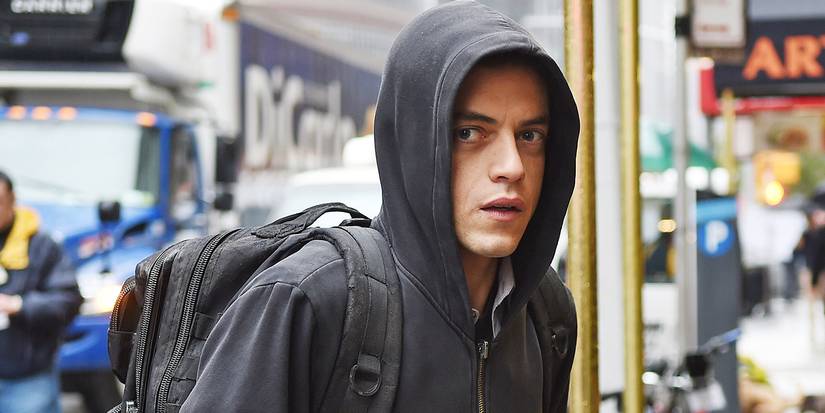
Mr. Robot is intriguing right from the start thanks to its incredibly compelling protagonist. The series follows socially isolated cybersecurity engineer Elliot Alderson (Rami Malek), who secretly hacks people he believes deserve to be exposed. Hacking is Elliot’s way of understanding a world he otherwise feels disconnected from. However, his otherwise boring life takes a turn when the mysterious Mr. Robot (Christian Slater) recruits him into fsociety, a hacker group planning to bring down the enormously powerful E Corp and erase consumer debt.
The group actually succeeds in carrying out its attack, but soon enough, Elliot finds himself caught between E Corp and his own increasingly unreliable mind. Every episode throws a curveball at the audience as they realize they can’t always trust Elliot’s perspective. The show creates a constant sense of uncertainty between what’s real and what isn’t. The consequences keep shifting, and Mr. Robot keeps finding new sides of Elliot to explore, especially after the identity of Mr. Robot is revealed. By the time the series ends, it feels completely different from the hacker thriller it started as, but that gradual progression is what makes the protagonist’s downward spiral so intriguing to follow.
Collider Exclusive · Action Franchise Quiz What Action Series Would You Thrive In? Wick · Fast · Mission · Die Hard
Four franchises. Four completely different ideas of what a hero is: the assassin with a code, the family that never leaves anyone behind, the man who does his own stunts, and the guy who simply refuses to die. Only one of them runs on your particular brand of trouble. Eight questions will tell you which one you would survive.
🐕Wick
🏁Fast
🧨Mission
🎄Die Hard
01
How does a room know you've walked into it? Every action hero arrives differently. Some of them arrive before they arrive.
02
It turns physical. What does your fighting actually look like? Choreography is character. Yours says something about you.
03
Who is standing beside you when it starts? Some franchises are built on a team. Others are built on one person walking in alone.
04
It has gone badly wrong. What keeps you upright? Act two exists to find out what you're actually made of.
05
There's a vehicle. What are you driving, and how? No action franchise has ever survived without a car chase. This one is yours.
06
How do you feel about the people giving the orders? There is always an institution. There is rarely a good one.
07
Underneath all of it, what are you actually doing this for? The stunts are the reason people come. This is the reason they stay.
08
When the credits roll, what do people say about you? Every franchise is really an argument about what makes someone worth watching.
Casting Has Been Completed Your Franchise Is…
Four action series. One of them is built around exactly the way you handle pressure, people, and a room that has just gone very quiet. Here is where you would survive the trilogy, and probably headline it.
John Wick
You are precision with a grudge. You don't posture, you don't escalate, and you don't warn anybody twice. That is exactly why the people who know you are so careful never to be the reason you start.
- The Wick films run on discipline: an underworld with actual etiquette, a hero who honours every rule of it, and a world that unravels the instant someone breaks one against him.
- You share that quality. You are extraordinarily reasonable right up to the line, and then completely immovable past it.
- Focus, commitment and sheer will. You'd be the one carrying grief through three sequels and turning it into technique rather than noise.
- People wouldn't call you dangerous. They'd say your name quietly and let that do the work.
Fast & Furious
You understand the thing the whole franchise is secretly about: the cars are spectacular, but the crew is the point. You collect people, you keep them, and you'd drive through a building for any one of them.
- This series went from street racing to orbit without ever changing its actual subject, because loyalty scales and plot doesn't have to.
- You have the same instinct. You build a family out of whoever turns up, and then you defend it past the point of reason.
- You'd thrive here because the franchise rewards exactly your strengths: warmth, nerve, an absolute refusal to leave anyone behind, and a relaxed relationship with physics.
- The mission can wait. The barbecue cannot.
Mission: Impossible
You over-prepare and then take the dangerous part yourself anyway. It looks like control, but it's really responsibility. You have never worked out how to ask somebody else to carry the risk.
- This is the franchise of the plan that collapses on schedule: the team, the mask, the rooftop, and the one person sprinting flat out because sprinting is all that's left.
- You share that refusal to accept an outcome. Told the odds, you treat them as an administrative error.
- You'd thrive here because these films reward competence and loyalty in equal measure. The mission matters, but nobody on the team gets left on the wrong side of a door.
- Some people delegate the cliff. You have never once been that person.
Die Hard
You are not the most trained person in the building, the best equipped, or the one anybody would have picked. You are simply the one still standing at the end, which turns out to be the only qualification that matters.
- Die Hard invented the modern action hero by making him mortal: outgunned, out-planned, bleeding, and extremely funny about it.
- You share that stubbornness. Adversity doesn't make you noble, it makes you sarcastic, and then it makes you unstoppable.
- You'd thrive here because these films reward improvisation and nerve over preparation, and you've never had the luxury of preparing anyway.
- You didn't want any of this. You just declined to be the person who let it happen.
3 ‘The Americans’ (2013–2018)
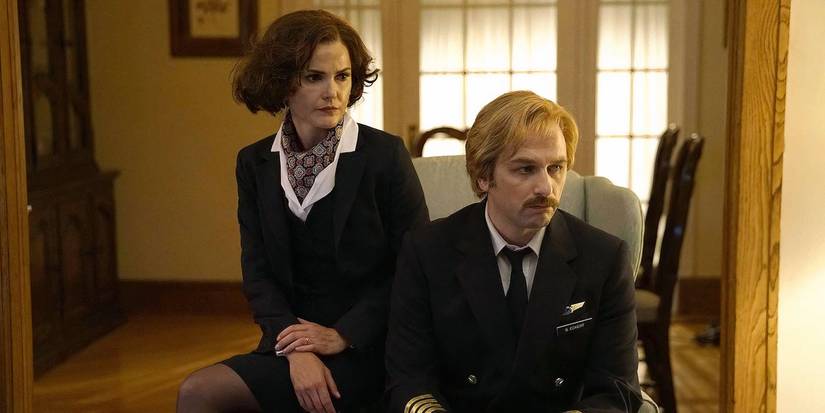
The Americans takes a familiar spy story and immediately makes it feel personal. The series, set during the Cold War, follows Elizabeth (Keri Russell) and Philip Jennings (Matthew Rhys), a seemingly ordinary married couple living with their two children outside Washington, D.C. The catch is that Elizabeth and Philip are actually Soviet KGB agents who have spent years pretending to be Americans. Their children have no idea who their parents really are, and neither do their neighbors. Their situation takes a dangerous turn when FBI counterintelligence agent Stan Beeman (Noah Emmerich) moves in across the street, a man whose very job is to smoke out spies.
The Americans thrives on the contrast between the couple’s increasingly dangerous missions and their normal suburban life. Of course, balancing their two lives becomes harder as Elizabeth and Philip’s children grow older, their work starts affecting their marriage, and the lines between their identities begin to blur. The Americans is one of the very few spy shows that manages to stay consistently entertaining and emotionally mature throughout its run. The possibility of the Jennings family being exposed never completely disappears, which makes every episode feel urgent, not to mention that the final season leads to one of the greatest endings in modern thriller TV — one that forces the couple to finally face the cost of every lie and sacrifice they have made.
4 ‘Breaking Bad’ (2008–2013)

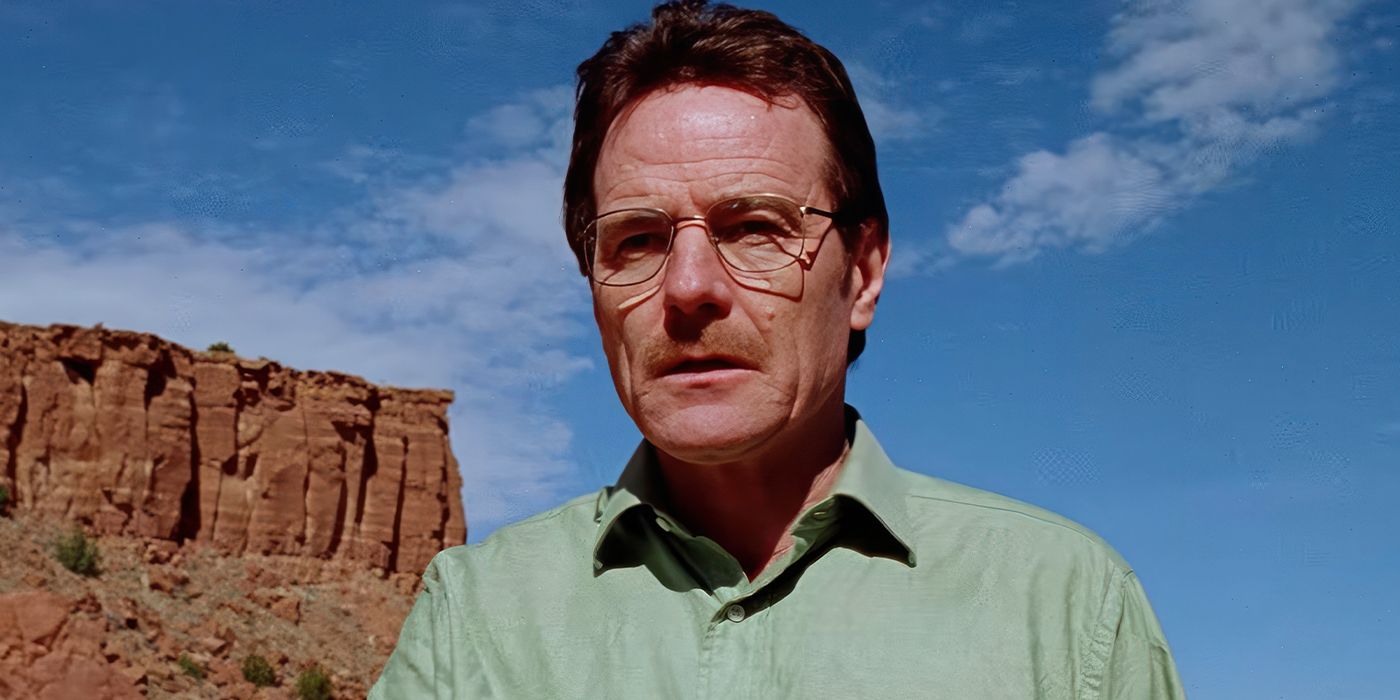
Breaking Bad begins with high school chemistry teacher Walter White (Bryan Cranston) finding out that he has cancer. Now, what could have turned into an extremely tragic story takes the exact opposite turn when Walter teams up with former student Jesse Pinkman (Aaron Paul) and uses his chemistry skills to make meth. At first, Walter insists he is only doing it for money, so he knows that his family will not struggle after he is gone. The fascinating part is watching how quickly that excuse starts falling apart. The series takes its time turning Walter from an ordinary, frustrated man into someone far more dangerous, and that patience is a huge part of why the story works so well.
Every choice feels like it grows naturally from the one before it. Every time Walter gets away with something, he becomes a little bolder and pushes things even further. What really separates Breaking Bad from most thrillers, though, is how little it wastes. A seemingly minor object, conversation, or decision can return much later with enormous consequences, and the tension keeps building because the series remembers almost everything it sets up. By the time the final season arrives, the story gets to cash in on years of carefully planted choices, which is why Breaking Bad feels just as intentional at the finish as it did at the beginning.
5 ‘The Night Of’ (2016)
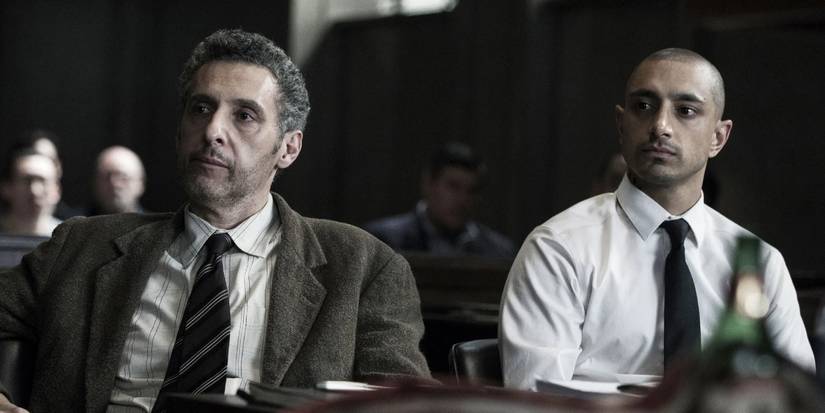
The Night Of builds its central conflict using a borrowed taxi, a stranger in the back seat, and one impulsive night. The series follows college student Nasir “Naz” Khan (Riz Ahmed), who loses all control of his life when the woman he spent the night with is dead the next morning. To make things worse, Naz has almost no memory of what happened, and the evidence surrounding him doesn’t exactly paint him as innocent. The Night Of could easily have turned that setup into a conventional whodunit. Instead, it becomes something far more uncomfortable. The murder mystery still matters, but the series is just as interested in what happens after someone becomes a suspect.
Naz is pushed through interrogation rooms, court hearings, and eventually Rikers Island, where surviving means leaving the sheltered college student he once was. The only person on his side is his lawyer John Stone (John Turturro), who keeps pulling at loose threads in the case in the desperate hopes of proving Naz innocent. The Night Of doesn’t reveal whether or not Naz committed the crime, and that uncertainty hangs over all eight episodes. Nearly every character in the series has a theory, and the evidence keeps pointing in different directions. However, what makes The Night Of such a complete thriller is that it understands the case itself is only part of the damage. In the end, the viewers realize that watching Naz slowly change into someone he barely recognizes is the real story.
KioskNews shows a cleaned-up reading view extracted from the publisher’s page — the original always lives on their site, not ours.