What my pilgrimage to Mecca taught me
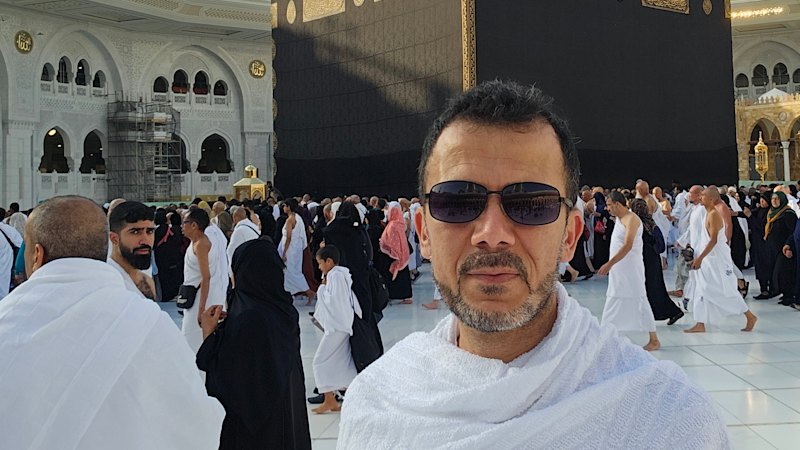
While on the journey to perform Hajj, the Muslim pilgrimage to Makkah (Mecca), I realised that Hajj was asking something much deeper of me. It was asking me to leave behind not only my home and possessions, but also my pride, attachments, fears and illusions of control.
When I entered ihram — the sacred state pilgrims enter, symbolised by simple clothing — I felt that something within me was being stripped away. The distinctions by which I sometimes measure myself seemed to lose meaning. I noticed that my nationality, education, appearance and social position became insignificant. I found myself standing before Allah (God) dressed simply, vulnerable and equal. The simplicity of ihram also made me think about the transience of this life.
When I first saw the Kaaba, the sacred structure at the heart of the Grand Mosque in Makkah towards which Muslims around the world pray, I struggled to put my emotions into words. I had spent my life turning towards it in prayer, but suddenly I was standing before it. For a moment, the distance between what I had known intellectually and what I was experiencing spiritually disappeared. I felt small and humbled. I couldn’t stop crying.
During Tawaf, the ritual of walking seven times around the Kaaba, I began to reflect on what occupies the centre of my life. I was physically circling the House of Allah, but inwardly I was asking myself: What does my heart revolve around? Is it Allah, or is it success, comfort, fear or the judgement of others?
That question stayed with me. Tawaf taught me that faith is not simply about where I turn my body during prayer. It is about where I turn my heart when I am scared and where I place my hopes when I am uncertain. I realised that true spirituality must be lived, not merely spoken.
The Sa’i — walking between the hills of Safa and Marwah — touched me differently. It recalls the story of Hajar, who searched desperately for water for her infant son in the desert. Her story taught me that tawakkul, or trust in Allah, does not mean passivity. Her footsteps reflected both effort and complete trust in Allah. I thought about the person I had been, the person I had become and the person I still hoped to be. I remembered the blessings I had taken for granted and the countless ways Allah had been merciful to me despite my shortcomings.
That thought changed the way I looked at my worldly ambitions. I do not believe Hajj taught me to abandon the world. It taught me not to let the world possess my heart. Standing among thousands of pilgrims also softened my understanding of others. I realised how little I knew about the struggles carried by those around me: the elderly person walking slowly, the exhausted mother carrying her child, and the person quietly making du’a — a personal prayer to God.
Returning home was bittersweet. The physical journey was over, but the real question was beginning: What will remain when the memories fade?
It is easy to be spiritual in Makkah. It is harder to preserve that spirituality in ordinary life. It is easy to cry during worship; it is harder to overcome contempt. It is easy to make promises to Allah in sacred places; it is harder to keep them when life becomes comfortable again. That, I believe, is the true test of Hajj.
When I think of Hajj now, I remember the Kaaba, the crowds, the heat, the prayers and the long walks. I remember the humility of ihram, the movement of Tawaf and the transient nature of life. I remember that I am a traveller.
Essan Dileri is a Rotary Peace Fellow, intercultural advisor and author of Raised in Conflict, sharing first-hand stories from his native Afghanistan.
KioskNews shows a cleaned-up reading view extracted from the publisher’s page — the original always lives on their site, not ours.