[Korea travels] Pyeongchang is so much more than the Olympics
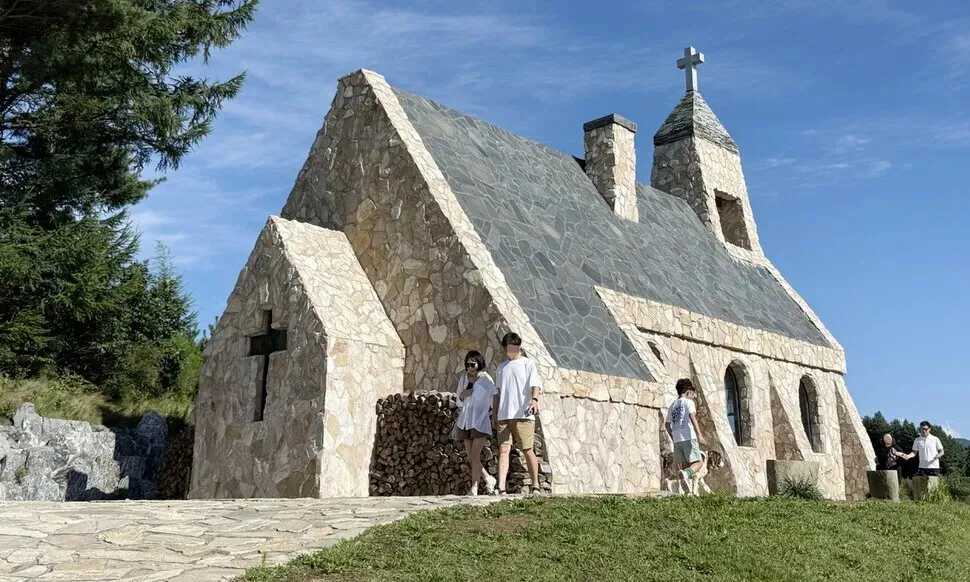
Silver Bell Church in Pyeongchang is the hottest new spot in the region. (Park Mee-hyang/Hankyoreh)
At around 8 am on Aug. 25, I set off on the Yew Tree Healing Forest Trail on Mount Balwang in Pyeongchang, Gangwon Province. There, I encountered a lone maple that had already turned crimson. What was the rush, I wondered, that it had already donned autumn’s finest?
Mount Balwang, one of Pyeongchang’s best-known mountains, rises 1,458 meters above sea level, making it the 12th-highest mountain in Korea. Most visitors take the cable car to the top and walk the trails there, where an easy-to-navigate wooden deck runs for 3.2 kilometers. The full loop takes roughly an hour and a half to two hours.
The forest trail is yew heaven. The evergreen conifer is called jumok in Korean, literally “red tree,” because of its ruddy bark and inner wood. Growing mostly on mountain slopes above 700 meters, you don’t see yews every day.
A thousand years alive, a thousand years dead
There is something profound about these trees. Standing before one draws you into contemplation. A thousand years of accumulated time seems to radiate from them. No matter how advanced artificial intelligence becomes, there is one thing technology can never conquer: the passage of time and the power of time itself.
In this sense, the yew is a testament to the mystery and power of time. Its resilience is extraordinary: the yew can endure for more than a thousand years, and even in death, its wood is said to resist decay. Hence the saying that has long followed the yew: “A thousand years alive, a thousand years dead.”
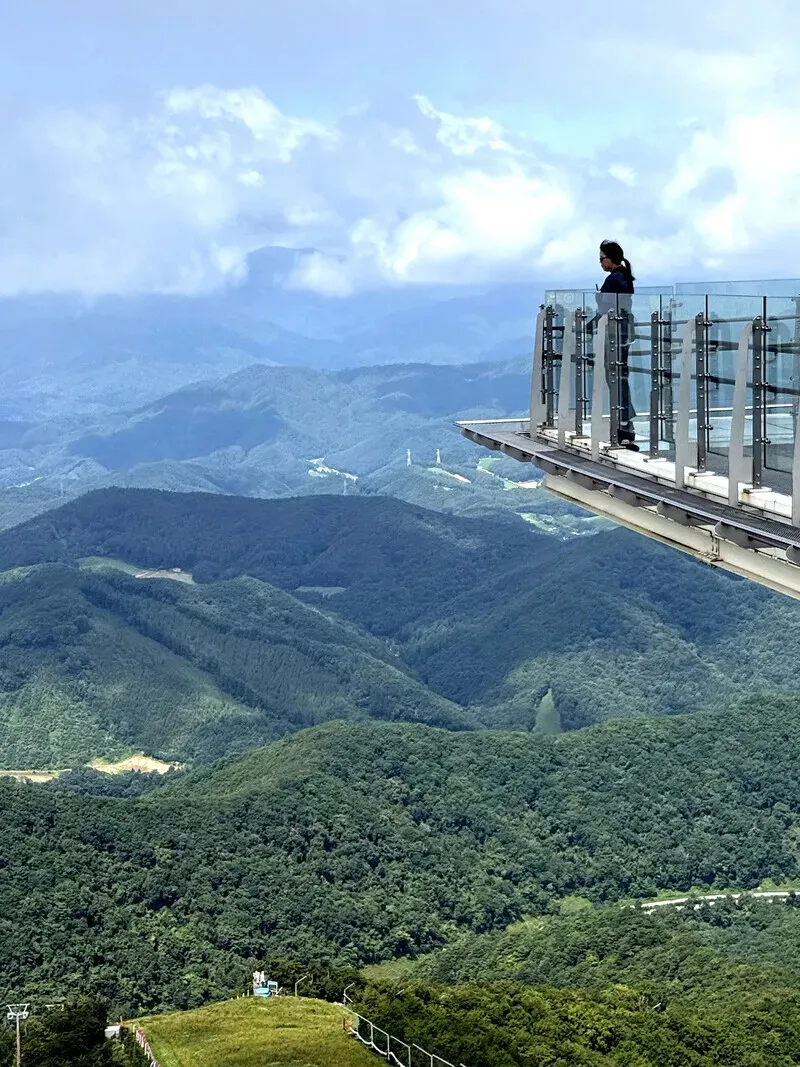
A traveler looks out over the Mount Balwang skywalk. (Park Mee-hyang/Hankyoreh)
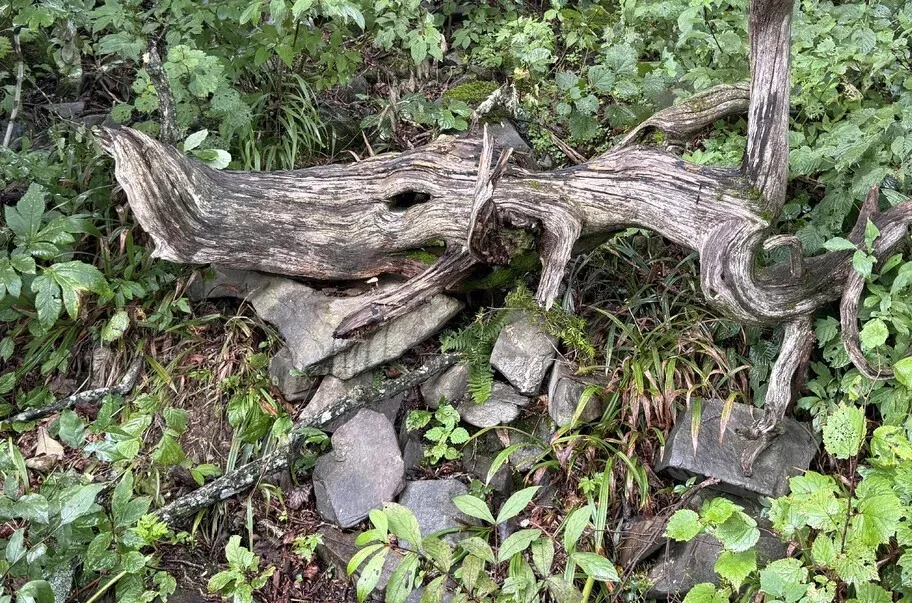
The “Wild Boar Yew.” (Park Mee-hyang/Hankyoreh)
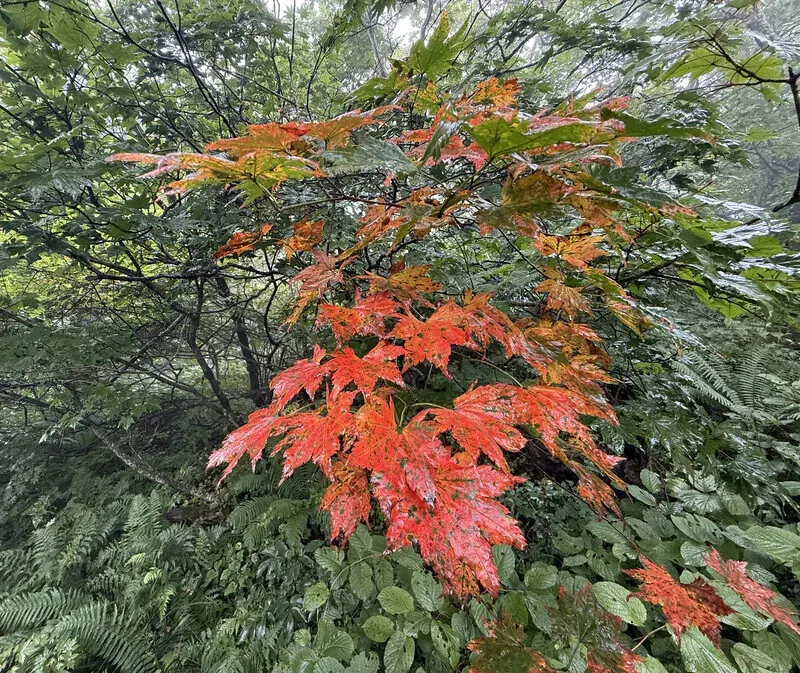
A lone maple in a sea of yews. (Park Mee-hyang/Hankyoreh)
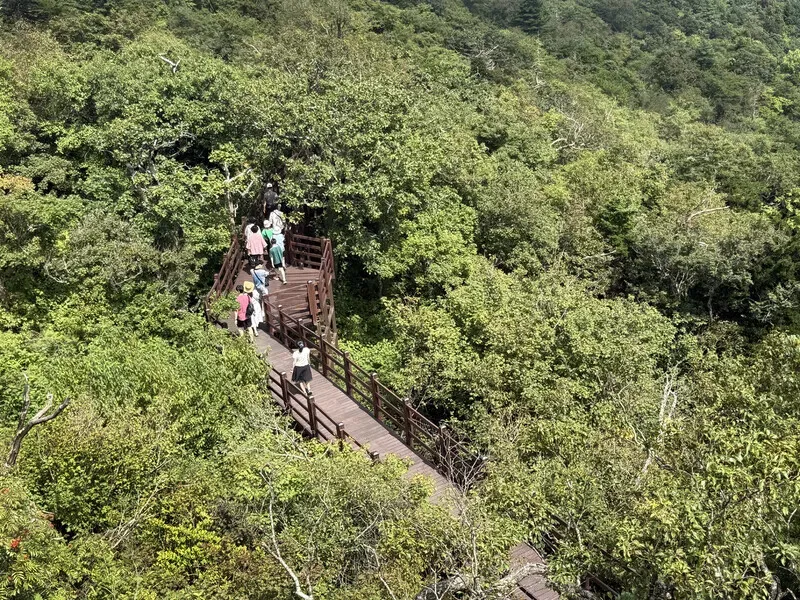
The wooden deck on Mount Balwang. (Park Mee-hyang/Hankyoreh)
A crisp morning breeze brushed my collar. Although autumn was approaching, daytime temperatures were still topping 30 degrees Celsius. But the heat had lost its force here among the yews. Whether from morning dew or droplets shed by the clouds, the wooden deck was damp underfoot.
My eyes were drawn to yews with distinctive personalities. The “Arm-in-Arm Yew” looked like two trees locked in an embrace, while the “Confession Yew” was hollow inside — a name that only made sense once I read the sign explaining it as a space for confiding secrets.
The “Mother Yew,” with a circumference of 4.5 meters, is so massive that it takes three adults holding hands to encircle it. There was even a “Wild Boar Yew” that looked remarkably like its namesake. After making my way past one story-filled yew after another, stumbling on that lone red maple genuinely took me by surprise.
Yews are not the only trees to take in. In this veritable cornucopia of trees, there is the “Piggyback Tree,” shaped like a parent carrying a child on their back. There is even a “Seoul National University Tree,” whose shape resembles the university’s distinctive gate emblem. During college entrance exam season, parents of applicants are said to flock here. They pray for their children to get into the university of their choice, even if it is not Seoul National University.
Eventually I reached the summit of Mount Balwang. I felt a twinge of guilt at having ascended a mountain more than 1,400 meters high with such ease. But the exhilarating wind at the summit and the spectacular scenery below soon melted away those darker feelings. After all, as the Korean saying goes, it doesn’t matter how you get there as long as you reach Seoul.
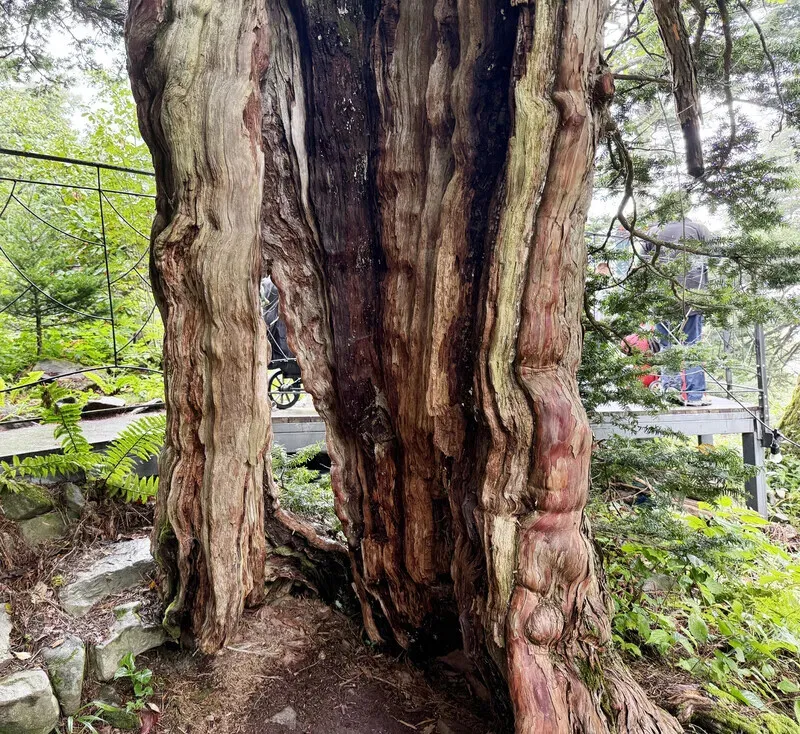
“Confession Yew” is almost entirely hollow. (Park Mee-hyang/Hankyoreh)
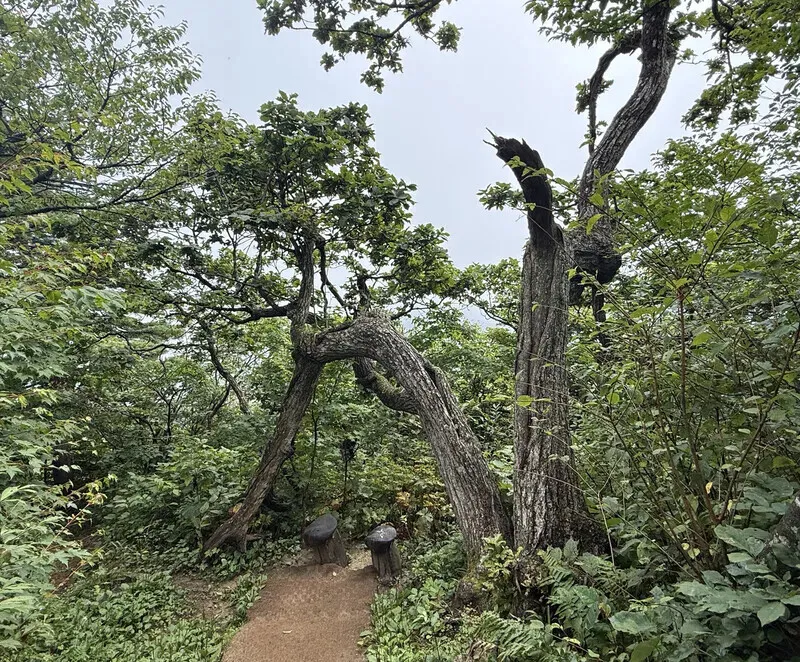
“SNU Yew” is a site of pilgrimage for the parents of high school seniors. (Park Mee-hyang/Hankyoreh)
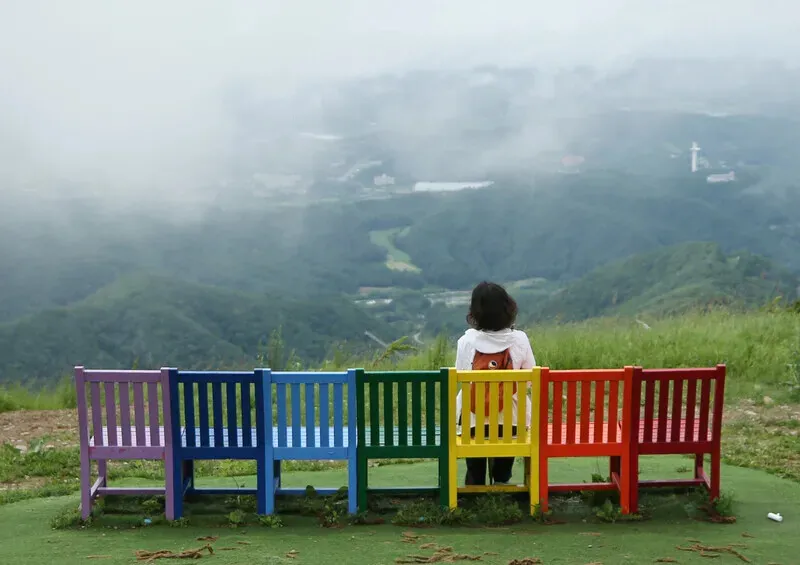
Near the entrance to the Yew Tree Healing Forest Trail, you’ll find a colorful outlook. (Park Mee-hyang/Hankyoreh)
Retracing my steps from the summit brought me to a skywalk. Only part of the skywalk was open that day, with access determined according to wind conditions and moisture on the structure. It is the sort of place made for a vertiginous photograph. High above the ground, the experience offers a refreshing sense of openness and freedom. It is Korea’s highest circular observation deck.
A church without a pastor that’s open 24/7
Pyeongchang County, where the trail is located, consists of one town and seven townships. The trail is in Daegwallyeong Township, with Jinbu Township nearby. Both are in northern Pyeongchang and make a natural pairing for a trip, particularly as they are close to Jinbu Station on the high-speed rail line.
Every township has attractions of its own, from the Lee Hyo-seok Literature Museum in Bongpyeong and Gwangcheon Seongul Cave in Daehwa to the Yukbaekmajigi plateau on Mount Cheongok in Mitan. But there is little point in a checklist trip that tries to cover them all. A place becomes a memory only when you give yourself enough time to truly experience it.
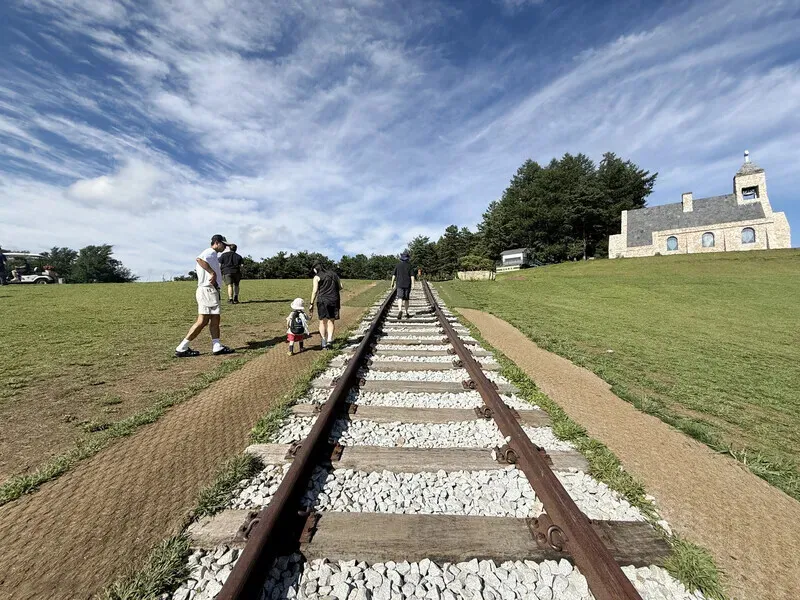
The train tracks in front of Silver Bell Church.
Daegwallyeong has a rising travel star these days: Silver Bell Church. Word is only beginning to spread.
It is an unusual church. There is no resident pastor and no organized congregation. It is open 24 hours a day, and anyone is welcome to come inside and rest, regardless of their faith.
There is one reason it has suddenly captured people’s attention: it looks as though it were somehow transported from Europe. The building is simply beautiful, with elegant milky-white walls. The place looks like a picture postcard, and it is hard to imagine a better subject for a photograph.
When I visited on Aug. 23, children who had been playing around the animal pens below the church were climbing the hill with their parents. In winter, the slope transforms into a free sledding hill. That day, the railway tracks leading to the church were filled with young couples, many stopping to capture the church grounds in photographs. Their excitement seemed to spill into the surrounding landscape, bringing a lively energy to Silver Bell Church.
Someone stepped inside the church and quietly bowed their heads. Looking toward God, perhaps they wondered whether perhaps they wondered whether the wounds and triumphs of a long, weary life ultimately amounted to no more than a handful of dust.

Some of the wide variety of vehicles that can be found in the building below the church. (Park Mee-hyang/Hankyoreh)
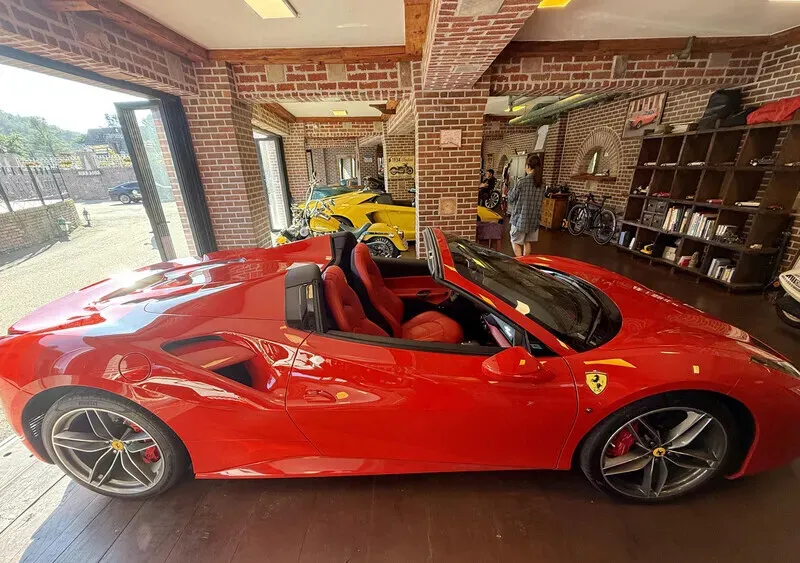
Some of the wide variety of vehicles that can be found in the building below the church. (Park Mee-hyang/Hankyoreh
Cars add another unusual dimension to the destination. Pastel-colored automobiles are displayed outdoors below the church, with more vehicles inside a building farther down. Rows of sports cars, including luxe Ferraris, fill the space. They belong to the head of a mid-sized restaurant company that operates several dining brands. He also built Silver Bell Church.
A visit to Daegwallyeong would hardly be complete without sheep. There are two places to see them.
Daegwallyeong Sheep Farm completed its sheep barn in 1989 and welcomed its first sheep in 1991. Visitors cannot see the animals grazing in winter: they are put out to pasture only from May through the end of October.
Nearby Daegwallyeong Sky Ranch has a different attraction: its tractor-drawn wagons, reminiscent of covered wagons from the 19th-century American frontier. Tours of the ranch aboard the wagons are popular.
Daegwallyeong Sky Ranch opened to the public in 2014, 40 years after it was established. It had been operated by Wooduk Livestock, an affiliate of Hanil Cement, and was one of Korea’s leading corporate-run ranches after its founding in 1974. The late Huh Chae-kyung (1919-1995), the founder of Hanil Cement, established it as part of the government’s 1970s drive for food self-sufficiency through livestock farming. The ranch was said to have held a special place in Huh’s heart.
As the times changed, so did the ranch. With the 2018 Pyeongchang Winter Olympics as a catalyst, it transformed itself into an agritourism destination.
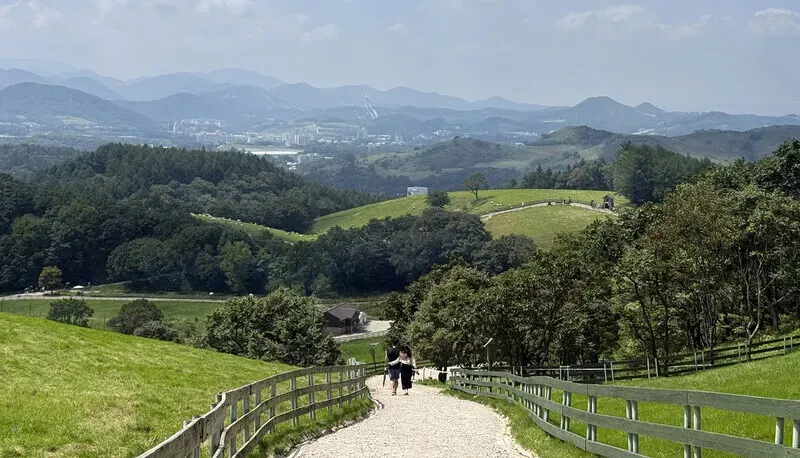
A walkable path through Daegwallyeong Sheep Farm. (Park Mee-hyang/Hankyoreh)
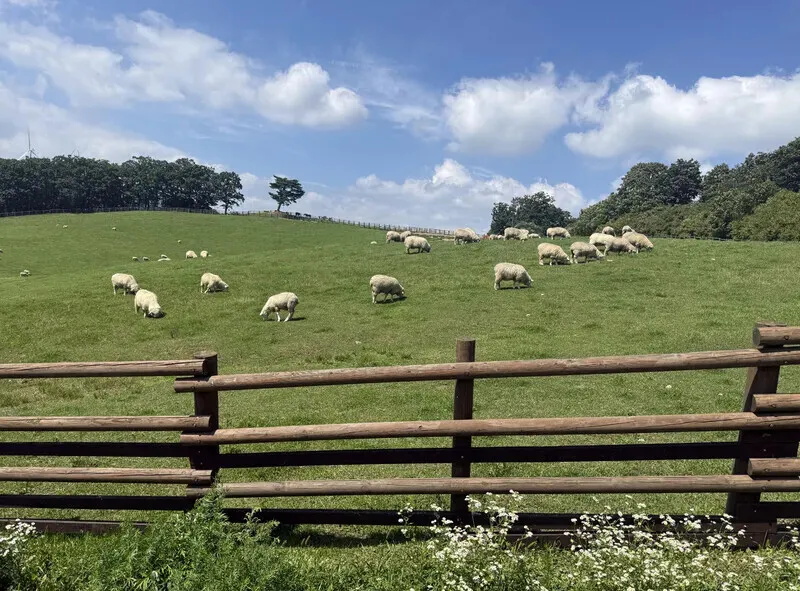
Sheep graze at Daegwallyeong Sheep Farm. (Park Mee-hyang/Hankyoreh)
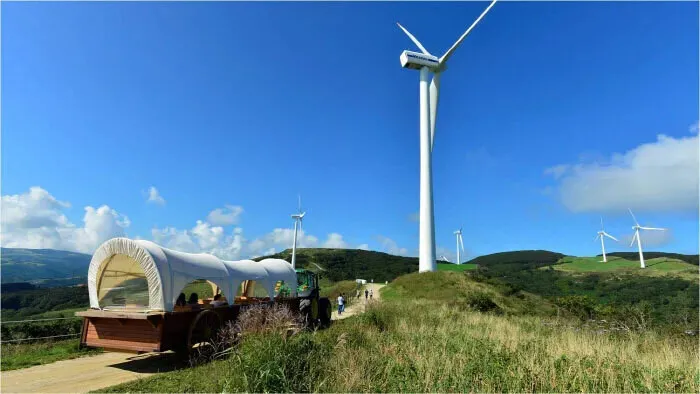
Daegwallyeong Sky Ranch offers covered wagon rides. (Park Mee-hyang/Hankyoreh)
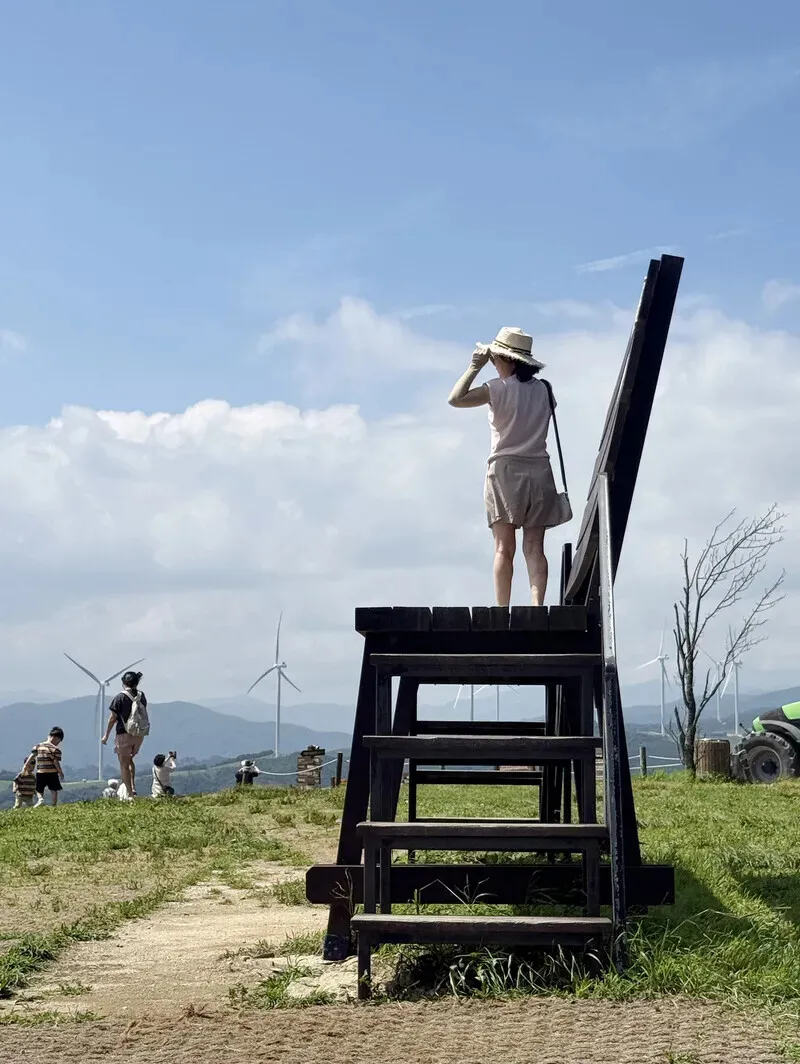
Travelers take in the view from the mountaintop at Daegwallyeong Sky Ranch. (Park Mee-hyang/Hankyoreh)
Covering more than three times the area of Yeouido, the ranch is a vast expanse of grassland. Walking is one way to experience its grandeur, though it takes considerable time. A tractor wagon can take you around in about 40 minutes. The 32-seat wagons carry visitors to Haneulmaru Observatory, the highest point on the ranch, at hourly intervals.
The guide’s commentary adds to the fun. “Over there is where the movie ‘Welcome to Dongmakgol’ was filmed,” he says. Heads swivel from side to side as passengers follow his words.
The ranch offers several walking routes. They include the 1.8-kilometer Wide Scenery Trail, said to evoke the Camino de Santiago; the 2.2-kilometer Edge Forest Trail, which connects to Seonjaryeong; the 350-meter Forest Stream Trail, with its tunnel of trees; and the 600-meter Short-Step Trail, where visitors can enjoy wildflowers.
Both ranches are ideal places to take in a sweeping sky and savor a sense of peace. The difference is one of scale and atmosphere: Daegwallyeong Sheep Farm is intimate and charming, while Sky Ranch is grand and expansive.
The majesty of the Annals of the Joseon Dynasty
In Pyeongchang, it is easy to understand why people say that nature is a teacher. The fir-tree forest trail at Woljeong Temple and the Korea Botanic Garden are already well-known nature destinations, while serene temples such as Woljeong and Sangwon showcase the beauty of Korean Buddhist architecture.
But part of the pleasure of travel lies in discovering somewhere new. Two places receive relatively few visitors yet are every bit as rewarding as better-known attractions: the People’s Forest and the National Museum of the Annals of the Joseon Dynasty.
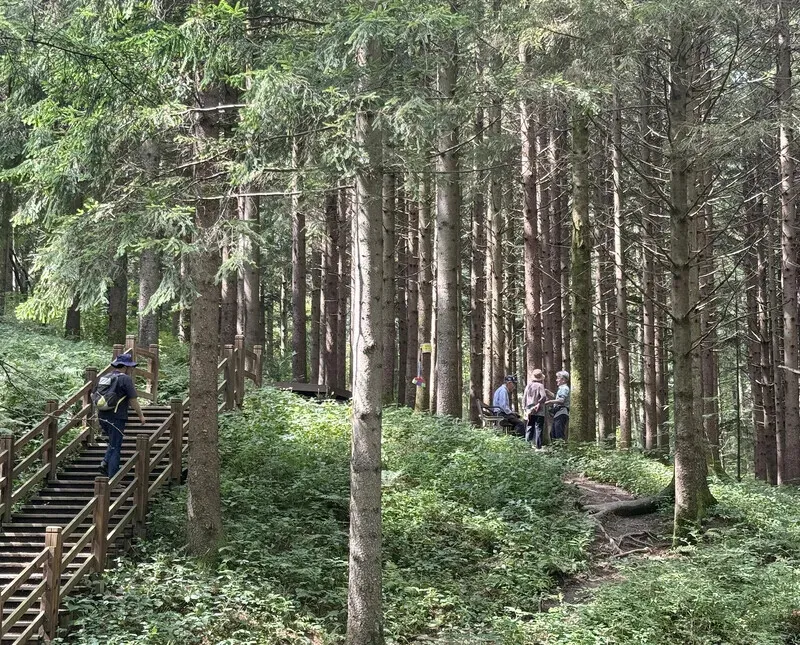
The People’s Forest is a hidden gem. (Park Mee-hyang/Hankyoreh)
At first glance, the People’s Forest looks unremarkable, like any wooded hill behind a neighborhood. Its ordinariness conceals what makes it special. Walking through the forest brings a quiet sense of calm. There is a reason, or so it is said: the forest lies at an elevation of 700 meters, considered ideal for the body’s natural rhythms. Take a deep breath and your lungs fill with phytoncides. Admission is free.
The National Museum of the Annals of the Joseon Dynasty opened on Nov. 12, 2023. Its displays include around 80 artifacts, among them the Mount Odae edition of the Annals of the Joseon Dynasty and the Royal Protocols of the Joseon Dynasty.
The Mount Odae edition is itself a testament to the power of time. The cultural heritage was removed to Japan during the Japanese colonial period. In November 2023, 110 years after it was taken from Mount Odae, it finally returned home to the mountain.
The Annals of the Joseon Dynasty are chronological records covering 472 years and the reigns of 25 Joseon kings, from Taejo to Cheoljong. Despite the many volumes burned or destroyed in wars and other calamities, 1,187 books survive today. Their sheer scale is awe-inspiring.
After surviving numerous twists of history, copies of the annals from the reign of King Seonjo onward were distributed among five repositories: the Chunchugwan National History Archives in Hanyang, the Mount Jeongjok archives on Ganghwa Island, the Mount Taebaeks archives in Bonghwa, the Mount Jeoksang archives in Muju and the Mount Odae archives in Pyeongchang.
The Mount Odae edition was taken to Japan in 1913, and much of it was destroyed in the Great Kanto Earthquake of 1923. Surviving volumes were gradually returned to Korea, with the process continuing through 2017, and were kept at the National Palace Museum of Korea before being returned to Mount Odae.
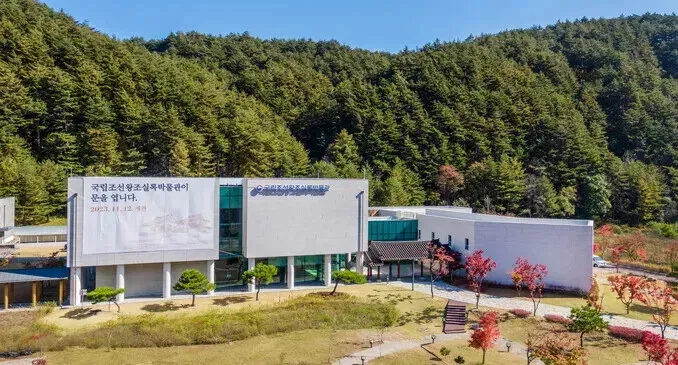
The National Museum of the Annals of the Joseon Dynasty when it opened in 2023. (courtesy National Museum of the Annals of the Joseon Dynasty)
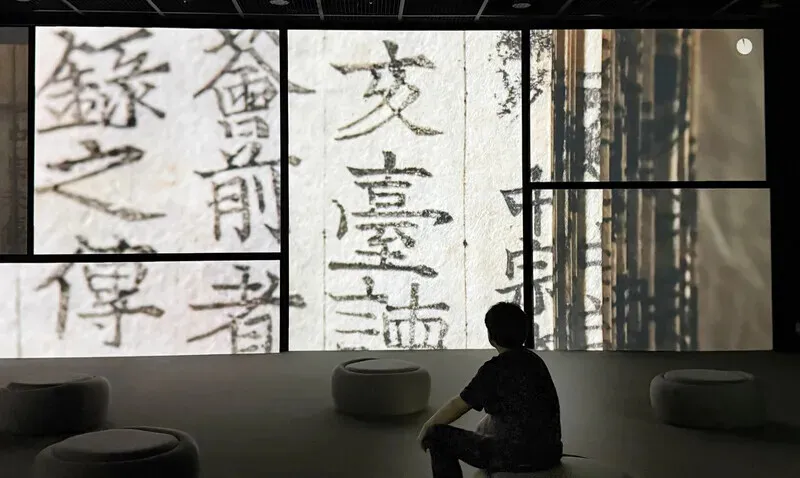
Inside the National Museum of the Annals of the Joseon Dynasty. (Park Mee-hyang/Hankyoreh)
It is a heritage that inspires pride, and the exhibition keeps that emotional pull alive without becoming tedious. One video display shows officials who periodically traveled down from Hanyang to care for the books, turning the pages one by one in the breeze to air them out. What a sight!
The Royal Protocols of the Joseon Dynasty are detailed records of the preparations, execution and follow-up for major royal ceremonies and events.
The museum has a total floor area of 3,537 square meters across two stories and houses some 1,200 artifacts, including volumes of the annals. Compact but richly conceived, it is a gem of a destination — and an especially good place to visit with children.
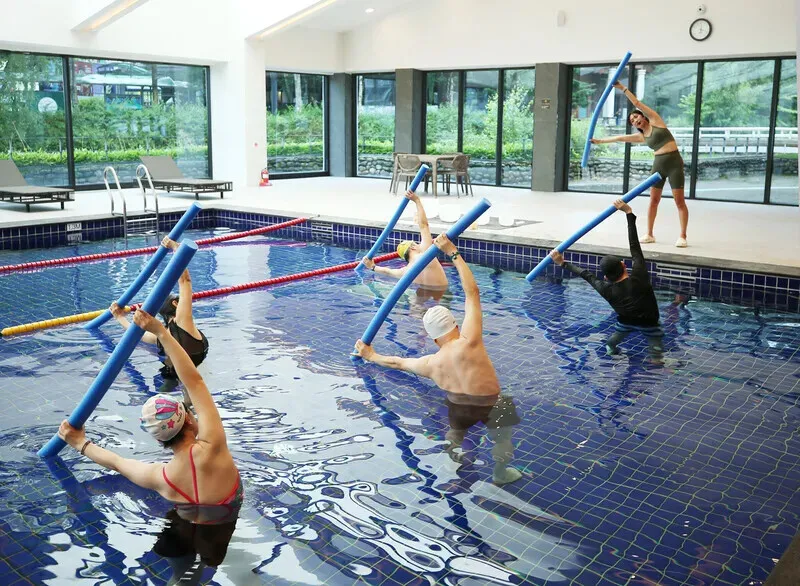
Aqua barre classes are available at Mona YongPyong. (Park Mee-hyang/Hankyoreh)
The fatigue of travel can be left to the wellness programs recently revamped by Mona YongPyong, which are available even to people not staying at the resort. This year, Mona YongPyong was included among the Korea Tourism Organization’s 88 outstanding wellness tourism destinations.
Programs include yoga meditation, jogging, Nordic pole walking and therapeutic forest walks. An indoor class called “Recovery Flow Yoga” loosened the shoulder muscles that had tightened after days on the road.
As I bent and stretched, nature’s vitality seemed to seep into me. The walking programs are designed around making nature your companion. The therapeutic forest walk combines travel with learning about the ecosystem while listening to a forest guide.
Then there is the one-of-a-kind aqua barre program. Conducted in a swimming pool, it uses the resistance of the water to train balance and strengthen the core. A professional instructor leads the session, so even those who cannot swim can take part.
KioskNews shows a cleaned-up reading view extracted from the publisher’s page — the original always lives on their site, not ours.