‘Fight for humanity’: Avoiding a climate catastrophe means acting now
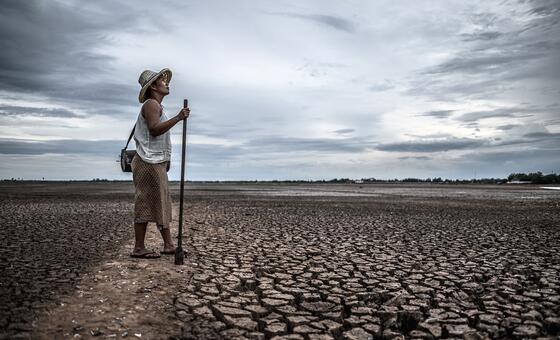
Record heat waves, deadly flooding and extreme weather reflect an ever-warming planet poised to soon breach safe temperature limits, according to a UN report released on Tuesday, but doubling down on climate action now could avoid a climate catastrophe.
Key points
- Rapid, collective and global action is vital to cap the temperature rise at 1.5°C
- Climate action can reverse current trend by slashing methane pollution, protecting land, forest and oceans and accelerating the phaseout of fossil fuels
- Every fraction of a degree will cost lives, destroy livelihoods, deepen inequality and push ecosystems closer to irreversible damage
The scorching heat in the northern hemisphere in recent months, raging wildfires and deadly floods are a warning of what lies ahead, UN Secretary-General António Guterres said.
He recalled that the historic 2015 Paris Agreement on climate change saw world leaders pledge to keep temperature rise to the 1.5°C limit above pre-industrial levels, which scientists say is critical to avoiding the worst climate devastation.
Indeed, the world is failing to keep that promise, according to the new report from the UN Environment Programme (UNEP)
“The fight for 1.5 degrees is the fight for humanity,” he said. “We are set to breach the 1.5°C limit within the next few years.”
‘Every fraction of a degree will cost lives’
There are no good outcomes if temperatures remain above 1.5°C consistently, warned UNEP chief Inger Andersen.
“Across the globe, extreme heatwaves are already proving that climate impacts will strike faster, hit harder, and last longer, costing more lives and causing deeper disruption,” she said.
“Now is the time we must double down on climate action. We can and must get on the right path. By cutting greenhouse gas emissions, strengthening resilience and adaptation and ensuring exceedance of 1.5°C is as small and short as possible.”
The UN chief agreed.
“Every fraction of a degree will cost lives, destroy livelihoods, deepen inequality and push ecosystems closer to irreversible damage,” the Secretary-General said. “Humanity is speeding past the limit to avoid climate catastrophe.”
‘Solutions are at hand’
However, swift climate action can bring the world back from the brink, Mr. Guterres said.
“We can still bring warming back below 1.5°C by the end of the century,” he said. “We must make the overshoot as small and short as possible, limiting how high temperatures rise and how long they remain above 1.5.”
That demands an “overshoot of ambition” through accelerating the phaseout of fossil fuels and the renewables revolution, slashing methane pollution and protecting land, forest and oceans, he said.
It also means governments must over-deliver on national climate plans, net zero commitments and beyond, and developed countries must triple adaptation finance and ensure it reaches those most at risk.
“The science is clear,” Mr. Guterres said. “The solutions are at hand, and the world has never been better equipped to deploy them. Now is the time to raise ambition and accelerate action.”
Highlights from the new report:
- Above 1.5°C, risks and impacts will intensify with every extra fraction of a degree and every year, including intensified extreme weather, ecosystem loss and submersion of small island developing States and low-lying coastal cities alongside severe damage to human health, food security, water supplies, nature, cities, infrastructure and economies
- The likelihood of crossing irreversible tipping points increases with the magnitude and duration of higher temperatures, including the destabilisation of major ice sheets and degradation of the Amazon rainforest
- Mitigation and adaptation must advance together, prioritising such interventions as nature-based cooling
- Net zero is a milestone towards net-negative in sustained reductions in greenhouse gas emissions
- Conditions for success include strong political will and multilateralism, effective policies, inclusive governance, and finance
- Countries with greater responsibility for climate change should act the fastest with the greatest ambition
♦ Receive daily updates directly in your inbox - Subscribe here to a topic.
KioskNews shows a cleaned-up reading view extracted from the publisher’s page — the original always lives on their site, not ours.