Revealed: ICE lost count of miscarriages, while detaining a record number of pregnant women

ICE says it has no updated information on the number of miscarriages after 3 October 2025. Lawmakers, advocates and immigration attorneys have raised alarms that pregnant detainees are not receiving basic prenatal care and screenings
ICE is arresting a record number of pregnant women and teenagers – placing them in detention centers where they say it can be exceedingly difficult to access medical care. At the same time, the agency appears to have lost count of how many suffered a miscarriage.
Government documents obtained by the Guardian show that the Trump administration placed more pregnant immigrants in detention last fall and winter than at any time over the previous year.
ICE recorded 18 miscarriages during the first nine months of the Trump administration, the documents show, but the agency has no data on miscarriages after 3 October 2025.
Meanwhile, detained pregnant women report that they are struggling to access routine and emergency medical care. In interviews with the Guardian and in testimonies shared by their attorneys, women who miscarried or were hospitalized for pregnancy complications said they did not receive follow-up care, despite experiencing ongoing pain and symptoms.
Anabell, 35, said she didn’t know she was pregnant until she was arrested and told to take a pregnancy test during a medical examination at the Campbell county detention center in Kentucky. A month later, she started bleeding heavily – soaking through a new menstrual pad every 30 minutes. Chained to a hospital bed at a local ER, she was told she wasn’t pregnant anymore.
Laura, 21, was in the second trimester of a high-risk pregnancy when she was sent to the Dilley detention center in Texas. Now, still detained and approaching her third trimester, she’s experiencing persistent abdominal pain and bleeding – and says she hasn’t been allowed to see an OB-GYN.
Angie, 26, learned she was pregnant a few weeks after she was booked into the Mesa Verde detention center in California. A few weeks after that, she woke up to large amounts of brown fluid excreting from her body. The medical staff at the detention center told her the miscarriage wasn’t her fault, she said.
Although it is difficult to pinpoint the cause of a miscarriage, or to attribute a miscarriage solely to the conditions in detention, it is clear that detained women aren’t getting the medical care they need when they experience miscarriage symptoms, said Deborah Ottenheimer, an obstetrician-gynecologist and medical expert with Physicians for Human Rights.
Women who miscarry and don’t receive proper treatment, including an ultrasound and other tests to ensure that their pregnancy tissue has been vacated from their body, could experience infection and other severe complications, Ottenheimer said.
“These incarcerated women are not getting the prenatal visits that they’re supposed to get. They’re not getting high-risk prenatal visits if they need them. And if they do miscarry, the medical care they receive is minimal to none,” Ottenheimer said.
Christina Davidson, the chief medical officer of the American College of Obstetricians and Gynecologists, said in July that “placing and holding pregnant patients in detention poses serious medical and mental health risks for both the pregnant patient and fetus”. Lapses in care at detention facilities, she added, could escalate treatable conditions into life-threatening emergencies.
The Guardian filed a Freedom of Information Act request and then filed suit in collaboration with the Reporters Committee for Freedom of the Press to obtain data on the number of pregnant people in ICE detention. Eventually, ICE shared records tracking the number of pregnant, postpartum and nursing women who were in detention from October 2024 through mid-January 2026, but only provided data on miscarriages up to 3 October 2025. In internal documents provided to the Guardian, the agency said it did not have miscarriage data for subsequent months because of a change in its medical accounting system.
In response to follow up questions about its tracking practices after 3 October 2025, a spokesperson for the Department of Homeland Security (DHS), which oversees ICE, first said that the agency was tracking miscarriages in monthly reports. But later, the spokesperson confirmed what was in its internal documents – it does not have data on miscarriages from October 2025 through June 2026.
DHS has never before acknowledged that it had lost count of miscarriages – not even when US senators asked the agency for the data.
It is convenient for the administration that ICE cannot report how many women in its custody had miscarriages, said Faisal Al-Juburi, the co-chief executive of Raíces, a Texas-based humanitarian aid and immigration services non-profit. “When you don’t track something of that magnitude, then you don’t have to be confronted with the reality of what your policies have yielded.”
To Anabell – an asylum seeker from Nicaragua who has birthed three children and miscarried once before – hardly anything about her last pregnancy had gone as normal.
She was wondering why her period hadn’t come yet when she turned up for her mandated ICE check-in appointment on 25 February, she said. The visit went as normal until she was about to leave and an officer told her she couldn’t.
The next few hours were a blur. She was taken to the Campbell county detention center in Newport, Kentucky. She underwent a medical examination, and was given one pregnancy test. Then another test. They both came back positive. “It was a surprise,” she said, speaking from the detention center on the phone. “All I could do was cry.”
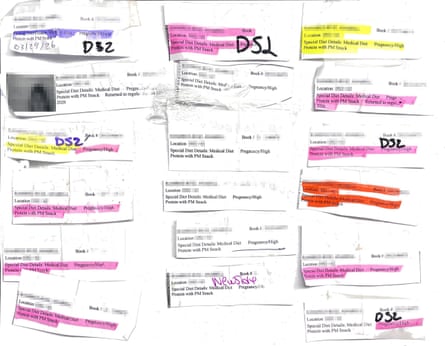
She wasn’t given a blood test to confirm a healthy pregnancy or prenatal vitamins, she said. Nor was she scheduled for an ultrasound. She did receive a special meal, labeled with a sticker that read: “Medical Diet - Pregnancy High Protein w/ PM Snack.” Usually, this meant an extra peanut butter sandwich and a small carton of milk.
Over the next weeks, she was often nauseous and could hardly eat or sleep. She’d wake up to the cries and screams of the other detainees, or to the sound of officers yelling.
About a month after she was arrested, she began to bleed – first a little, then a lot. “I told them I need to see a doctor,” she said, but an officer told her she’d have to wait. In an emergency medical request, she wrote, in Spanish: “This is URGENT, please. I am pregnant and have been bleeding since yesterday … I am scared for the baby.”
Fellow detainees noticed she looked unnaturally pale and tried to get her help as well, she said. A day later, she was rushed to the ER. Shackled to a hospital bed and under the watch of three immigration officers, she was told she wasn’t pregnant anymore through a Spanish interpreter on the phone.
ICE has repeatedly declined to release Anabell’s medical records to her and her lawyer. She didn’t even know which hospital she had been taken to, so her lawyer hunted down her hospital record by calling nearby medical facilities. The doctor’s notes said her pregnancy hormone levels were low, suggesting that she may have lost her pregnancy even before she started bleeding heavily.
Still at Campbell, Anabell has continued to bleed, vomit and lose her hair in chunks. She has lost about 30lbs, and her skin is tender with rashes, she said. In hospital records she shared with the Guardian, the ER doctor wrote that she should return to the hospital if she experiences any new symptoms and that she should receive follow-up care at a women’s health clinic – but the medics at Campbell haven’t offered any check-ups.
“I don’t know what is going to happen to me,” she said.
Anabell said she met two other pregnant women in detention – including another who seemingly miscarried.
The data ICE released to the Guardian shows that the agency has been increasingly detaining pregnant people since Donald Trump took office in January 2025. Amid high-profile, militarized immigration raids in Minneapolis, Chicago and other cities last autumn and winter – ICE held more pregnant individuals in detention than at any time over the previous year, according to the agency’s records. In October, there were at least 87 pregnant women and adolescents in detention and in November, there were 101.
Most women of reproductive age who enter immigration detention receive pregnancy tests during an initial medical assessment, but not all of them do. Some detained women have said they were unable to access pregnancy tests, so ICE’s numbers could be an undercount.
Records from ICE show that at least 18 women miscarried while in custody from January 2025 through September 2025. This is also very likely an undercount, according to experts on healthcare within the immigration system. Some women who experience miscarriages, especially early in pregnancy, don’t notice significant physical symptoms and therefore don’t seek or receive emergency medical care – so their pregnancy loss may not be tracked in ICE’s records.
There are no updated data on miscarriages after 3 October 2025, ICE noted in internal agency documents, because the agency had ended its contract with the Veterans Affairs Financial Services Center (VA-FSC), which had been handling medical billing for the agency.
Acentra Health, a private Virginia-based company, was contracted to replace the VA-FSC starting in October 2025 – but ICE’s medical claims processing has been delayed for months.
Immigration attorneys and former DHS officials told the Guardian it was odd that ICE was only keeping track of miscarriages via its medical billing provider.
Federal policy, outlined in a 2021 directive, instructs ICE to wholly avoid detaining pregnant, postpartum and nursing immigrants “unless release is prohibited by law or exceptional circumstances exist”. If ICE does detain a pregnant individual, the directive obligates officers to consistently monitor and document their health. Agents or contractors at detention centers are to send monthly updates on these detainees to the executive associate director of enforcement and removal operations. The ICE health service corps, which oversees healthcare in detention, is to continuously evaluate whether it is medically advisable to keep them detained.
“In the very limited circumstances in which detention is necessary and appropriate, ICE must monitor individuals known to be pregnant, postpartum, or nursing detained in ICE custody for general health and wellbeing, including regular custody and medical reevaluation, to ensure appropriate pre- and/or postnatal and other medical and mental health care,” the directive states.
A spokesperson for DHS said the agency is still adhering to the directive. “The 2021 directive is still in place,” said spokesperson Chandler Rebel. “Pregnant women receive regular prenatal visits, mental health services, nutritional support, and accommodations aligned with community standards of care.” He did not engage with the Guardian’s questions about reports that women were not receiving essential prenatal, postpartum and miscarriage care.
Acentra did not respond directly to questions about whether it was keeping track of miscarriages on behalf of ICE. Instead, it directed the Guardian to a statement clarifying that there were delays in implementing ICE’s new claims processing due to government shutdowns.
Court records as well as interviews with US congress members, immigration attorneys and pregnant detainees indicate that the administration has all but abandoned adherence to the directive.
The Guardian reviewed case details of eight pregnant women and teens who complained of medical neglect at the Dilley detention center in Texas – the country’s only ICE facility that holds families as well as single adults. Several of them alleged that language barriers made it difficult to access medical care. One woman who was four months pregnant stopped trusting the medical staff after a nurse shouted at her because she couldn’t speak English, according to Raíces. A woman who was pregnant with severe anemia and asthma was unable to get prescribed treatment. A woman who was six months pregnant with a high viral load of hepatitis B was unable to access the antiviral medications she needed to lower the risk of transmitting the infection to her baby.
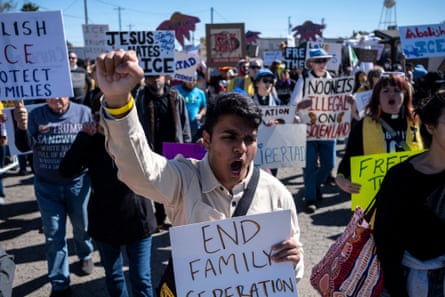
Laura, the 21-year-old who remains detained at Dilley along with her two-year-old son, said she has a history of miscarriages. Two days before she was detained at a mandated ICE appointment, she had gone to the ER with symptoms of miscarriage and was diagnosed with a high-risk obstetric condition. After arriving at Dilley, a physician at the facility evaluated her and told her her condition requires a specialist. “Despite this clinical determination, facility administration has failed to approve or schedule the consultation for me,” she stated in a legal declaration that Raíces shared with the Guardian.
She and her son should never have been detained in the first place, said Al-Juburi of Raíces. She was certified for a special visa for the victims of crime after a stray bullet struck her and her son last year.
The 2021 directive instructs ICE to avoid detaining pregnant people “except in exceptional circumstances”. But in more than a dozen cases reviewed by the Guardian, attorneys said they did not receive any clear explanation from ICE officers or from the DHS as to how they met the criteria of “exceptional circumstances”. Many were asylum-seekers with scheduled immigration hearings, and dutifully attended mandated ICE appointments – showing that they posed no flight risk.
“I have yet to encounter a pregnant or postpartum person who I believe meets the definition of extraordinary circumstances, as it’s used in other areas of the law,” said Sarah Decker, a senior attorney at the Robert and Ethel Kennedy Human Rights Center. Many of her clients are detained at the South Louisiana processing center in Basile, an all-women detention center with the highest number of pregnant detainees in the county, according to ICE data.
Decker also raised doubts that ICE was unaware of how many women in its custody had experienced pregnancy complications or miscarried.
“Many of the pregnant women that we’ve met at Basile have told us that they disclosed their pregnancy to ICE officers, that they had to advocate for access to prenatal care and access to a gynecologist, that they needed emergency care for complications,” she said. “So ICE is clearly aware and I think their desire to kind of obfuscate the access that people have to this data is intended to cover up the level of life-threatening medical neglect that’s happening in these facilities.”
The Guardian is not using full names for the pregnant women in this story to protect their privacy and safety.
Quick GuideHow the Guardian reported on the conditions of pregnant women in ICE detention
Show
Our findings are based on interviews with pregnant people in immigration detention, lawyers and medical professionals, as well as data and documents released to the Guardian through a public records lawsuit with the Reporters Committee for Freedom of the Press.
The Guardian filed a records request with ICE for data and documents on all pregnant, postpartum and nursing women in immigration detention. In response to our lawsuit, the government released spreadsheets of the number of pregnant and nursing women per facility through January 2026 and the number of miscarriages per facility per month through September 2025. The documents with information on miscarriages released to the Guardian said that ICE had no updated data after 3 October 2025.
KioskNews shows a cleaned-up reading view extracted from the publisher’s page — the original always lives on their site, not ours.