‘I treat every senior as I would a member of my own family’: A home care nurse on finding his calling
When R. Subramaniam’s father was diagnosed with lung cancer seven years ago, doctors estimated he had six months to live.
He decided against chemotherapy and radiotherapy, choosing instead to receive care at home. During the four months before he passed away, he was able to continue with his daily routines, feeding himself, taking walks and even drafting his will.
In his father’s final days, Subramaniam, 45, took leave from work to care for him, helping fulfill the older man’s wish to die peacefully in familiar surroundings.
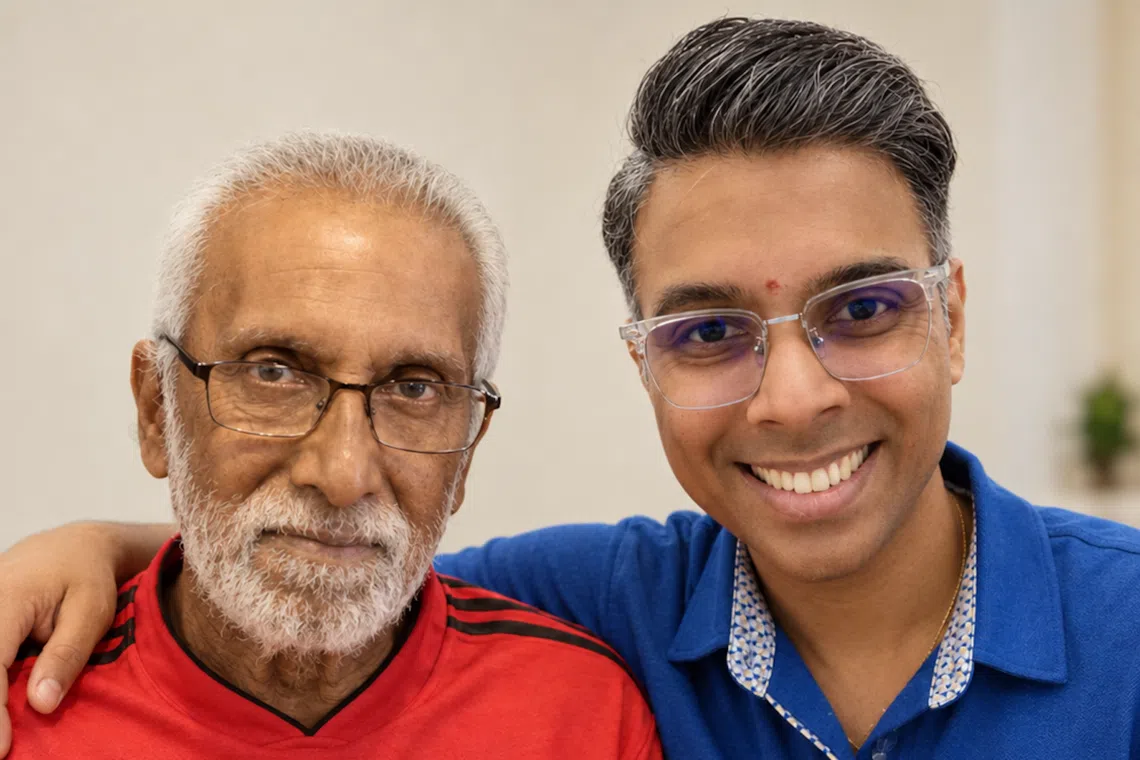
Subramaniam (right) looked after his late father at home, which taught him what it means to care for loved ones during their final days.
PHOTO: COURTESY OF R. SUBRAMANIAM
That experience gave Subramaniam a personal understanding of what it means to care for a loved one at home – something he now helps other families do as a senior staff nurse with Methodist Welfare Services (MWS).
The social service agency provides home care and home hospice services, and runs nursing homes. His work includes helping patients manage chronic conditions at home, and guiding families and domestic helpers in recognising symptoms and providing end-of-life care.
He says: “Our job gives us the privilege of encouraging family members to take care of the patient at home.”
His work is among the contributions recognised on Community Care Day, observed on Nov 1 to honour those working in the sector.
Here, he shares his path into community nursing, the bonds he builds with patients and their families and the fulfilment he finds in caring for others, just as he did for his father.
Q: What made you take up community nursing as a career?
When I was young, I had a cousin who was a nurse. She would tell me many inspiring stories about her job. I was also touched when I saw how my mum took care of my late grandparents. Another big inspiration comes from my wife and sister-in-law, who are nurses too. I felt that nursing could be my calling. I didn’t complete my GCE O levels so I started as a healthcare assistant at the Institute of Mental Health (IMH). I later asked for a transfer to the National University Health System where I worked for 14 years and became a staff nurse. I may have climbed up the ladder in a longer, different way, but I reached my goal.
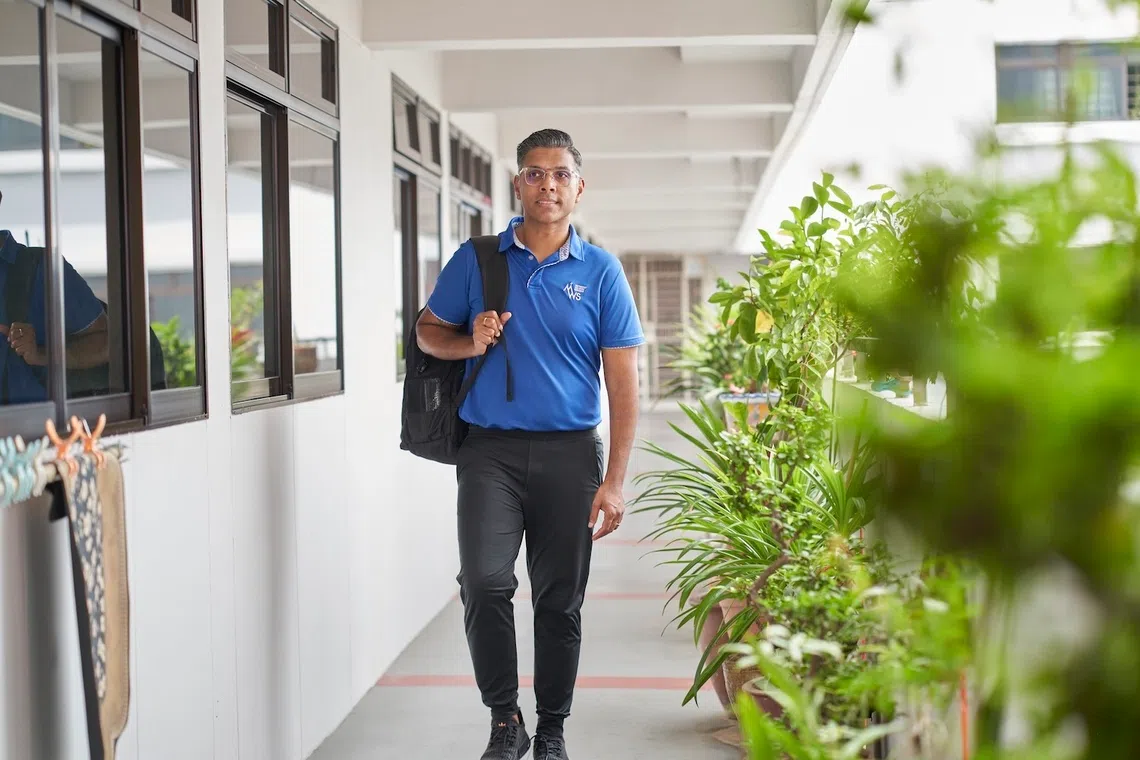
Subramaniam visits patients' homes, where he helps them with tasks such as packing their medicines, and teaches caregivers how to dress wounds or administer injections.
PHOTO: SPH MEDIA
Q: What does your role as a senior staff nurse at MWS entail?
In a day, I may make visits to patients’ homes for 45 minutes to two hours. I help pack their medicines as some patients need to take more than 10 medications every day and their newly hired helpers may not know how to do so. I will also teach family members and helpers to do tasks like dressing wounds or administering injections.
Our home care patients are long-term patients who may have medications prescribed by their doctors, like antibiotics, on standby. Home hospice care patients will have injections to manage pain or shortness of breath.
We work office hours but take turns to be on call for after-office home visits when needed.
Some families still keep in touch with me even years after a home hospice patient’s death and some attend our memorial events to express their gratitude.
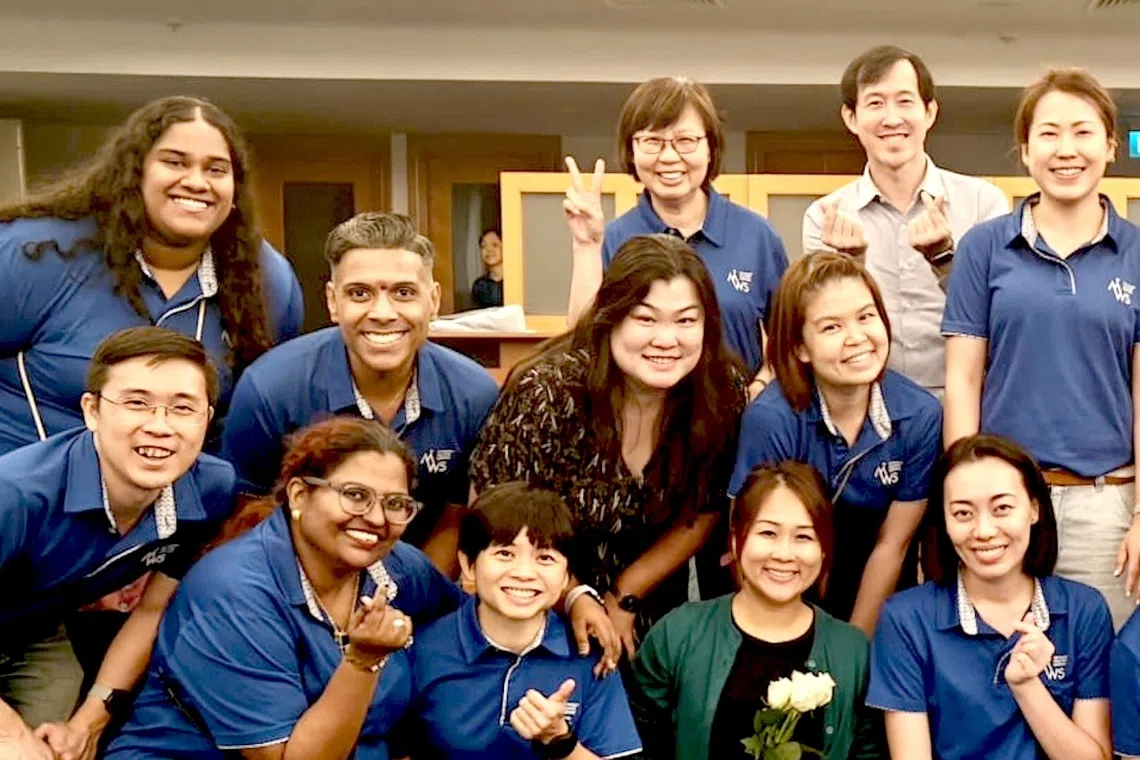
Subramaniam (second row, second from left) with his colleagues from MWS
PHOTO: COURTESY OF R. SUBRAMANIAM
Q: What are some misconceptions about your work?
People think we are private nurses because we do home visits. While home hospice patients may have less than a year to live, some remain well enough to go about their daily lives and are not necessarily in their final days.
My job is to help their family and helpers identify symptoms and know when to call us for advice.
Q: What were some memorable cases that you have come across?
Some patients may not want our services. One man in his 70s with end-stage kidney failure had decided against further dialysis after being told he had three to six months to live.
When we called to introduce our services, he got angry and shouted that he was going to die anyway. He lived alone without a helper and was wheelchair-bound. This made it hard for him to clean up his five-room HDB flat or go out to buy meals.
One month later, we tried contacting him again, and this time, he was less resistant. Nowadays, when I visit his home to check on his vital signs and pack his medicines, he enjoys chatting with me. I think it makes him feel better. We also managed to get an appointment for him to go for cataract surgery so now, he can watch TikTok videos and order food on his phone!
Some families may also have issues and can’t agree on whether to keep the patient at home or admit the patient into hospital. We referred one family to our medical social workers and when the patient passed away, her daughter sent us a simple thank-you message. We knew that we had made a difference for them.
Q: What makes your work meaningful?
Community care is becoming increasingly important because we have many elderly people in Singapore.
An 80-year-old patient may have children in their 50s who are managing chronic conditions themselves, while the grandchildren may have young families of their own. Our support as community care professionals can help ease the strain on the whole family.
Whenever my daughter asks me why I have to go to work, I tell her I am going to give “Grandpa” and “Grandma” their medicine. I treat every senior as I would a member of my own family. Caring for them brings me the same sense of fulfilment I felt when looking after my father in his final days.
Community care professionals like Subramaniam bring skilled nursing care, compassion and reassurance to seniors, helping them receive the care they need in the comfort of their homes. This Community Care Day, show your appreciation for them by personalising a “Thank You” card here.
KioskNews shows a cleaned-up reading view extracted from the publisher’s page — the original always lives on their site, not ours.