US clears US$24.3b sale of 48 F‑35 jets to Saudi Arabia amid Iran war
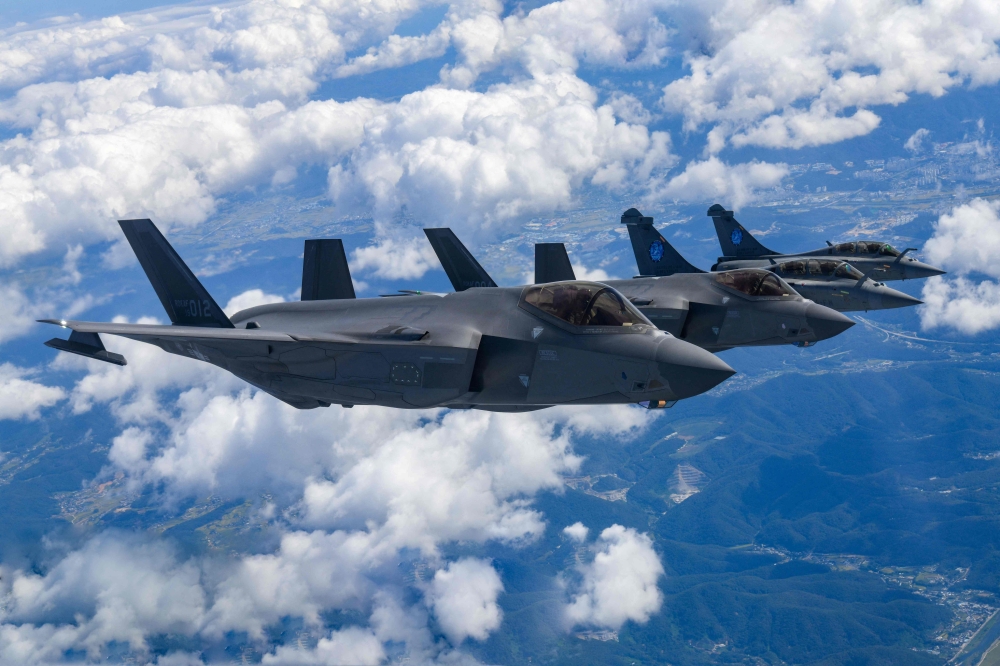

This handout photo taken on September 16, 2026 and provided by the South Korean Defence Ministry shows two South Korean Air Force F-35A fighter jets (front) and two French Air and Space Force Rafale fighter jets (rear) flying in formation over the South Korean Peninsula during a ROK-France joint aerial exercise. The United States has approved a US$24.3 billion (RM99.5 billion) sale of 48 F-35 stealth warplanes to Saudi Arabia, the State Department said yesterday. — South Korean Defence Ministry handout/AFP pic
First Published: Friday, 18 Sep 2026 11:22 AM MYT
WASHINGTON, Sept 18 — The United States has approved a US$24.3 billion (RM99.5 billion) sale of 48 F-35 stealth warplanes to Saudi Arabia, the State Department said yesterday, the kingdom’s latest major arms purchase since the start of the Iran war.
Saudi Arabia has long sought to buy F-35s, but officials from Israel — currently the only country in the Middle East to operate the jets — has voiced concern about their sale to Riyadh despite a push for the kingdom to normalize relations.
“The proposed sale will improve Saudi Arabia’s capability to deter current and future threats by strengthening its homeland defence, and improving interoperability with US forces,” the State Department said in a statement.
It “will also augment Saudi Arabia’s operational aircraft and enhance its air-to-air, and air-to-ground self-defence capability,” the statement said.
The Saudi embassy in Washington praised the transaction, saying it “reflects the strength and enduring nature” of the relationship with the United States.
It added that the security cooperation between the two countries “has contributed to regional stability, strengthened our collective defence capabilities, and advanced our shared security interests.”
Saudi Arabia has been repeatedly targeted with drone and missile strikes by Tehran’s forces since the United States and Israel launched their war against Iran in February, and has also been hit by Yemen’s Iran-backed Houthi rebels.
Yemen’s civil war had been dormant for years, but fighting between Houthis and the internationally recognized, Riyadh-backed government reignited in July, with the rebels declaring a maritime blockade of Saudi Arabia and targeting its ships in the Red Sea.
Washington has not directly entered the conflict, but a US official said earlier this week that an American military task force is working to enhance intelligence sharing and planning assistance for Saudi forces.
Congressional approval pending
The State Department has notified Congress about the proposed sale, which would require the approval of US lawmakers. It did not provide a time frame for the delivery of the jets.
The F-35 sale “will not alter the military balance in the region,” the State Department said, in keeping with longstanding US policy that Israel must have a military edge over potential regional adversaries.
The United States has so far only allowed the sales of F-35s to its closest allies, including a number of European Nato allies and Israel.
Washington kicked Nato member Turkey out of the F-35 program in 2019 because Ankara’s purchase of a Russian air defence system sparked fears that Moscow could acquire the plane’s technology.
Billions in arms sales
Washington also has concerns about potential Chinese espionage related to the jets.
The New York Times reported this week that US intelligence analysts have raised the possibility that Beijing could acquire F-35 technology through its partnerships with Riyadh.
US Representative Raja Krishnamoorthi, a Democratic member of the House Intelligence Committee, expressed opposition to the sale on those grounds.
It should not go ahead “when our own intelligence community is warning that it could put the crown jewels of American military technology within reach of the Chinese Communist Party,” Krishnamoorthi said in a statement.
The F-35 sale is the latest in a series of major arms buys by Saudi Arabia this year.
The State Department announced the approval of a US$5 billion sale of more than 10,000 bombs — including highly destructive 2,000-pound weapons — to Riyadh earlier in September.
Washington also signed off on the sale of 60 tank engines and related equipment to Saudi Arabia at a cost of US$750 million this month, and a US$1.96 billion deal in July for the kingdom to buy guidance sections that can convert rockets into precision weapons. — AFP
KioskNews shows a cleaned-up reading view extracted from the publisher’s page — the original always lives on their site, not ours.