Govt sets 12-month timeline before nuclear decision
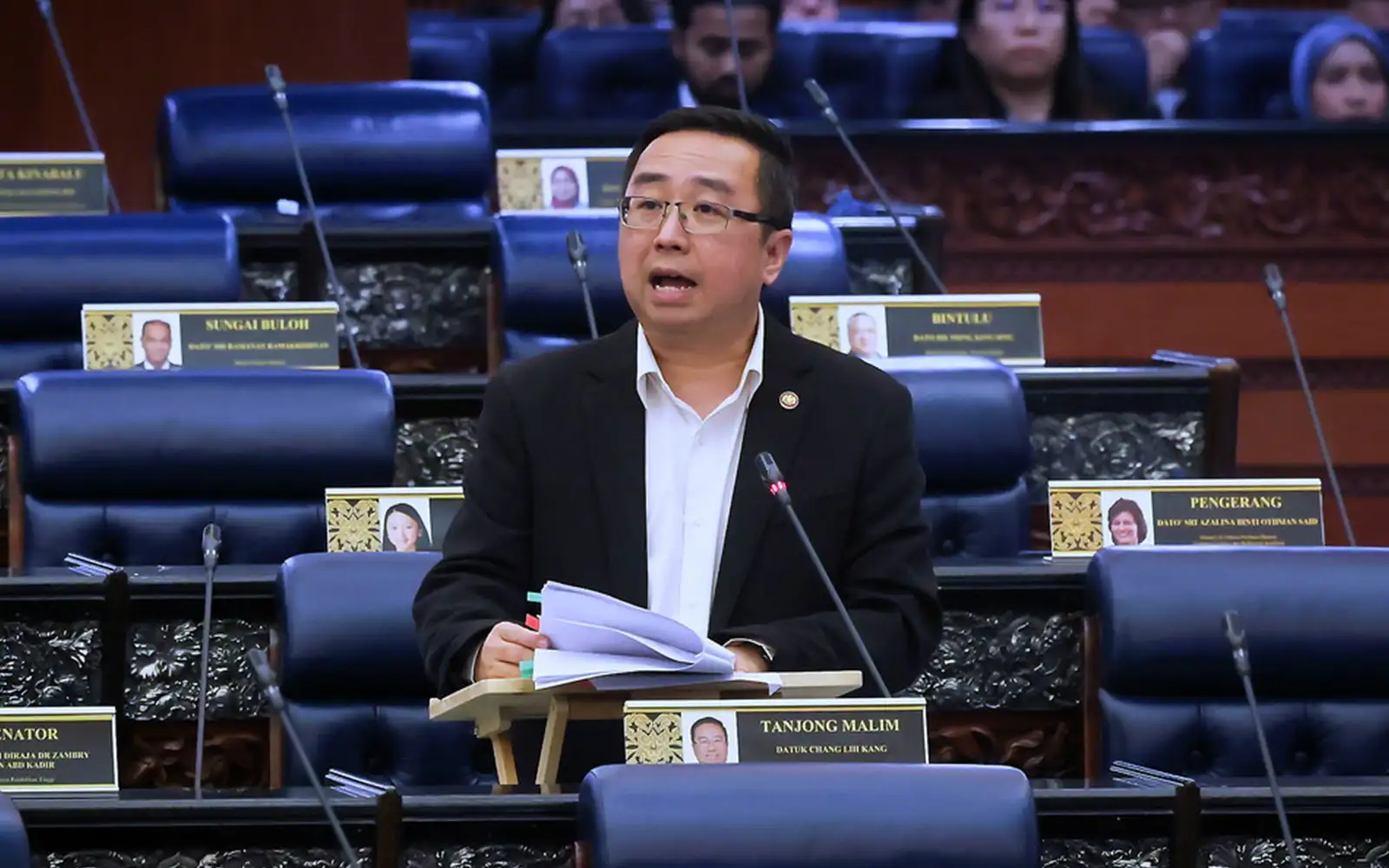
The government has set a 12-month timeline to complete four key studies before deciding on Malaysia’s nuclear energy pathway, says science, technology and innovation minister Chang Lih Kang.
Chang said the studies were being carried out under the nuclear energy technology development programme overseen by the energy transition and water transformation ministry.
The studies would cover the owner-operator model and financing plan, site assessment and prioritisation, technology assessment, and the pathway for developing Malaysia’s nuclear industry, he said.
“These studies will be completed within 12 months,” he said when winding up the 2027 budget debate for his ministry in the Dewan Rakyat today.
“After that, the government will decide whether to use floating small modular reactors (SMRs) or land-based SMRs, and which model should be adopted.”
This comes amid calls from MPs on both sides for Malaysia to accelerate its preparations for a more uncertain energy future, with rising electricity demand from artificial intelligence and data centres, geopolitical tensions, and continued reliance on oil and gas.
Howard Lee (PH-Ipoh Timur) urged the government to accelerate its preparations, saying Malaysia could not afford to wait until a final decision on nuclear energy before beginning work on the technology.
Lee argued that the country needed to consider interim options given rising energy prices amid tensions in West Asia and growing electricity demand from data centres, particularly in Johor.
Even if Malaysia decided to proceed with a floating SMR after the studies, he said, obtaining equipment, assembling components and constructing the facility could still take around five years.
Lee also said Malaysia may already have much of the regulatory groundwork in place.
“If I am not mistaken, the mapping of legislation, laws and regulations is already about 80% to 90% in place (for floating SMRs),” he said, adding that only a smaller portion remained unclear.
Wan Ahmad Fayhsal Wan Ahmad Kamal (PN-Machang) had made a similar argument in the Dewan Rakyat, calling for Malaysia to accelerate its nuclear planning as it confronts broader energy-security risks.
He pointed to the crisis around the Strait of Hormuz, and warned that oil and gas would remain a major challenge for the economy.
“It is time for Malaysia to take serious and consistent steps to develop our first nuclear power plant,” he said, adding that the project would require “brave decisions” from the government.
SMRs among options
In his winding-up speech, Chang said floating SMRs were among the options being assessed, but no decision had been made on the technology.
“There are land-based SMRs, floating SMRs and others. We will take into account suitability, needs and the country’s circumstances,” he said.
He was responding to Lee, who asked whether the energy transition and water transformation ministry, and the science, technology and innovation ministry (Mosti) were prepared to consider floating SMRs.
Lee had said that floating SMRs were not a new technology, stating that Russia had implemented it “for years”.
Public acceptance crucial
Chang also said the parliamentary debate showed that MPs recognised the need to explore nuclear energy as an alternative source of power.
“For MPs, we see there is a need to explore nuclear energy as one of the alternatives,” he said.
Khairil Nizam Khirudin (PN-Jerantut) also called for Malaysia to explore nuclear energy, saying the technology was neither new nor untested.
However, he said that nuclear energy remained a sensitive issue in Malaysia because of concerns over past nuclear incidents, such as the 2011 Fukushima nuclear disaster in Japan.
He called for greater public education and engagement, including among school and university students as well as MPs who may eventually scrutinise nuclear legislation.
In response, Chang said that public acceptance would remain crucial to any decision to pursue nuclear energy, adding that Mosti was working to make the subject less taboo.
“If the public does not accept the government’s proposal, a (nuclear) project like this will be difficult to continue,” he said.
As such, Chang said the ministry has introduced nuclear advocacy as a new element of National Science Week 2026, with public engagement focussing on scientific facts, safety concerns and radioactive-waste management.
Subscribe to our newsletter and get news delivered to your mailbox.
KioskNews shows a cleaned-up reading view extracted from the publisher’s page — the original always lives on their site, not ours.