China’s upgraded VT-4B export tank gets fourth-gen Type 100 tech ahead of Zhuhai show
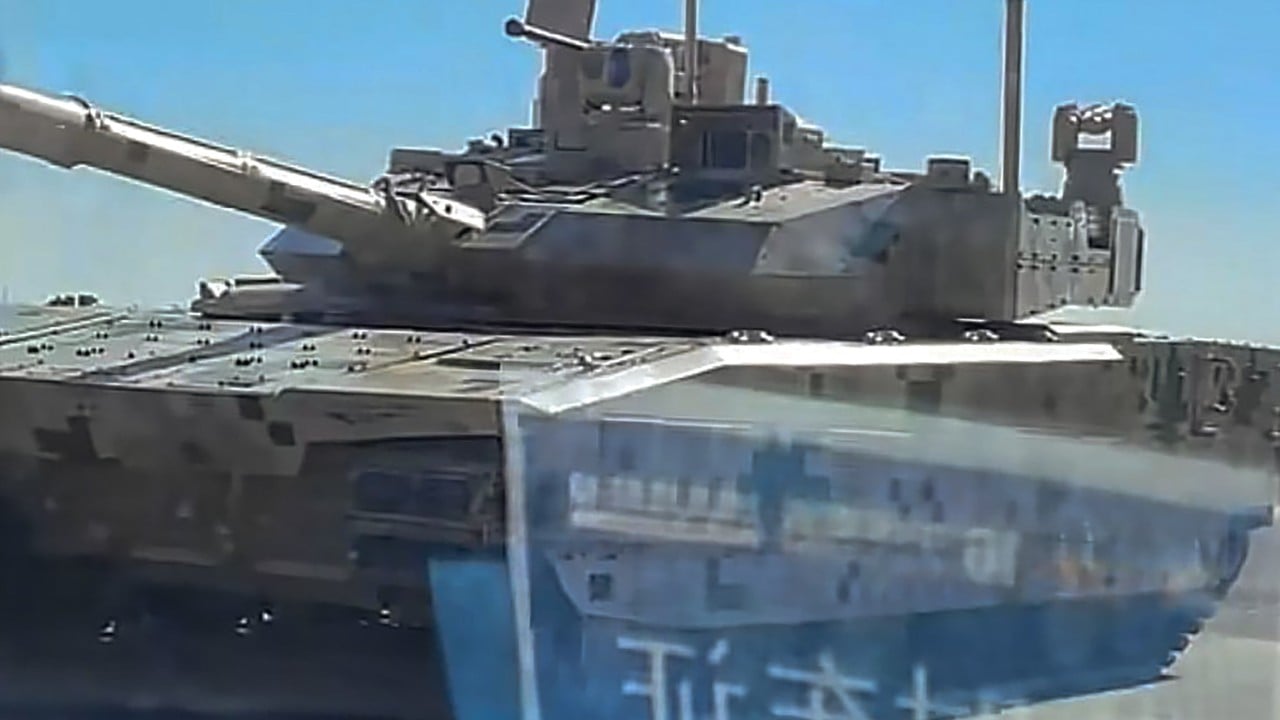
China has upgraded its VT-4 series main battle tank with cutting-edge technologies aimed at the international market, newly surfaced photos show ahead of the country’s premier defence exhibition in Zhuhai.
The appearance of the new tank, believed to be designated as VT-4B, indicates significant upgrades over the existing VT-4A in its armour protection, active protection, weapon station and electronic equipment.
Some of the improvements show traits of technologies developed for China’s next-generation armoured vehicles, such as those already seen on the fourth-generation Type 100 tank family and the upgraded Type 99B main battle tank. However, the VT-4B retains the overall design characteristics of a third-generation main battle tank.
The new tank was captured arriving at the airport in Zhuhai, in southern Guangdong province, alongside other military hardware to be displayed at next month’s Airshow China. Formally titled the 16th China International Aviation and Aerospace Exhibition, the biennial event runs from December 7 to 13.
The domestically developed VT-4 family is China’s most successful export main battle tank series, having entered service with the Pakistan Army, the Royal Thai Army and the Nigerian Army.
Images circulating on social media since Friday show the new variant with significant armour upgrades, reinforcing the front hull and sides with thicker explosive reactive armour that extends further down to cover the lower front section and parts of the running gear.
One of the most noticeable features on the VT-4B is the adoption of a 30mm remotely operated weapon station, replacing the standard 12.7mm roof-mounted machine gun on most tanks in service. This large-calibre gun provides greater firepower against the increasing threat from loitering munitions and first-person-view, or FPV, drones, as well as infantry and anti-tank teams.
The VT-4B is also equipped with a comprehensive active protection system that appears to be the GL-6, a set-up seen on the People’s Liberation Army’s recent main battle tanks. The system uses four turret-mounted phased-array radar panels for 360-degree threat detection, alongside twin interceptor launchers near the rear of the turret.
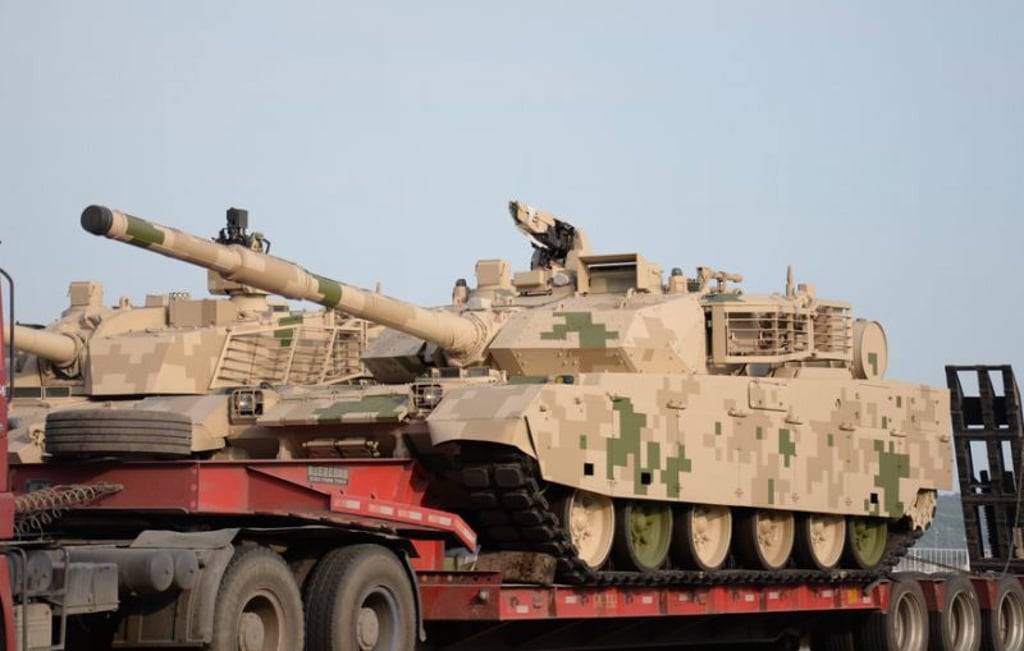
The situational awareness system has also been significantly upgraded, with the commander’s sight replaced by a large, independently mounted electro-optical and infrared (EO/IR) sensor pod. Comparable EO/IR suites fielded on other advanced PLA main battle tanks feature automated target acquisition and image recognition.
Meanwhile, the tank’s communications antennas have been swapped for thicker, stick-type models to support high-bandwidth data links, potentially giving the VT-4B increased vehicle-to-vehicle connectivity and tactical battlefield networking.
The circulating photos also show a small radio-frequency array mounted on one side of the remote weapon station. While its precise function remains unclear, military watchers suggest it could be either an independent fire-control radar or a compact high-power microwave emitter designed to disable incoming drones alongside the tank’s kinetic interceptors.
KioskNews shows a cleaned-up reading view extracted from the publisher’s page — the original always lives on their site, not ours.