Bleeding protesters, detained journalists: New Delhi sees fresh chaos despite SC order
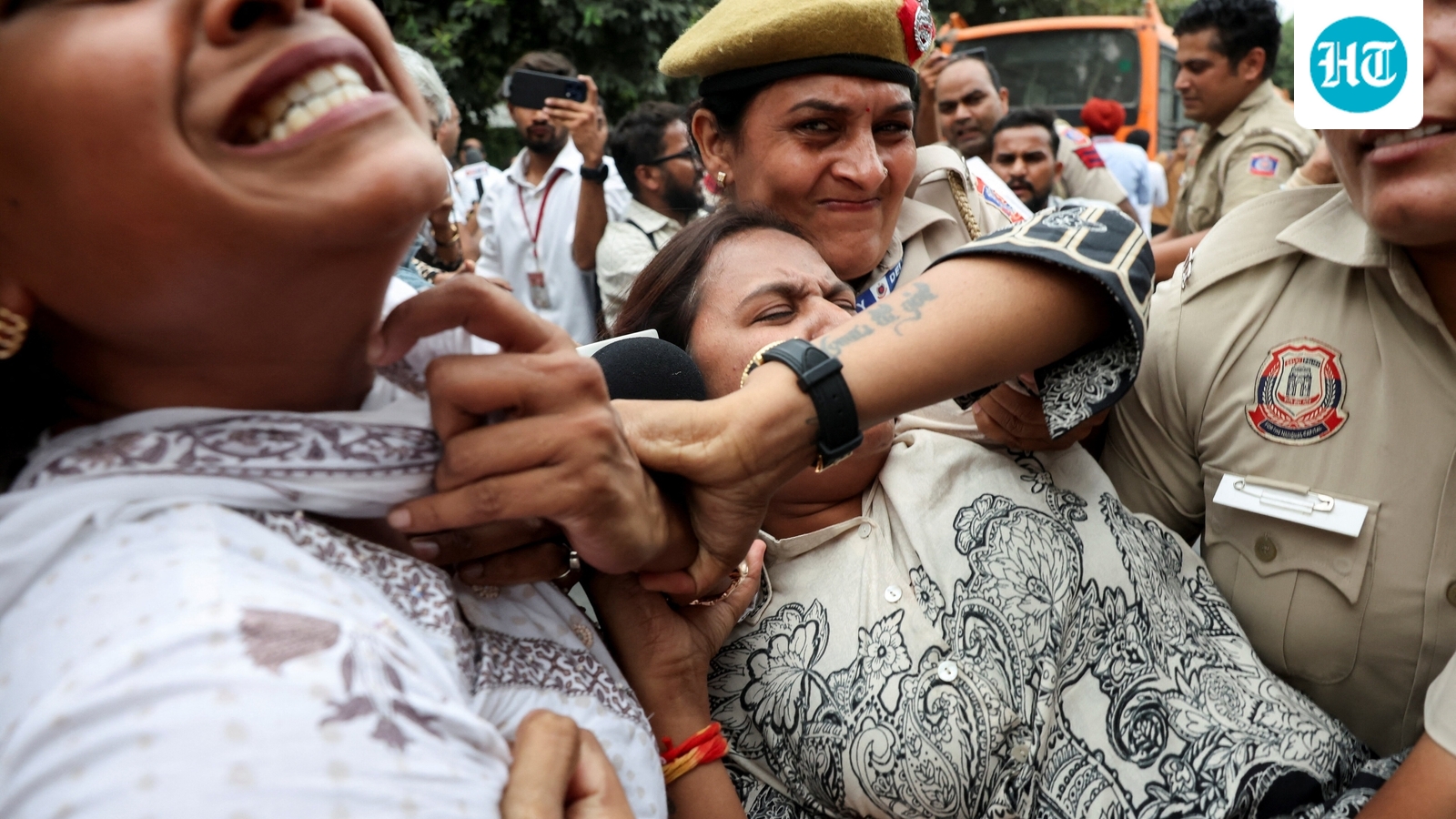
Fresh chaos gripped New Delhi district on Sunday as several groups protested against the Election Commission and police continued their crackdown, apprehending people, including journalists, despite a Supreme Court order against illegal detentions.
The journalists – including one from a national daily, from digital news platforms and camera persons – were detained from outside the Press Club of India on Raisina Road, Connaught Place and RK Ashram Marg. More than 70 people were held outside the Press Club of India.
A bus packed with the detainees at Connaught Place included two journalists and at least two protesters who were bruised and bleeding. Overall, about a 100 protesters were packed into two buses and removed from the area. A man was pulled out of a burger joint on suspicion of being a protester. A video of the incident showed him telling the cops that he was simply standing at the spot and that he would not go with the team. The cops later let him go.
Also read | Detentions continue in Delhi despite Supreme Court order, 100 held from Connaught Place
The police action came despite the top court’s order earlier in the day that peaceful, unarmed protesters cannot be detained except in accordance with the “procedure established by law”. The court also said the police cannot detain such peaceful protesters beyond the area covered by a prohibitory order under Section 163 of the Bharatiya Nagarik Suraksha Sanhita (BNSS).
Besides, AISA president Neha Bora and CPI(M) leader John Brittas were detained at Connaught Place. Brittas suffered injuries after he was dragged by the security personnel.
At Raisina Road, NSUI members staged a protest after the Cockroach Janta Party (CJP) concluded their press conference.
Also read | From 1am pickups to deserted streets: Connaught Place, heart of Delhi, sealed to smother CJP protest
The protesters are seeking the resignation of Chief Election Commissioner (CEC) Gyanesh Kumar over alleged irregularities in the Special Intensive Revision (SIR) of the electoral rolls.
On Saturday, about 41,000 security personnel turned the Capital into a fortress to thwart a planned protest, launching an unprecedented clampdown that saw the detention of 7,000 people and left large chunks of Delhi deserted.
Four former chief ministers and the leaders of the CJP were among those detained as police cracked down on students, lawyers and politicians, successfully refusing passage to Jantar Mantar. Yet, sporadic protests bubbled up at different points of the city throughout the day, even as police rushed to smother the stirs.
Reeling, the CJP announced a second consecutive day of stirs on Sunday.
Also read | 7,000 held, 41,000 personnel foil Gyanesh Kumar stir in Delhi; sporadic protests persist
Authorities had imposed restrictions across the Capital since Friday, with thousands of police on the streets, internet services suspended near Jantar Mantar, cancellation of many trains to Delhi and the controversial closure of 45 Metro stations – the largest this year. Police started detaining people going to the protest – the authorities had earlier said they denied permission for the stir – by 1am on Saturday, laying spike strips on arterial roads, erecting thousands of yellow barricades that choked traffic, and putting up loudspeakers that blared prerecorded police warnings against unlawful gatherings.
During a special sitting of the Supreme Court on Sunday, a special bench of justices Joymalya Bagchi and V Mohana ordered that peaceful, unarmed protesters cannot be detained except in accordance with the “procedure established by law”.
It issued the directions after an urgent hearing on petitions alleging mass detentions, restrictions on movement, suspension of internet services and non-compliance with the court’s October 9 order on transport curbs ahead of Saturday’s protest against Kumar.
The court also directed that metro and railway services in Delhi operate normally, internet connectivity remain undisturbed and free movement of people be restored. It ordered authorities to remove a notice imposing prohibitory restrictions around the Supreme Court and other court complexes to ensure unhindered “access to justice”.
KioskNews shows a cleaned-up reading view extracted from the publisher’s page — the original always lives on their site, not ours.