6 Most Universally Loved Movies Released Since 2020, Ranked
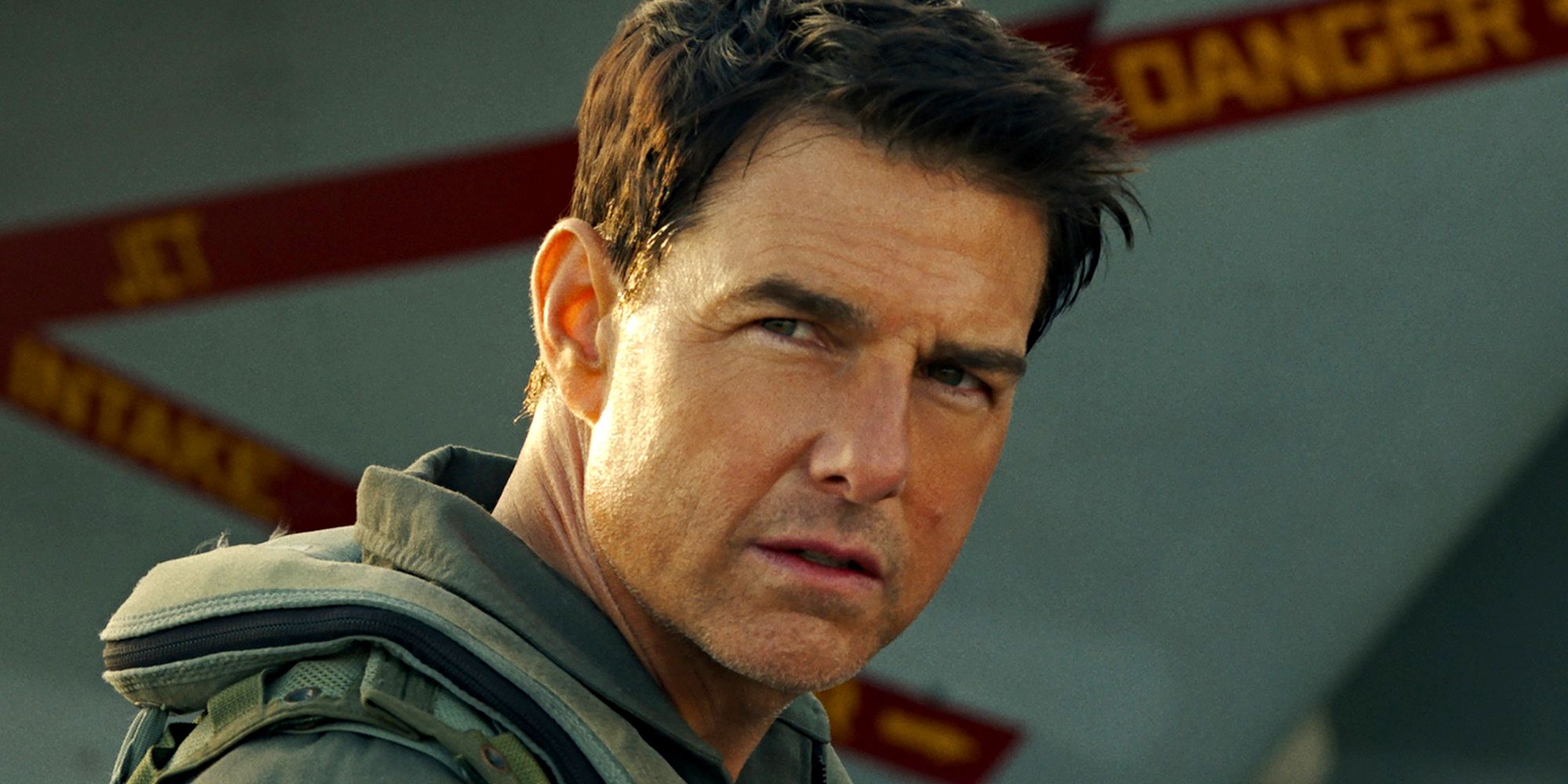
Getting people to agree on movies now feels harder than getting a family to agree on where to eat. Every release has discourse attached before half the audience has even seen it. Somebody thinks it is overrated. Somebody thinks criticism of it is a personality defect. Somebody thinks it’s too woke and somebody takes it as offensive or cancels the actor. So when a movie breaks through all of that noise and generates something close to genuine shared affection, I notice.
These six did that for completely different reasons. Some made theaters feel enormous again. Some made adults cry over things they absolutely did not expect to cry over. Some took familiar franchises and found emotional nerves nobody thought were still exposed. And a couple simply reminded everyone that spectacle works best when there is an actual human being standing underneath it. These are 6 most universally loved movies released since 2020.
6 'Oppenheimer' (2023)

Oppenheimer follows theoretical physicist J. Robert Oppenheimer (Cillian Murphy) as he leads the Manhattan Project’s effort to build the first atomic bomb, then watches the political and moral consequences of that achievement consume the rest of his public life. Cillian Murphy plays Oppenheimer as a man brilliant enough to understand the science and never quite powerful enough to control what happens once the science leaves his hands.
What stunned me was how little Christopher Nolan, who directed the film, seemed interested in making genius feel glamorous. The Trinity test is spectacular, yes, but the truly sickening moment comes later when Oppenheimer addresses the cheering Los Alamos crowd. Everybody is celebrating. He imagines flesh burning from faces and bodies turning to ash beneath stomping feet. That is the movie in miniature. Victory and horror have occupied the same room, and only one man seems capable of seeing both at once. The final conversation with Einstein (Tom Conti) then reframes the entire thing with this awful, quiet thought: maybe they really did start a chain reaction. Just not the one they calculated.
5 'The Wild Robot' (2024)

A robot called Roz (Lupita Nyong'o) washes onto an island with no instructions for how to belong there. That is the wonderfully simple beginning of The Wild Robot, which follows Roz as she learns to communicate with animals, accidentally becomes responsible for an orphaned gosling named Brightbill (Kit Connor), and slowly develops something machines were never supposed to need: attachment.
I did not expect this movie to understand parenthood as sharply as it does. Roz approaches raising Brightbill like a task. Feed him. Teach him to swim. Make sure he can fly before migration. Then, somewhere inside all that programming, responsibility turns into love. Chris Sanders directed the film, and he never gets sentimental in the cheap way. Brightbill still has to leave. Roz still has to let him. And when the animals who once feared her eventually stand together because of the relationships she created, the movie earns every tear. Children see a robot and a goose. Adults see the horrifying little truth that sometimes loving somebody means preparing them to need you less.
4 'Dune: Part Two' (2024)

Dune: Part Two picks up with Paul Atreides (Timothée Chalamet) hiding among the Fremen after the destruction of House Atreides, learning their ways, falling in love with Chani (Zendaya), and being pushed toward the messianic role that his mother, his enemies, and centuries of Bene Gesserit manipulation have prepared for him. Timothée Chalamet starts the movie as someone afraid of becoming a prophecy and ends it sounding frighteningly comfortable giving orders to an army.
And that is why the sandworm ride feels so damn good. For a few minutes, you are allowed to enjoy Paul becoming the person everyone said he could be. He runs across the desert, plants the hooks, gets dragged beneath the sand, somehow climbs onto the worm, and the Fremen watching him erupt when he survives. Pure movie-star electricity. Denis Villeneuve, the film’s director, knows exactly when to let you cheer before reminding you what you are cheering for. By the time Paul tells the fundamentalists to lead the other Houses to paradise, triumph has curdled into something much scarier. That emotional reversal is blockbuster filmmaking with teeth.
3 'Godzilla Minus One' (2023)
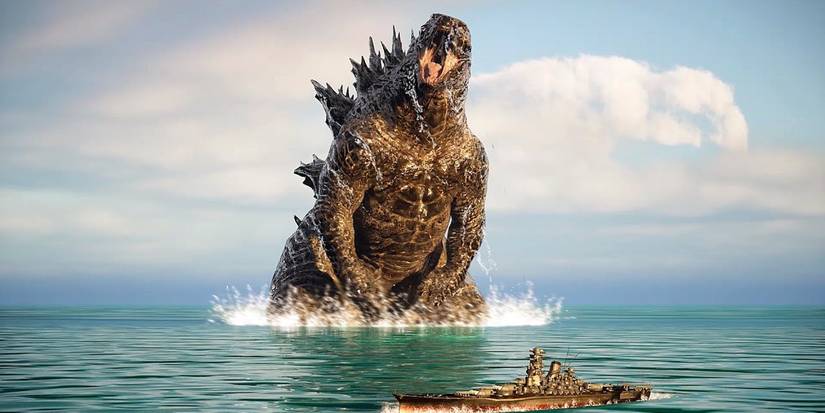
Godzilla Minus One begins with Koichi Shikishima (Ryunosuke Kamiki), a Japanese kamikaze pilot who survives World War II and returns home carrying crushing guilt, only to face another impossible threat when Godzilla emerges and begins devastating a country already broken by war. The monster is enormous. The real story is a man who believes he forfeited the right to be alive.
That distinction is what made this hit people so hard. Koichi builds a makeshift family with Noriko (Minami Hamabe) and the orphaned Akiko, yet every bit of happiness seems to offend his guilt. Then Godzilla attacks Ginza, and the destruction is frightening because there are people in those streets we desperately want to live. Takashi Yamazaki directed the film and understood something many giant-monster movies forget: scale becomes meaningful only after intimacy. When the surviving civilians finally plan to fight Godzilla themselves, the entire movie becomes an argument against throwing lives away. Koichi spent years thinking survival made him a coward. The ending finally lets survival become the brave choice.
2 'Spider-Man: No Way Home' (2021)

Peter Parker (Tom Holland)’s identity has been exposed to the world when Spider-Man: No Way Home begins, so he asks Doctor Strange (Benedict Cumberbatch) to cast a spell that will make everyone forget he is Spider-Man. Peter interferes with the spell, reality cracks open, and villains from other universes begin appearing in his world. Then the movie pulls off the thing everybody hoped it might and somehow makes it matter emotionally instead of functioning as a two-hour applause machine.
Yes, Andrew Garfield’s Peter Parker walking through that portal was one of those theater moments where you could barely hear the dialogue. Tobey Maguire arriving seconds later made it louder. But the scene that explains why the movie became so beloved happens later, when Garfield’s Peter catches MJ (Zendaya) as she falls and quietly breaks down after realizing he has saved someone in the way he could not save Gwen Stacy (Emma Stone). Nobody needs to explain what his face means. Years of another movie’s grief just resolved inside ten seconds. Jon Watts directed No Way Home, and the best decision was treating nostalgia as unfinished emotional business. The cameos brought people into theaters. The healing is why they remembered it.
1 'Top Gun: Maverick' (2022)
Top Gun: Maverick brings Pete “Maverick” Mitchell (Tom Cruise) back to TOPGUN decades after the original film, still flying as a test pilot and still avoiding the promotions that would take him out of the cockpit. He is ordered to train an elite group of younger pilots for an almost suicidal bombing mission, only to discover that one of them is Rooster (Miles Teller), the son of his late best friend Goose.
There is a beautiful lack of embarrassment in this movie. It wants jets to look incredible. It wants friendship to matter. It wants a handshake between two men to carry thirty years of history. It wants you to cheer when Maverick proves the impossible training run can actually be flown, and it absolutely earns that cheer. The emotional engine belongs to Tom Cruise’s willingness to let Maverick age without turning him into a joke. The reunion with Iceman (Val Kilmer) is tender. The tension with Rooster hurts because Maverick is protecting him in the exact way Rooster resents. Then Maverick gets shot down after saving him, Rooster turns back, and suddenly the mission becomes personal in the oldest, simplest movie language imaginable. People loved this because it remembered something blockbuster cinema occasionally forgets: audiences do not need to be tricked into caring. Give them somebody worth caring about.
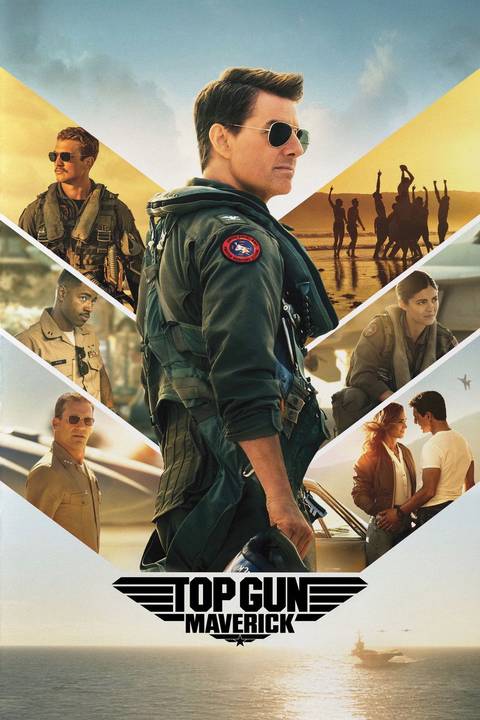
Top Gun: Maverick
9 10
- Release Date
- May 27, 2022
- Runtime
- 131 minutes
- Director
- Joseph Kosinski
- Writers
- Christopher McQuarrie, Ehren Kruger, Eric Warren Singer, Peter Craig, Justin Marks
KioskNews shows a cleaned-up reading view extracted from the publisher’s page — the original always lives on their site, not ours.