True crime novel about 1949 murder of Paris life model wins France’s biggest literary prize

A literary true-crime investigation that tries to solve a 77-year-old cold case and ends up rehabilitating the reputation of its life model victim has won France’s most prestigious literary prize.
The author Philippe Jaenada was announced on Tuesday afternoon as the winner of the Prix Goncourt, for his book L’Inconnue du quai de Javel (The Unknown Woman of the Quai de Javel), a recreation of the murder of a 29-year-old Breton woman named Louise Cansot.
Known as “the woman with a hundred portraits” because she was so sought-after as a model for artists in Montparnasse, Cansot was found dead on 7 September 1949, but police never managed to establish the identity of her murderer.

This year’s edition of the Prix Goncourt has been overshadowed by the allegation that one of the other longlisted books, the Canadian-Haitian author Thélyson Orélien’s C’était ça ou mourir (It Was That or Die), was “almost entirely” written by artificial intelligence.
The Académie Goncourt, a Paris-based literary organisation, withdrew Orélien’s book from its longlist, and his Canadian publisher Boréal severed ties with the writer after an investigation. Orélien has denied using AI to write his novel.
Having been previously shortlisted for the Goncourt four times, Jaenada has finally triumphed with the 13th novel of his career.
The writer, born in Île-de-France, has made investigations into old news stories his trademark style since 2013’s Sulak, the story of a notorious and charismatic robber and escape artist who targeted jewellery stores in the 1980s.
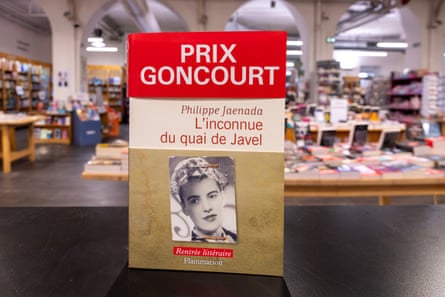
The subject of L’Inconnue du quai de Javel, Louise Cansot, left Brittany at 16 to work as a maid but then started to sit as a life model for painter Jean-Louis Boussingault, who introduced her to other Parisian painters and sculptors.
The original 300-page police report into Cansot’s murder concluded that she was a woman of “ill repute”, and newspaper reports at the time speculated that she was a sex worker or drug addict.
Jaenada’s 530-page book goes to some length to right the wrongs of the original investigation, not just by suggesting the name of the murderer, but also in its empathetic portrayal of the victim. “He spares no effort in trying to understand his heroine,” wrote the newspaper Le Monde, while also praising the book’s humour and “touch of grumpy tenderness”.
The author drew inspiration for his book by reading and re-reading 74 out of the 75 novels in George Simenon’s Inspector Maigret series, about the chief inspector of a criminal brigade in 1940s Paris.
KioskNews shows a cleaned-up reading view extracted from the publisher’s page — the original always lives on their site, not ours.