‘Let adults decide’: After Maharashtra UCC panel exit, Justice Chavan talks about ‘minimum government’ in personal lives
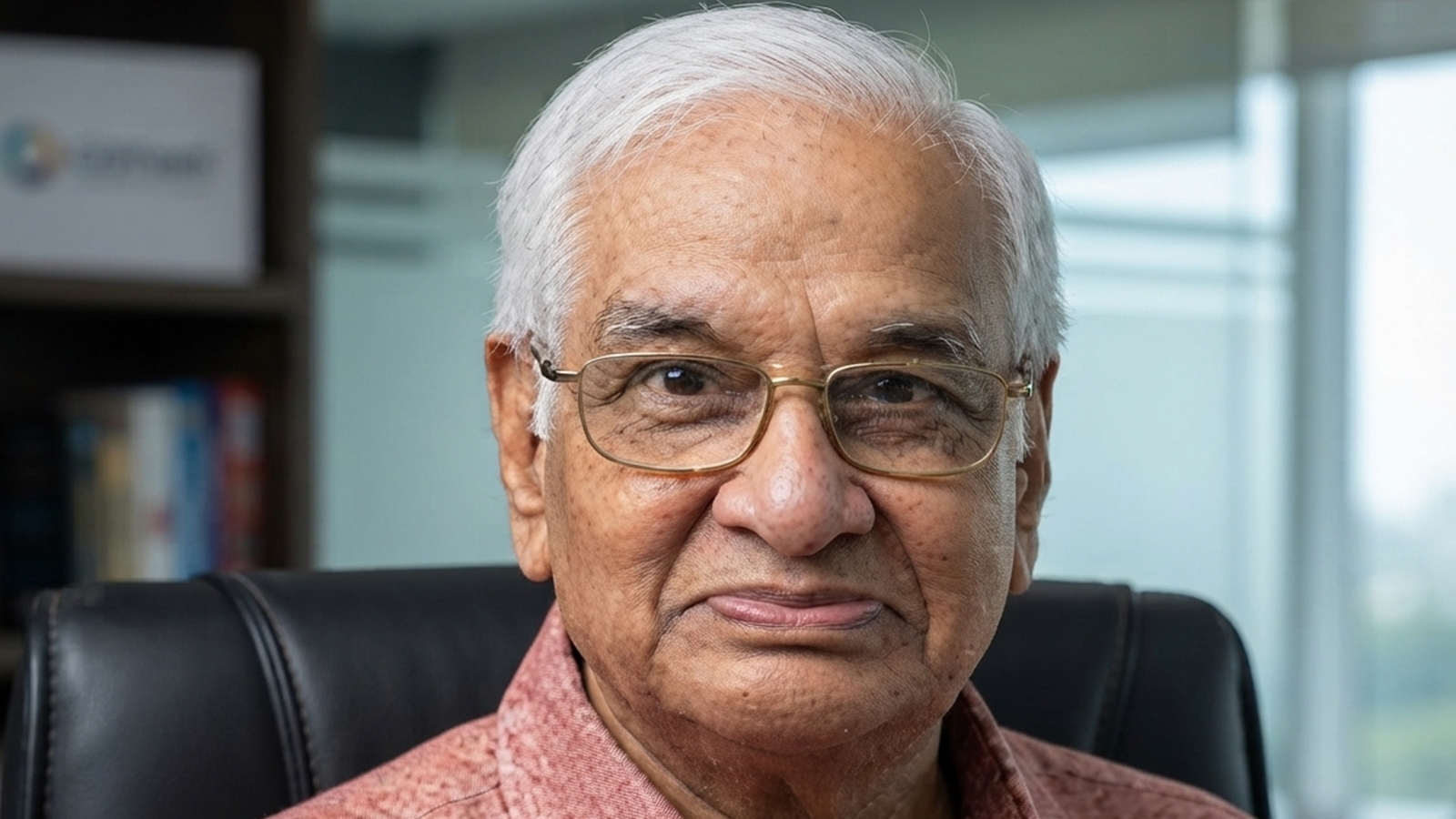
Retired Bombay High Court judge Justice R C Chavan, who resigned from Maharashtra’s Uniform Civil Code (UCC) panel citing differences over the public feedback process and other reasons, said the exercise is needed. Still, it should give people the autonomy to decide, he said. Justice Chavan was part of the seven-member committee, formed in July by the state government to decide on the draft and implementation of UCC in the state.
After being part of two committee meetings, Justice Chavan resigned on September 19. Justice Chavan talks about the committee and his decision to resign and why he thinks there should be ‘minimum regulations and government’ in personal lives.
Can you tell us about the formation of the committee and when you were approached?
I was asked by a secretary of the state government about the formation of the committee in June, and since I had closely followed the issue of UCC implementation, I immediately agreed to be a part. I did not know the other members till the government notified and announced the committee. When the Law Commission was doing consultations in 2016 regarding the UCC, I had closely followed it and had also given my suggestions orally then.
I wanted to be a part of the process to decide on what goes into the law, on topics which affect family and social life, marriage, divorce, adoption, inheritance. My intention was that this exercise should create unity (rather) than a rift in society.
There were two meetings till your resignation. Can you tell us about the discussion in those?
There were general introductions in the first meeting, and the second was held on September 19. There were several exchanges over email in between, including on the formulation of a questionnaire for public feedback. There was a discussion that not all questions can be in the format of ‘Yes/No’ responses, and there should be scope for people to give multiple or longer responses since these were complex issues. There may be difficulty in analysing them, but it can be done with various tools at our disposal, as is done in an economic or social survey.
Further, I also felt that physical meetings should not only be held in divisional headquarters with representatives of political parties, religious leaders and NGOs, as there might be a limitation to the opinions we will hear. I had requested that the National Law Universities and state universities, and the state legal services authority, be brought on board to conduct these discussions among the general public and submit well-researched papers. I had suggested that at least 10,000 responses should be collected through this process. I had suggested a timeline to conclude this and submit a report by January.
I felt that there was a lot of misinformation and an impression that the whole exercise was undertaken with a political agenda alone, and there was a need to spread awareness that this is a goal set by the Constituent Assembly. I was also of the opinion that there should be a lot more engagement with the younger generation since this is going to be a law that will govern their lives the most.
Story continues below this ad
I had made these suggestions on a draft questionnaire sent for the perusal of the members; while some questions were modified based on my responses, in the second meeting, we were told by the Honourable Chairperson (Supreme Court retired judge Justice Ranjana Desai) that the questionnaire circulated was finalised and would be uploaded on the website once it was ready. I had my disagreement with this, and I made this clear in my resignation letter too. I had also raised the issue of the participation of a non-member in the meeting.
What was your idea on UCC and how it should be codified in the state?
For the past few years, during my interactions with students in law colleges, I have been proactively discussing UCC. I was guided by some principles conveyed by them on how the UCC should evolve. I felt that it should aim at preserving family as a unit of society, and that all adult interpersonal intimate relationships should be allowed without any stigma or labels that demean relationships, suggesting gender-neutral terms like ‘spouse’ rather than husband or wife.
Consenting adults should have the freedom to define the terms of their relationships, with the right to privacy. So I felt that instead of mandatory registration of relationships like live-ins, it should be voluntary, with a rider that those not registering may be left out of welfare schemes meant for couples, or compassionate employment on death or incapacity of a partner. I felt that inheritance should be equal too for all heirs.
My main thought was that freedom should be given, as despite existing laws preventing bigamy, for instance, it remains in practice. I know that it may be radical for some, but a lot of relationships cannot be labeled and defined, and rather than this being decided by the state, let the adults involved decide; give them the autonomy.
Story continues below this ad
I felt that personal laws can co-exist with the UCC. Whatever is covered by the UCC can override concerned laws; wherever the UCC is silent, it can be accordingly dealt with by personal laws. We talk of minimum regulation in commerce etc. I feel that there should be minimum regulations and minimum government as far as personal lives are concerned too.
KioskNews shows a cleaned-up reading view extracted from the publisher’s page — the original always lives on their site, not ours.