For survivors of serious illness, a second battle begins at the workplace after treatment ends
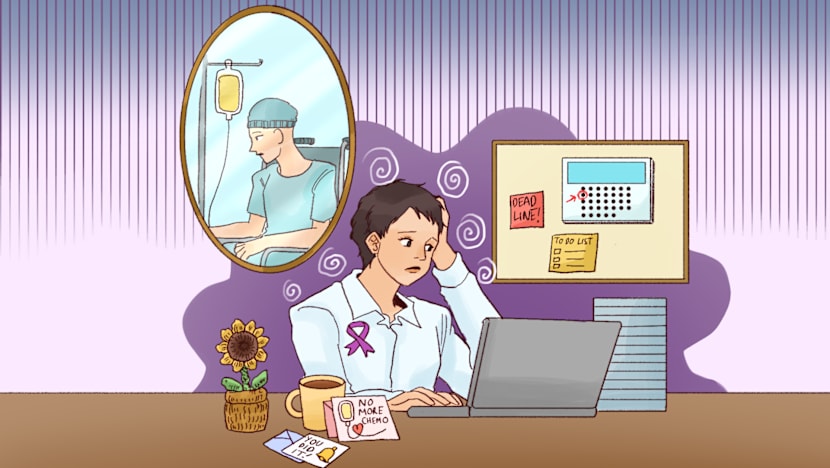
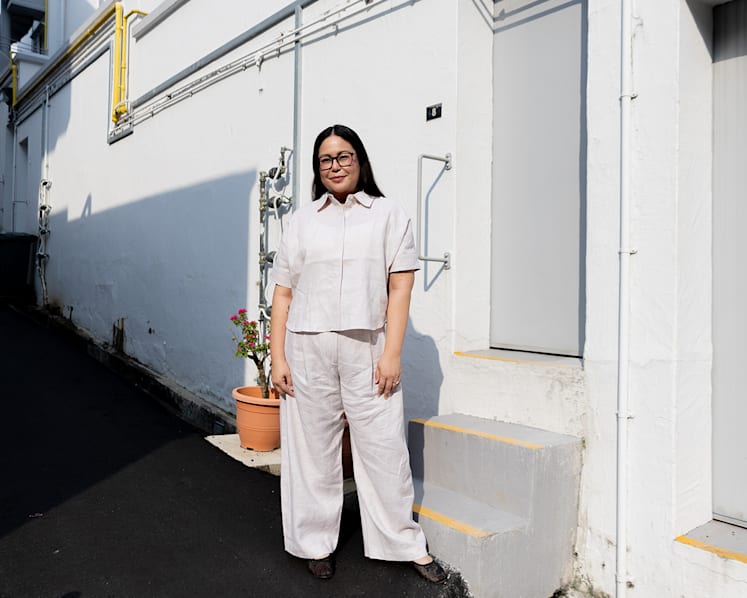
Eight weeks after a mastectomy and breast reconstruction for stage 0 breast cancer, Ms Patricia Malay was eager to get back to work, but she had not anticipated how quickly fatigue would set in.
"I couldn't stack meetings, one after the other, the way I used to," said the 46-year-old general manager at Bud Communications, an international public relations agency, who underwent the surgery in December 2025.
Ms Malay said she was concerned that, as someone in a senior leadership role, taking time off work, even due to illness, would affect perceptions of whether she could still do her job, and so she wanted to push on, but without overexerting herself.
Fortunately, Ms Malay said she was able to have an honest discussion with her team and boss about her ability to return to work at full capacity.
"I told them I didn't know if I could go back to 100 per cent right away," she said. "Thankfully, they gave me as much leeway and understanding as possible."
Ms Malay said her agency was more than happy to accommodate her needs as she returned to work. Rather than expecting immediate turnarounds, her colleagues would first ask if the task was something she could handle and what timeline she was comfortable with.
There were other, smaller, gestures that made her feel accepted. After her surgery, she felt self-conscious about her appearance, and her team never pressured her to switch on her camera during online meetings.
She took it easy for the first few weeks back to work after her surgery, and as soon as she gained more strength, she ramped up her workload. By August this year, she was back into the full swing of things.
Ms Malay said she was fortunate that she was not the first person at her company to have gone through a serious illness. Her managers already had experience accommodating employees who needed time to recover from medical conditions.
"When it came time for me to ask for that, I was just glad that it wasn't an issue," she said.
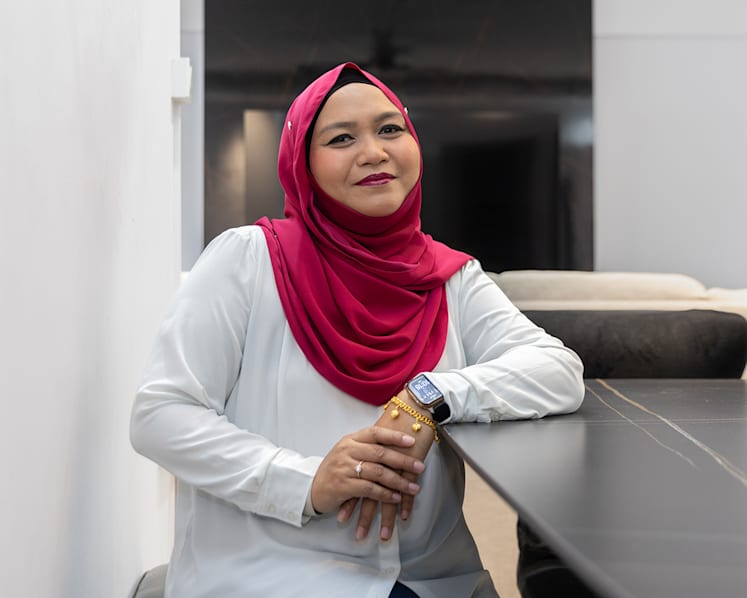
For Ms Faridah Ahmad, a starkly different reality awaited her after being diagnosed at the age of 17 with Stage 2 Hodgkin's Lymphoma, a type of cancer that affects the body's germ-fighting immune system.
After going through treatment, and as a young adult, Ms Faridah found that entering the workforce as a cancer survivor was more challenging than she had expected.
During job interviews, instead of asking how they could support her, prospective employers questioned how much medical leave she would need and whether she could cope with the role. Ms Faridah applied for corporate administrative roles and jobs in social work.
"Nobody wants to hire somebody with cancer, and nobody wants to hire someone who has to take a lot of leave for medical appointments," she said.
Even after she found a role in social work, Ms Faridah said her cancer history continued to shape how some employers saw her.
At one workplace, she found out that she had been passed over for a promotion because management thought she might not be able to handle stress or could go on medical leave.
"They treat me like glass, like I'm very weak, but I'm not," Ms Faridah said, adding that colleagues who joined at the same time and had the same qualifications were given more work than her.
Although she is in remission, the side effects of treatment have not fully gone away. She still experiences fatigue, memory lapses and neuropathy, which can make her hands and feet feel numb and clumsy. But, she added, she can still work almost as hard as the average person.
"They already assume I can only operate at 60 per cent," she said. "But maybe I can do 80 or 90 per cent. Once they set that limit on me, they don't give me the chance to move forward."
Ms Faridah, now 29, is currently a social work assistant at the non-profit social service agency 365 Cancer Prevention Society, which she said has been a much more supportive workplace.
The two women's experiences point to the challenges faced by cancer survivors returning to employment after treatment, an issue that sparked something of a national conversation recently, after the Employment Claims Tribunal awarded a cancer survivor S$20,000 (US$15,600) for wrongful dismissal.
The woman, who was working at an international school as an administrative assistant for 17 years, was forced to resign after she and her managers disagreed over work-from-home arrangements following a battle with stage 3 nasopharyngeal cancer.
While she was declared fit to work, she was slower and weaker in her hands and needed rest and rehabilitation. She then faced resistance when she asked to work from home twice a week, leave early on certain days for rehabilitation and take on only light responsibilities.
The case has sparked discussion about whether the current legal framework provides sufficient clarity for employers and employees returning to work after a serious illness, said Ms Amarjit Kaur, head of employment at law firm Withers KhattarWong.
The tribunal focused on the particular facts of this one case, but the case highlights a number of broader policy questions that may warrant consideration, she said.
Currently, Ms Kaur noted, no comprehensive statutory regime clearly defines what accommodations must be provided, when they should be provided, or how competing considerations should be balanced.
"The law provides relatively limited guidance regarding the practical contours of that obligation," she said.
Ms Kaur added that disputes over employees returning from serious illness often arise because employers and employees are unsure what they are expected to do when navigating the return-to-work process.
As advanced medical treatments allow more people to survive cancer and return to the workforce, the question is whether workplaces are prepared – and willing – to provide them with adequate support, and whether they should be made to do so.
THE LONG ROAD TO FULL RECOVERY
For many cancer survivors, ending treatment is only the beginning of recovery, and returning to work can look deceptively ordinary.
Data from the latest Singapore Cancer Registry annual report, published in January 2026, showed there were 4,995 cancer diagnoses among those under 40 between 2019 and 2023 – a 34 per cent increase from the period between 2003 and 2007, when the number stood at 3,729.
Ms Nurhana Abdul Ghani was 33 when she was diagnosed with Stage 2 triple-negative breast cancer in 2017. She underwent a right mastectomy without reconstruction and had one month of hospitalisation leave.
Ms Nurhana said it was a strange feeling returning to work as a civil servant in human resources, when a once-familiar workplace felt both recognisable and foreign.
"My workplace hadn't changed, but I was the one who had changed," she said.
Physically, she no longer had the same energy or stamina. Her concentration was also affected by "chemo fog", and there were times she needed more time to process things.
To cope, Ms Nurhana tracked tasks and deadlines to ensure she could perform to the best of her abilities.
Her team continued to trust her with responsibilities instead of assuming she could no longer handle them, which was important to her recovery.
Emotionally, returning to work also meant adjusting to how her body had changed after a mastectomy without reconstruction.
Ms Nurhana was initially worried that colleagues who knew about the surgery would look at her differently, but they never made her feel judged.
She added that it was initially difficult to open up about her diagnosis because she was used to being independent.
But her supervisor approached her and shared that he had a sibling who had gone through leukaemia, which made it easier for her to speak about what she needed.
"I was very thankful that he remained approachable throughout the period," she said, adding that he also offered her flexibility around her treatment.
"I still wanted to contribute, and I still wanted to be part of the team," she said. "The important thing is not to assume that I can't do something just because I've had cancer."
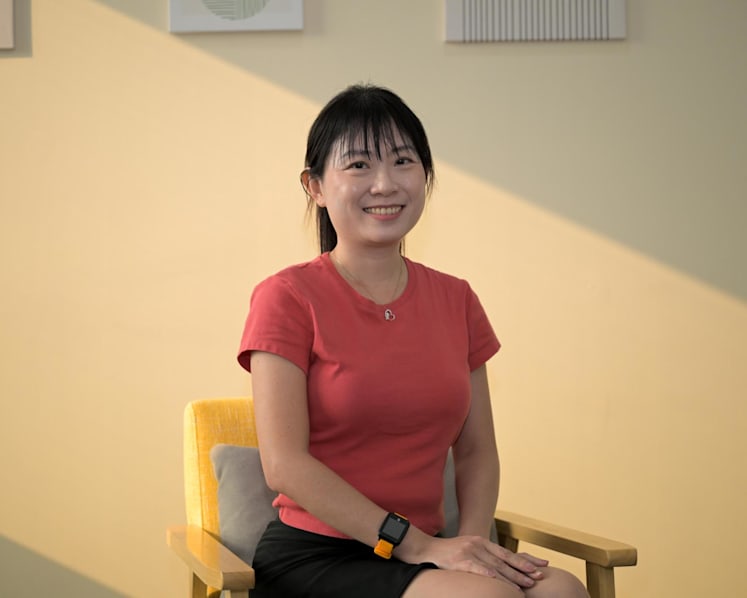
Similarly for network engineer Ms Connie Seng, her return to work was filled with uncertainty. She was diagnosed with stage 3 breast cancer in 2020 at 36 years old.
After taking nine months of no-pay leave from her teaching job in South Korea to let her treatment stabilise, she returned to Singapore and tried to rebuild her career.
"I was worried my employers wouldn't hire me when they found out I was a cancer survivor and still on maintenance treatment," she said. "So, I kept this a secret when I applied for jobs."
She eventually took on part-time work at a traditional Chinese medicine brewery, starting with three-hour shifts because her energy had not returned to normal.
"People tend to assume that as a cancer survivor, once you're back at work, you've fully recovered and can immediately pick up where you left off," said Ms Seng.
Even when she could get through a full workday, it came at a cost. "That meant that I would be exhausted when I got home and usually didn't have enough energy to do housework and care for my child," she said.
In 2023, Ms Seng took coding classes while retraining in software engineering.
Through Singapore Cancer Society's Return to Work programme, she secured an internship at a multinational corporation, where her employer supported her through a cancer recurrence and double mastectomy.
After her internship, she joined a new company as a network engineer, where she has since completed a year in the role and received a glowing review.
When Mr Ellil Mathiyan Lakshmanan, 67, returned to work after treatment for rectal and testicular cancer, what helped was not a formal return-to-work policy but a series of practical accommodations.
He was 52 when he was diagnosed and underwent surgery to remove the tumours from his rectum and groin, eight cycles of chemotherapy and 28 cycles of radiation, and now lives with a permanent stoma.
A stoma is a surgically created opening on the abdomen that allows waste to leave the body into an external bag.
His employer allowed him to rest after treatment and work from home when needed, while remaining contactable.
However, the more important adjustment for him was the special provisions made for him so he could safely change his stoma bags while at work.
Because the male toilet was heavily used, his employer arranged, with the agreement of the female colleague who used it, for him to use the female toilet when he needed a cleaner, more private space to change the stoma bag.
"That was a wonderful arrangement,” he said. “It really helped a lot."
For a 28-year-old teacher who wanted to be known only as Victoria, returning to work also meant accepting that things would not be the same as before.
Diagnosed with triple-negative breast cancer in late 2024, she returned to work in July this year on desk-bound duties under her oncologist's recommendation due to concerns about her immunity, stress levels and stamina.
After eight weeks back at work, Victoria is still adjusting to her routine. She declined to be identified as not all her colleagues are aware of her diagnosis.
"Returning to work may look like going back to normal, but it is really a new normal," she said. "I'm still trying to figure out what that means for me," said Victoria.
"The fatigue will creep in sometimes," she said, adding that there are days when she feels fine until suddenly becoming dizzy on the MRT ride home.
"You can look well, you can work, you can laugh and function normally. But you will still be having treatments, medication, blood tests," said Victoria.
She noted that her supervisor was supportive from the start, checking in on her during treatment and making it easier for her to ask for what she needed when planning her return to work.
Senior medical oncologist Dr Angela Pang, at OncoCare Cancer Centre, said one common misconception is that if a person looks well, they must be fully recovered.
"Many cancer survivors appear healthy externally while continuing to experience substantial fatigue, cognitive challenges, or emotional distress," she said.
Mr Tan Kwang Cheak, chief executive officer of Singapore Cancer Society, said cancer is deemed a chronic condition where some treatment effects can continue for many months or years.
"Recovery, therefore, looks different for every survivor, and work capacity may improve gradually rather than immediately," he said.
Dr Pang added that beyond concerns about physical recovery, patients often worry about whether they can perform at the same level as before, how colleagues will perceive them, whether they will face discrimination, and how they will balance ongoing medical appointments with work responsibilities.
"For many cancer survivors, going back to work is one of the major milestones after treatment, yet it is also a source of anxiety."
EMPLOYERS WHO WALK THE TALK
That's where managers come in. Those who have helped support a survivor's return to work say it is often less about a single grand gesture than a series of practical decisions.
Mr Ronald Soh, founder and chief executive officer of IT services firm Win-Pro Consultancy, said supporting his employee of 15 years after he was diagnosed with Stage 4 nose cancer was simply "the right thing to do".
The longtime employee, a sales director, was diagnosed in 2024 and it took about nine to 12 months before he could return to work on a more regular basis.
Mr Soh helped the sales director look for treatment options, while the company continued paying him during treatment and gave him a zero-interest loan to cover the upfront cost of proton therapy.
Mr Soh admitted the period was operationally challenging, as his sales director's treatment left him unable to work for days at a time.
During treatment, the sales director could sometimes work only one or two hours from home before needing to rest, while chemotherapy left him "totally down" for days at a time.
"It was a crisis, and I as the business owner am the one who has to fill the gap," Mr Soh said.
As the employee was in a key sales director role, Mr Soh said he had to stop some of his own business development work for a few months and focus on sales to cover him. But letting the employee go never crossed Mr Soh's mind.
"I believe in really taking care of people before people can take care of you," he said, adding that companies must live up to their stated values when staff fall seriously ill.
Mr Soh said his sales director is still with the company and has since returned to work fully, though the company continues to give him flexibility when needed.
The same goes for Ms Malay's manager, chief executive officer and founder of Bud Communications, Mr Oliver Budgen, who said his main concern was Ms Malay's well-being rather than her job, when she first broke the news.
"What mattered was that she knew her job was there for her and that she could focus on getting well without worrying about what was happening back at the office," he said.
To ease Ms Malay's return to work, Mr Budgen said the company focused mainly on giving her flexibility over where and when she worked.
She was allowed to work fully remotely whenever she needed to, without following a fixed office schedule, and could move commitments around on days when she was not feeling well.
Rather than designing a fixed return-to-work plan for her, Mr Budgen said he simply asked Ms Malay what she needed and adjusted the plan as needed.
Even so, Mr Budgen said it was challenging to balance Ms Malay's recovery needs with the team's workload and the business needs.
"To pretend otherwise would misunderstand either the recovery journey or the demands of running a business in a highly competitive market," he said.
He said honest communication and clarity about expectations made it workable, and that he let Ms Malay set the pace for her return to work rather than setting it for her.
"Recovery isn't linear, and the risk with any return to work is that someone comes back too quickly, feels they have to prove they're fine, and ends up depleted," he said.
Mr Budgen said the experience also made the business more resilient, by forcing the team to keep running even when not operating at full capacity.
"It pushed other people in the team to step up, and it made us less dependent on any single person," he said.
For cancer survivors, work can be an important part of rebuilding their lives, said Mr Jacob Soo, president of the Breast Cancer Foundation.
"It provides a sense of agency, routine, financial independence, identity, social connection, and some sense of normality," he said.
In response to queries from CNA TODAY, a spokesperson for the Tripartite Alliance for Fair and Progressive Employment Practices (TAFEP) said employers should be sensitive when managing situations involving an employee’s medical condition and ability to work.
"Employers should be sympathetic to such challenges faced by their employees and have an open and constructive conversation with them about any work adjustments that may be required," said the spokesperson.
TAFEP added that, where reasonably practicable, employers can explore suitable alternative work arrangements or other forms of support, such as temporary changes to workload, plans for the gradual resumption of duties, and check-ins with employees on how they are recovering and adjusting back to work.
"By supporting employees through their recovery, employers also stand to benefit from retaining experienced employees and strengthening staff morale."
Dr Tan Kim-Lim, senior lecturer at James Cook University (Singapore Campus), said Singapore's employment frameworks provide important protections, but may not fully address the realities faced by cancer survivors returning to work.
"While frameworks can protect against unfair treatment, they cannot create empathy or a psychologically safe workplace."
From an HR perspective, Dr Tan said employers need to recognise that reintegrating cancer survivors is about more than providing workplace accommodations.
"More importantly, it is about creating a psychologically safe environment that encourages empathetic and honest conversations about their needs," he said.
One area that is less clearly addressed by existing guidelines, Dr Tan noted, is "work pacing". This includes realistic timelines, workload pacing and performance expectations for employees whose energy levels may fluctuate during recovery.
Mr Hao Shuo, chief executive officer of the Singapore National Employers Federation, said employers need to balance support for the returning employee with operational requirements and the well-being of the wider team.
"Clear communication and consistent workplace practices can help ensure that business needs continue to be met while colleagues are prepared to step in and support one another where necessary," he said.
"Practical flexibility and reasonable accommodations, where feasible, can enable employees to continue contributing meaningfully during their recovery," Mr Hao added.
LEGAL COVER FOR EMPLOYEES
Although Singapore does not currently give employees returning after a serious illness a clear statutory right to specific workplace accommodations, the legal landscape is set to change when the Workplace Fairness Act (WFA) takes effect, targeted for end-2027.
The landmark legislation enshrines fair employment practices into law, shifting from previous advisory guidelines to legally enforceable statutory rights.
It strictly prohibits discrimination across the entire employment lifecycle, including recruitment, promotions and dismissals, based on protected characteristics such as age, nationality, sex, marital status, pregnancy, caregiving duties, race, religion, language, and disability or mental health conditions.
Additionally, the Act mandates that companies establish confidential internal grievance channels, outlaws employer retaliation against whistleblowers and outlines a structured dispute resolution pathway that prioritises workplace conciliation and neutral mediation before escalating to tribunal adjudication.
Employers who break the law can be ordered to attend educational workshops and pay financial penalties.
Singapore's current rules on supporting employees returning after cancer or other serious illness are spread across several areas, rather than set out in one specific law, experts said.
The Employment Act protects workers against wrongful dismissal, including cases where an employer effectively forces an employee to resign. Common law may also require employers to take reasonable care of employees' health and safety, though what this requires depends on the facts of each case.
Separately, the tripartite guidelines for flexible work arrangements let employees formally request flexible work, but employers only have to consider such requests properly and they do not have to approve every one.
In reference to the recent tribunal ruling, Associate Professor Ravi Chandran, from the department of strategy and policy at the National University of Singapore Business School, said the ruling is significant because it is the first local case involving illness in this context, but noted that it came from a lower-level court.
He added that the ruling does not mean employers must automatically approve every request for workplace accommodation.
Agreeing, Ms Kaur, from Withers KhattarWong, said what an employer is expected to do depends on the employee's condition, the nature of the job and what support is practical in each case.
She said the tribunal was not critical of the employer simply because the employer refused the employee's requests. Rather, it took issue with the employer adopting a fixed position without genuinely engaging with the employee's medical condition, the recommendations from her medical advisers, or possible arrangements that could support her recovery.
Ms Kaur added that the decision is also noteworthy when considered alongside the tripartite guidelines for flexible work arrangements, as the ruling is consistent with them.
"Both (the ruling and the guidelines) place emphasis on the importance of properly considering employee requests, understanding the employee's circumstances, and making decisions based on genuine operational considerations rather than rejecting requests without meaningful assessment," she said.
With the WFA set to kick in next year, guidance on the relationship between disability discrimination, serious illness and reasonable accommodation will be clearer.
"Among other things, it will prohibit adverse employment decisions based on protected characteristics including disability and mental health conditions," said Ms Kaur.
"It would be relevant to consider whether particular cancer-related effects may fall within the WFA's disability protections."
However, experts and advocates said enshrining these legal protections is no silver bullet.
"Legislation alone is unlikely to resolve the challenges associated with returning to work after cancer or other serious illnesses, which include practical issues of communication, trust, individual recovery trajectories and workplace culture," noted Ms Kaur.
Assoc Prof Chandran noted that the WFA has its limits, too, as it will not require employers to make reasonable adjustments.
Mr Tan from the Singapore Cancer Society said the society strongly supports strengthening the Act to include serious illnesses, including cancer, as a protected characteristic.
He added that while legislation alone cannot address every challenge faced by cancer survivors at work, explicitly recognising serious illness would send a clear signal that employees should not be unfairly disadvantaged or dismissed simply because they have been diagnosed with cancer.
"Ultimately, we hope to see cancer-inclusive workplaces that focus on what a cancer survivor can continue to contribute, rather than defining them by their diagnosis."
In the meantime, survivors who are adapting to being back in the workplace are still holding out for more support and understanding.
Dr Wang, a 30-year-old medical officer who wanted to be known only by her last name, was diagnosed with breast invasive ductal carcinoma last year, and underwent surgery and radiation therapy.
Although her acute treatment has ended, Dr Wang is still managing complications, including radiation-induced fibrosis and a spinal fracture.
She said her direct employer has been supportive during her return-to-work process, checking in regularly and trying to understand what she can physically manage.
"They check in on me consistently, take the effort to understand what I am physically able to do and work with me to explore suitable roles," she said.
However, her job spans different healthcare institutions, departments and ministries, and Dr Wang said the level of understanding has not always been consistent.
In some cases, she said, there is limited flexibility in accommodating recovering employees or providing alternative work arrangements, even for administrative roles.
Dr Wang said one of her biggest challenges returning to work is meeting professional requirements, such as maintaining her CPR (cardiopulmonary resuscitation) certification and rebuilding enough physical capacity to perform chest compressions.
She said that despite consistent physiotherapy, occupational therapy and dietitian reviews, her weight, strength and pain have not improved much and are still being managed.
"Each time I thought that I had turned a corner, something else seemed to emerge. I often wonder when I can stop waiting for the next setback," she said.
Dr Wang said that before her diagnosis, she was working hard to build her career and being diagnosed with cancer upended her plans.
"Going back to work is a way of reclaiming a part of my life that cancer put on hold," she said.
Having a routine gives Dr Wang a sense of purpose and normalcy, reminding her that cancer does not define her and that she can still grow professionally.
"Wanting to work while recovering from cancer should be seen as resilience, not an inconvenience," Dr Wang said.
"Most of us are not looking for special treatment. We simply hope for understanding, open communication and, where possible, some flexibility as we continue to recover."
KioskNews shows a cleaned-up reading view extracted from the publisher’s page — the original always lives on their site, not ours.