The 6 Best Fantasy Films of the 2020s So Far, Ranked

Sign in to your Collider account
Fantasy can easily feel pretty ridiculous when it lacks a beating heart. Sure, talking birds and enchanted puppets are cool, but the magic only hits hard when it touches something uncomfortably real, like the fear of failure or grief. That is why a fine fantasy film would focus entirely on human messiness instead of just empty spectacle.
The movies below are from 2020s and use surreal worlds as a pressure cooker for raw emotion. Instead of hiding behind special effects, they dig into the ugly parts of growing up and losing control. It hurts, but it works. So, let's count down the best of them.
6 ‘Wolfwalkers’ (2020)

Wolfwalkers feels like a breath of wild air trapped inside a cage. The film follows Robyn Goodfellowe (Honor Kneafsey), who lives in a walled Irish city where every line looks stiff, boxed-in, and watched. Her father, Bill Goodfellowe (Sean Bean), wants obedience. The town wants fear. And, the woods outside the gate are treated like a disease that must be cut back.
But then Robyn meets Mebh MacTíre (Eva Whittaker), and the whole movie starts moving differently. The forest does not just look freer than the city. It is drawn to feel like freedom itself, full of loose pencil energy and rushing movement. Robyn learning to run as a wolf is such a beautiful release because her body finally stops asking permission. Mind you, the story has real teeth too, with colonial control and the destruction of nature pulsing underneath the fairy-tale glow. It is effortlessly gorgeous, angry, and alive.
5 ‘Poor Things’ (2023)

Fantasy here is pure appetite, and Bella Baxter (Emma Stone) treats the world like a plate she has every right to devour. At first, she is stuck inside that warped London townhouse with Godwin Baxter (Willem Dafoe), framed through fisheye lenses that make everything feel like a laboratory, nursery, prison, and dollhouse at once. Her body moves in blunt, jerky stomps, as if she is still learning to control it.
The second Bella wants the outside, Poor Things becomes completely unstoppable. Duncan Wedderburn (Mark Ruffalo) thinks he is leading her into experience, which is hilarious because he cannot survive the speed of her curiosity. Bella learns language, pleasure, cruelty, money, philosophy, and power with no interest in being embarrassed by her own growth. The joy is watching her movement change. The stomp becomes a stride. The experiment becomes a woman. The weirdness becomes liberation, undeniably. It just works.
4 ‘The Boy and the Heron’ (2023)

There is a wound at the center of The Boy and the Heron, and Mahito Maki (Soma Santoki) keeps trying to make it visible. He loses his mother in a fire, moves to the countryside, and carries himself with that silent, hostile stiffness children get when grief has nowhere clean to go. The moment he strikes his own head with a rock, the movie stops being beautiful in any easy sense. It becomes personal and frightening.
Then the Heron (Masaki Suda) starts talking, ugly and mocking, as the movie plunges Mahito into a world that feels half-dreamed and half-rotted. Frogs swarm him. Pelicans crowd the sky. Parakeets march with awful purpose. The plot is less important than how grief shapes Mahito's imagination. It is profoundly strange, sometimes overwhelming, and unmistakably the work of an artist turning private dread into myth.
Collider Exclusive · 8 Questions · 2 Minutes What Fantasy World Do You Belong To? Middle-earth · Grand Line · The Continent · Camp Half-Blood
Pick your magic, your crew, where you want to wake up and who you would rather be fighting, and we will tell you which world you actually belong in. Four are open to you: an ancient kingdom living through its last good age, an endless sea full of pirates, a continent that pays people to kill monsters, and a summer camp where the Greek gods are extremely real and mostly a nuisance.
💍Middle-earth(Rings of Power)
👒Grand Line(One Piece)
🐺The Continent(The Witcher)
🔱Camp Half-Blood(Percy Jackson)
01
What kind of power do you want? Every one of these worlds runs on a completely different sort of magic.
02
Who is travelling with you? Nobody gets through any of these stories entirely on their own.
03
Where do you want to wake up tomorrow? The best fantasy is usually just somewhere you would genuinely like to live.
04
How are you making a living out there? Even in fantasy somebody has to pay for the horse.
05
There is something in the woods. What do you do about it? All four of these worlds keep something unpleasant out there in the dark.
06
Who is the villain of your story? The enemy tells you far more about a world than the hero ever does.
07
What do you actually believe in out there? Every world hands its heroes one rule and asks them to hold onto it.
08
A thousand years from now, how are you remembered? Eight questions in, this is the one that decides your world.
The Map Is Drawn Your World Is…
Four worlds and four completely different ideas of what a good life looks like. This is where you belong, what it would ask of you, and what you would get back in return.
Middle-earth
You belong somewhere old enough that the mountains have names and somebody can still tell you who gave them. Middle-earth is for people who think the right thing is worth doing even when it will not be finished in their lifetime.
- This is the only world on the list where doing good is understood as a very long defeat, fought anyway, by people who will never see how it ends.
- You are drawn to grandeur, to white cities and deep forges and the sense that almost everything you touch is older than your entire family line.
- The Rings of Power is set in the last good age before it all goes wrong, which gives every quiet scene in it a slightly unbearable weight.
- You would take the hard road, and you would take it on foot.
The Grand Line
You want the sea, a crew, and absolutely nobody telling you where you are allowed to go. The Grand Line is the world for people whose main ambition in life is finding out what is over there.
- One Piece has run for decades on one very simple engine, which is a group of people who each want something impossible and have decided to go and get it together.
- You collect people. Your ideal crew is a set of misfits who were each written off somewhere else before you turned up and offered them a better idea.
- The world is enormous and deliberately ridiculous, and the emotional gut punches land harder because of that rather than in spite of it.
- You would set sail knowing the map runs out, which is more or less the entire point of it.
The Continent
You would rather be feared and useful than liked and useless. The Continent is a world where the monsters are the straightforward part of the job and the people are where it all gets complicated.
- Witchers get paid to do what nobody else will and resented for existing at all, which is a trade most people would refuse and you would probably accept.
- You have no real illusions about which side is the good one, largely because on the Continent that question tends to have a disappointing answer.
- The best of these stories are not about the fighting. They are about somebody with a rigid code being repeatedly cornered into caring about people.
- You would take the coin, finish the job properly, and be out of town before the story got told wrong.
Camp Half-Blood
You want the myths to be real and loose in the actual world, and you want to find out at about thirteen that you were never anywhere near as ordinary as everybody kept telling you.
- Percy Jackson takes the oldest stories we have and drops them into car parks and diners, which makes the gods considerably funnier and a great deal worse.
- You would be the kid every school gave up on, who turns out to have been built for something nobody thought to test for.
- The series is genuinely about friendship rather than destiny, and it says so out loud every time a prophecy tries to get in the way.
- Camp Half-Blood is the real fantasy here: a place where the thing that made you difficult everywhere else is the thing that makes you belong.
3 ‘Guillermo del Toro’s Pinocchio’ (2022)

Guillermo del Toro’s Pinocchio understands one brutal truth that most traditional versions completely soften. Look, Geppetto (David Bradley) builds Pinocchio (Gregory Mann) straight out of raw grief, rage, alcohol, and a desperate refusal to accept loss. That heavy emotional foundation makes their bond feel complicated right from the start, leaving no room for easy fairy-tale magic.
That is why the puppet’s unfinished body hurts to look at, especially with those nails jutting out of his back like a child born from a wound. Honestly though, things get even crazier when this strange, loud boy wakes up inside fascist Italy where every institution demands total obedience. Pinocchio’s innocence quickly turns into accidental rebellion simply because he refuses to accept cruelty as normal. Death keeps taking him and sending him back, but the real heartbreak stays locked inside Geppetto’s workshop with those trembling hands trying to love a child without turning him into a replacement. Surely, the stop-motion is gorgeous, but the story about fatherhood is what really sticks with you.
2 ‘The Odyssey’ (2026)

The Odyssey feels enormous in the old, salt-stung way myths are supposed to feel enormous. Odysseus (Matt Damon) enters the story as a battered king after war, trying to drag his crew home across water that seems determined to erase them. The sea acts as an active enemy, a memory trap, a graveyard, and a test that keeps changing shape.
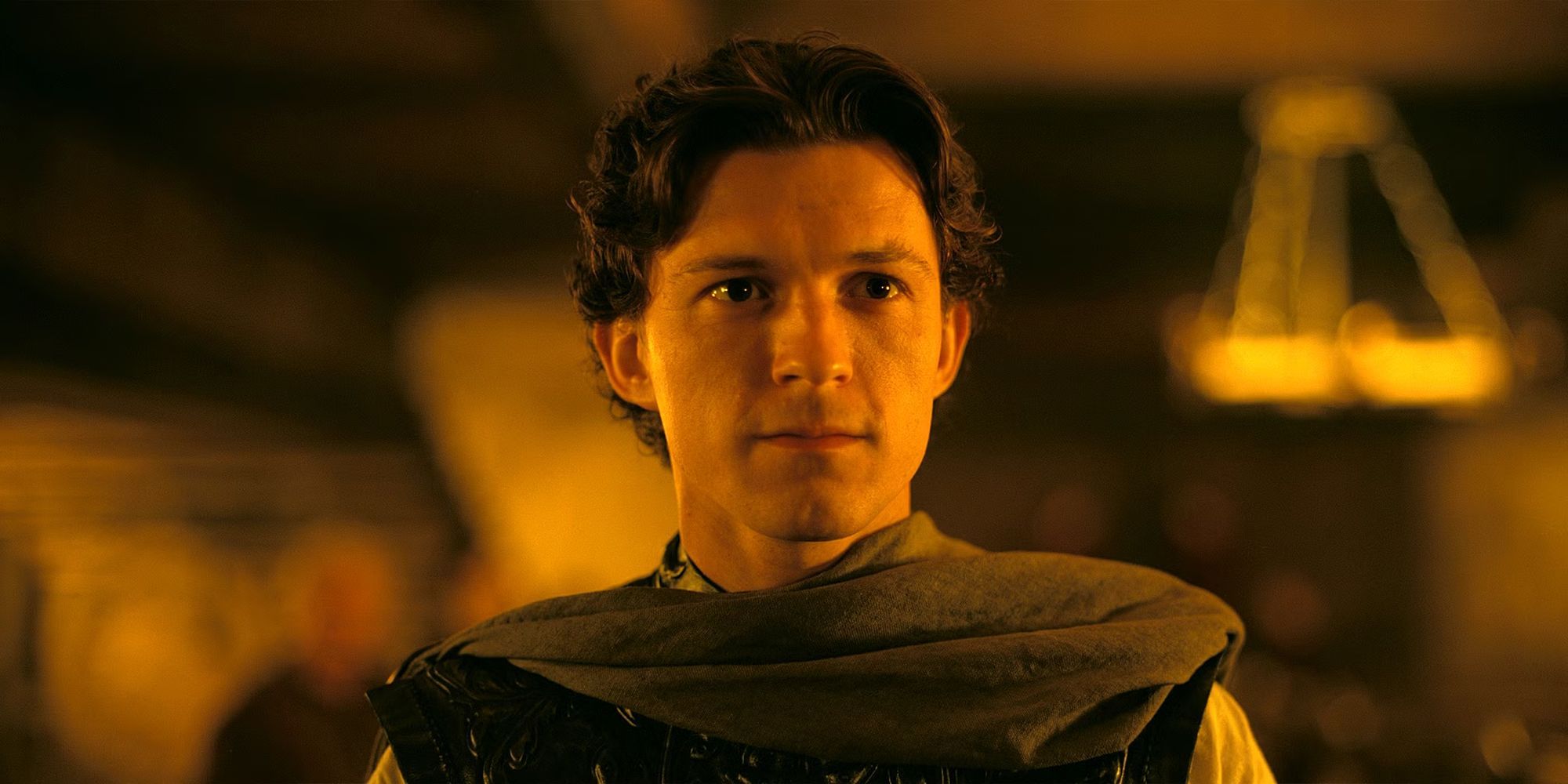
The sea creatures steal the headlines, but the sheer physical weariness is what makes every frame hurt. The salt-caked stare, the fractured sense of time, the bronze-gong dread in the score, the feeling that every island might steal another piece of him. At the same time, Telemachus (Tom Holland) and Penelope (Anne Hathaway) give the journey a second ache, because home is no longer just a place waiting patiently on a map. Nolan’s mythological bombast works best when the spectacle turns inward, making survival feel like remembering who you were before the journey broke you.
1 ‘The Green Knight’ (2021)

The Green Knight is the one that stays in the bones. It follows Sir Gawain (Dev Patel), a young and restless man ashamed of his own emptiness, drinking away mornings and wanting a legend before he has earned a life. He stands far apart from the typical grand knight polished by destiny. Then the Green Knight (Ralph Ineson) crashes Camelot's halls as a living embodiment of soil, bark, judgment, and time, offering a game that sounds glorious until the return blow becomes real.
That is the genius of it, turning the quest into a long humiliation. Gawain trudges through mud, cold, hunger, temptation, robbery, fog, rot, and the horrible awareness that courage cannot be borrowed from a story. The film greens and yellows feel ancient, damp, and indifferent, as if nature has already seen every coward and every king. The movie makes Gawain smaller the farther he travels, which is exactly why the ending lands. His journey becomes a direct reckoning with his own mortality rather than a chase for victory. He is being stripped down to the core question underneath every myth. When the axe finally falls, who are you without the lie?

The Green Knight
- Release Date
- July 29, 2021
- Runtime
- 130 minutes
- Director
- David Lowery
- Writers
- David Lowery
KioskNews shows a cleaned-up reading view extracted from the publisher’s page — the original always lives on their site, not ours.