Red Metal cracks deeper Qld rare earths potential at Sybella
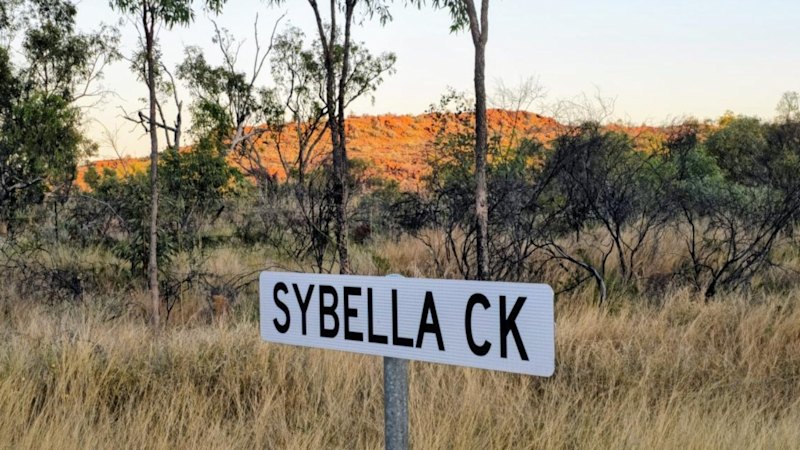
Red Metal has put another piece of a key metallurgical puzzle in place at its massive Sybella rare earths project near Mount Isa in Queensland, with impressive column leach test results from the Kary Zone’s deeper, more dominant fresh granite ore.
The company says two-metre column leach tests on the granite, crushed to 10 millimetres, achieved solid neodymium and praseodymium recoveries of 65 per cent and 68 per cent, respectively. Notably, the result was achieved with a total acid consumption of just 19 kilograms per tonne of sulphuric acid at ambient temperature, which is materially lower than the 23–27kg used in tests for the two other weathered ore types that sit above it.
Neodymium and praseodymium are particularly valuable because they are used to manufacture powerful permanent magnets for electric vehicles, wind turbines and industrial equipment.
In heap leaching, a chemical solution is trickled through the crushed ore to dissolve the valuable metals, which are then collected from the liquid and recovered. Low acid consumption is important because acid can be one of the biggest costs in heap leaching.
‘The new data will feed into our current Sybella PFS to assess the potential economics of this very large rare earth project.’
Red Metal Limited managing director Rob Rutherford
The fresh granite accounts for the lion’s share of the Kary Zone’s monster 936-million-tonne (Mt) inferred mineral resource, weighing in at 598Mt, while the overlying saprock and transitional ores contribute 182Mt and 157Mt respectively. With all three ore types now successfully tested, the company appears to have cleared a major hurdle on its path to a prefeasibility study (PFS).
The Kary Zone resource currently grades 334 parts per million (ppm) neodymium-praseodymium (NdPr) and 31.7ppm dysprosium-terbium (DyTb) at a 300ppm NdPr cut-off. Intriguingly, the mineralisation remains open at depth, with drilling encountering rare earths down to 240 metres, suggesting the deposit could potentially become bigger with further drilling.
Meanwhile, the company is running a separate test using 20mm crushed ore packed into 150mm-diameter columns standing six metres tall to closely replicate the conditions of a commercial heap leach pad. The final results are expected to build on Red Metal’s previously successful two-metre column program, which delivered impressive neodymium recoveries of 76 per cent from transitional ore and 71 per cent from saprock. Praseodymium recoveries were equally encouraging, reaching 78 per cent and 72 per cent from the respective ore types.
Red Metal Limited managing director Rob Rutherford said: “The positive column leach test on the fresh granite mineralisation from the Kary Zone has demonstrated the heap leach potential of the very large fresh granite resource located immediately below the near-surface, saprock and transitional ores which remains open at depth.”
In parallel with its metallurgical work, the company has drill rods already turning on a 5000-metre campaign aiming to both upgrade and extend the Kary Zone deposit. Infill drilling is targeting near-surface, rich zones, while extensional drilling is testing the interpreted southeast extension where previous work hinted at higher-grade potential.
Management describes the Sybella deposit as geologically unique, with abundant granite-hosted soft ore, giving the project a compelling edge and offering simple crushing and processing options.
Sybella lies in a 12km long by 3km wide granite-pervasive corridor and holds an enormous global resource of 4.795 billion tonnes grading 302ppm NdPr. These metals sit alongside the more valuable heavy rare earths dysprosium and terbium at a combined 28ppm, with yttrium adding a further 136ppm.
The results have landed at an opportune time, as Australia and its allies ramp up efforts to loosen China’s grip on global rare earths supply chains, with government-backed financing and strategic-reserve measures increasingly focused on the critical minerals sector. Against that backdrop, a large, shallow, granite-hosted resource that has demonstrated ambient-temperature heap-leach potential - and includes both light and heavy magnet rare earths - is likely to attract attention.
While Sybella is the clear flagship, Red Metal is also pursuing a “Big Copper” strategy in the famed Mt Isa province, hunting for giant iron-oxide-copper-gold discoveries similar to the nearby Ernest Henry and Osborne deposits. The company recently expanded its footprint in the region, lodging 17 new tenement applications near its Gulf and Three Ways projects to bring its total landholding to a vast 5800 square kilometres.
The company is also running a high-resolution airborne gravity survey at Mt Isa, piggybacking on concurrent regional airborne gravity surveys conducted by the Geological Survey of Queensland and Geoscience Australia.
With metallurgical work de-risking its processing pathway, drills turning to expand its already giant resource and a separate hunt for monster copper deposits underway, Red Metal looks to be firing on all cylinders. The completion of the Sybella PFS, slated for the first quarter of 2027 and results from the six-metre column test will likely be the next key catalysts as the company sketches out the economics of its potentially world-class asset.
Is your ASX-listed company doing something interesting? Contact: mattbirney@bullsnbears.com.au
KioskNews shows a cleaned-up reading view extracted from the publisher’s page — the original always lives on their site, not ours.