Indonesia warns of toxic gas after 'blue fire' at Mount Papandayan
Visitors must not stay overnight or conduct any activities within a 500-meter radius of the active craters, especially on cloudy or rainy days.
Bandung, West Java (ANTARA) - Indonesian authorities have warned of hazardous volcanic gas emissions at Mount Papandayan in West Java, following the rare appearance of a "blue fire" in its Manuk Crater.
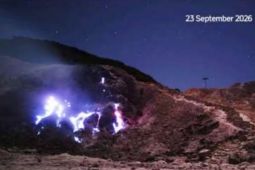
Head of the Geological Agency Lana Saria stated here on Sunday (September 27) that an emergency response team from the Center for Volcanology and Geological Hazard Mitigation (PVMBG) found that the blue flames were caused by a sudden, intense release of underground heat.
The blue fire, which first appeared early on September 24, burned surface materials and left behind ash. While the flames had died down by September 26, the crater continues to release dangerous levels of volcanic gas.
"Despite a decrease in thermal activities, significant toxic gas emissions continue around the site. A strong sulfur odor can still be smelled downwind, posing health risks to anyone directly exposed," Saria said in the agency's evaluation report.
The blue fire is a rare event at Mount Papandayan. It has only been recorded twice before — on February 22, 2023, and July 12, 2025 — and is identical to the famous phenomenon at Mount Ijen in East Java
However, the latest blue fire in Manuk Crater appeared dangerously close to main hiking trails and tourist camping grounds, prompting the agency to issue a safety warning.
While Mount Papandayan's overall alert level remains at Level I (Normal), the Geological Agency has issued strict safety guidelines for visitors and park management.
Visitors must not stay overnight or conduct any activities within a 500-meter radius of the active craters, especially on cloudy or rainy days.
They must also remain vigilant for toxic gas concentrations, which can spike suddenly depending on wind direction.
Tourists are also urged to beware of sudden eruptions, as phreatic eruptions can occur without warning, as well as the threat of landslides on the crater walls surrounding the active crater complex.
The agency urged Mount Papandayan Nature Park management to strictly enforce the 500-meter safety zone to protect hikers and prevent people from wandering into areas with toxic gas.
Tourists and the public are advised to monitor official volcanic activity updates through PVMBG's official channels and the magma.esdm.go.id portal.
Related news: Indonesia targets mercury-free status by 2030, PCB management by 2028
Related news: Gibran apologizes as toxic haze from land fires persists in Kalimantan
Translator: Ricky Prayoga, Uyu Liman
Editor: M Razi Rahman
Copyright © ANTARA 2026
KioskNews shows a cleaned-up reading view extracted from the publisher’s page — the original always lives on their site, not ours.