Meet Vahn Pascual, the debuting director behind Cinemalaya hit ‘Status: Rejected’
- Vahn Leinard Pascual, inspired by his late grandfather who was also a filmmaker, makes his feature debut with 'Status: Rejected' at the Cinemalaya Philippine Independent Film Festival.
- Pascual's filmmaking journey began with bootleg DVDs and progressed through film school, where he directed nearly 20 shorts, focusing on heartfelt storytelling grounded in reality.
- His film 'Status: Rejected' explores themes of generational trauma and belonging through the story of a widow, showcasing Pascual's unique voice and collaborative approach in filmmaking.
This is AI-generated. Read the article for full context. Report any errors.
Vahn Leinard Pascual’s interest in moving images only began upon the demise of his grandfather Leonardo “Ding” Pascual, a once active filmmaker in the late 1970s through the 1990s known for hyper-masculine action movies, including Final Showdown (1979), The Five Style Fist (1978), and Brusko (1981), which were all the rage then.
“Nanghihinayang ako kasi hindi ako nakapag-usap sa kanya tungkol sa paggawa ng pelikula (I regret that I wasn’t able to have any conversations with him about filmmaking),” Pascual said in a Zoom interview.
Now at 26, Pascual is the youngest main competition director in this year’s Cinemalaya Philippine Independent Film Festival, making his feature debut Status: Rejected fresh off college.
And yet, the Ani ng Dangal awardee wasn’t exactly a complete newbie to moviemaking and was even once tagged as among the “eight emerging Filipino directors to watch out for.”
Pascual’s earliest exposure to cinema was through bootleg DVDs of mostly commercial comedies, such as those from Wenn V. Deramas and the Enteng Kabisote film franchise. He would write and direct his first film for a campus festival in his high school years, until he entered film school at De La Salle – College of Saint Benilde, under which he’d direct nearly 20 shorts prior to his Cinemalaya debut.
“Most Benilde people would focus on the technicalities of moviemaking because of the equipment and budgets that they have, but I really insist on the importance of making stories with heart, and at the same time, grounded on lived realities,” Pascual told Rappler, recalling how he began making movies armed only with a mobile phone.
Among his directing credits include Blue Is Not My Favorite Color (2020), Sina Alexa, Xander at ang Universe (2020), and Ang mga Sisiw sa Kagubatan (2022), all premiering to various acclaim in the Philippines and abroad. His 2021 black-and-white silent short Alingasngas ng mga Kuliglig, in particular, entered the library of The Criterion Channel in May 2024 as part of the film program “When the Apocalypse is Over: New Independent Cinema” curated by Filipino-American critic Aaron Hunt.
Much of Pascual’s work, produced largely during the COVID-19 pandemic amid bouts of depression, invokes the personal and the vicissitudes of growing up a queer boy. In fact, his first two submissions to Cinemalaya are queer-themed concepts, which riff on his thesis film My Dearest Darling, and the work-in-progress Don’t Mess With My Hormones. But what resonated with the selection committee was his concept for Status: Rejected, initially titled Friend Request Sent.
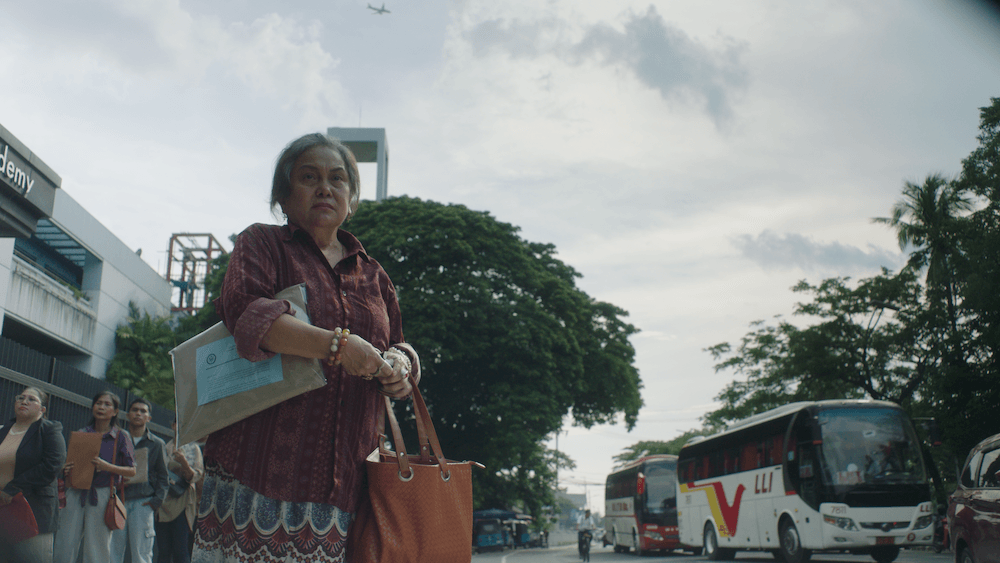
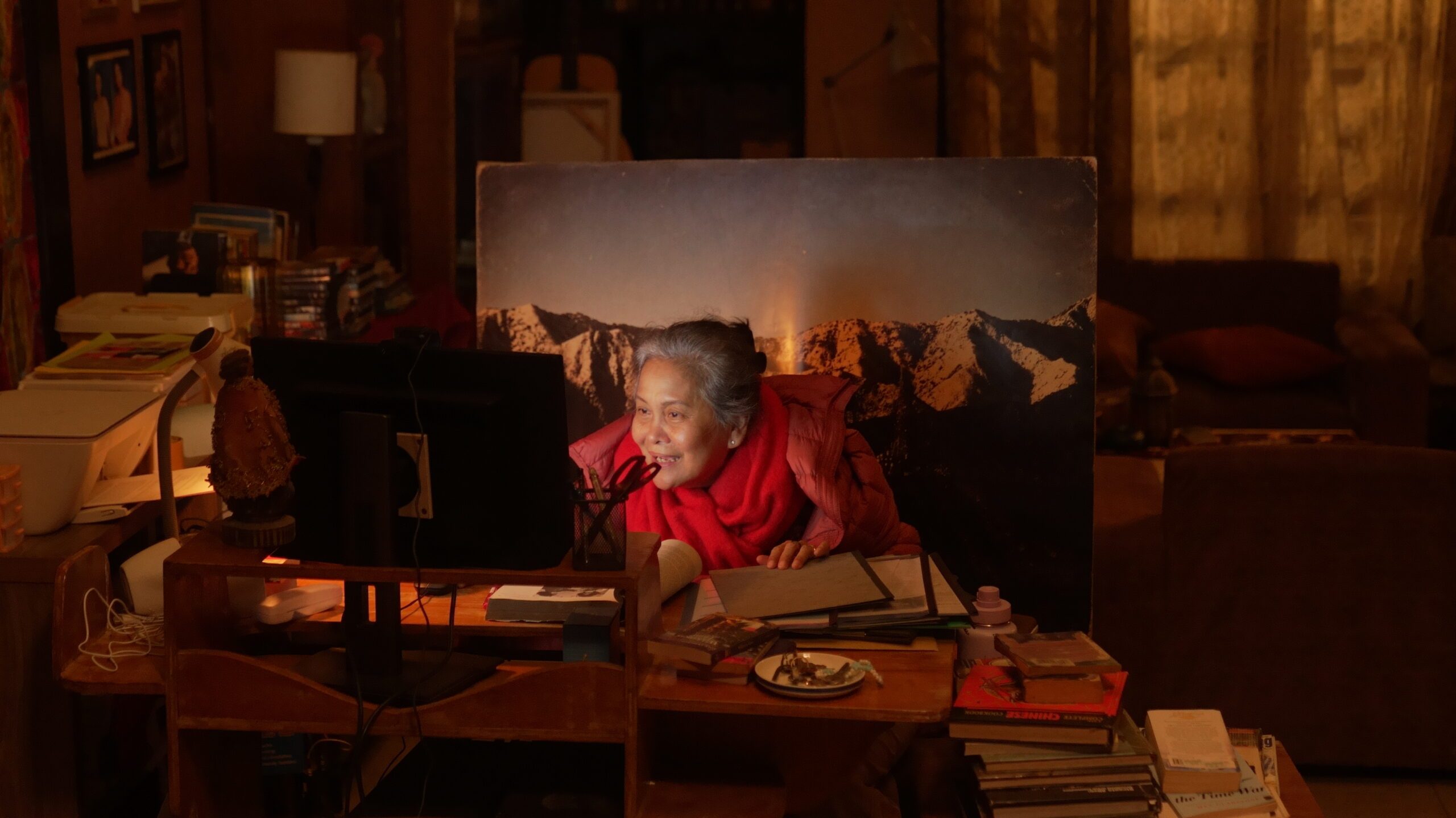
Loosely described by the director as a “love scam movie,” Status: Rejected follows Biring (played with lacerating clarity and dignified quietude by Ruby Ruiz), a widow in her late 60s who is left existentially adrift by her distant daughter Anna (Alessandra de Rossi), whose own child Sophia (Yani Villarosa) inherits the swelling generational trauma. Soon enough, Biring resorts to the illusory promise of digital ephemera, finding some sense of belongingness in a faceless American serviceman she can only embrace by proxy.
Drawing inspiration from the women in his life, especially his grandmother, Pascual builds his commentary to a hopeful endnote in which Biring reconciles the ideals the American empire fleetingly, deceptively offers with the realities of the world around her.
It was in the Cinemalaya lab when the director realized he had to work within the operations of family drama and romance for the vision he had in mind, at which point Jaymar Santos Castro and Ivan Villacorta Gentolizo — who likewise penned another Cinemalaya entry, Jenn Romano’s Padamlágan (2025) — joined the crew as co-writers.
Then, Pascual was dreading the idea that the concept would not work as a full-fledged feature. “Because I was so exposed to short films, people might think, ‘If it works as a short film, then why not make it a short film?’” he explained. But with experienced writers and veterans in the workshop working alongside him, Pascual grew less and less anxious, confident that the material would eventually snap into focus.
While shopping the material around, he likewise lamented the limitation of having to cast bankable and therefore mainstream actors for production houses to be on board with the project, given that it’s from an independent artist. In fact, Pascual’s team initially considered Vilma Santos and Chanda Romero in the lead role.
“It’s disheartening, actually,” Pascual admitted. “I and my producer Fea Fortuna struggled with impostor syndrome from time to time.”
Luckily, the rejections led to some newfound allies in the industry, such as producer Micah Tadena and production outlets Clever Minds Inc. and Black Cap Pictures. Upon their attachment to the project came the casting of Ruby Ruiz, who had starred in Iska, a 2019 Cinemalaya entry directed by Theodore Boborol, Pascual’s mentor.
Also among those allies was cinematographer and Leonor Will Never Die director Martika Ramirez Escobar, whom Pascual already worked with in Gab Rosique’s QCinema 2025 entry Yelo. “I’m really a fan of her work because Pusong Bato was the first short film I saw when I was still starting out as a filmmaker,” said Pascual. “That’s when I realized that that kind of storytelling was possible.”
On set, Pascual described his process with the seasoned cinematographer as “very collaborative.” “She would always ask about my intentions in terms of the framing and story,” he added.
Indeed, Escobar’s signature lensing lifts the film to a greater aesthetic delight, generating stunning vistas occasionally punctuated with experimental flourishes, which are already part of Pascual’s own lexicon.
Pascual never thought of his feature debut not being a queer film, but just by virtue of the movie being so personal to him and the women around him allowed for a kind of shared understanding about minoritized struggles to come through.
Such sensibility proves crucial to the many different ways in which he facilitates the tensions among the female protagonists, deeply locating us in their chaotic, at-times needy and embarrassing, yet profound interior lives.
And while Status: Rejected is a modestly scaled debut, it somehow never feels contained or limited as far as filmic daring is concerned. If anything, it is proof that putting faith in new voices remains, more often than not, a worthy venture.
With so much promise still ahead of him, we certainly won’t be done with Vahn Leinard Pascual anytime soon. – Rappler.com
Note: Some quotes in Filipino have been translated into English for brevity.
KioskNews shows a cleaned-up reading view extracted from the publisher’s page — the original always lives on their site, not ours.